Residents to grow food on 'unloved' public land

 Hounslow Council
A west London council has said it is allowing residents to grow their own food on public "unloved and unused" land.
Hounslow joins a handful of councils in England to have launched the Right to Grow initiative and is only the second in London, after Southwark.
The council said it would "cut red tape" and allow residents to connect with nature and build civic pride, while tackling fly-tipping and antisocial behaviour.
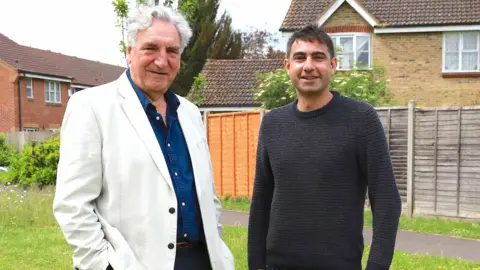
Downton Abbey actor Jim Carter OBE who is also patron of charity Greenfingers, said more councils should introduce the policy.
 Hounslow Council
Carter, who is known for his role as the butler Mr Carson in the TV drama, said: "To offer under-utilised council ground to schools and community groups to grow plants and food and to reconnect with nature is both imaginative and far-sighted.
"I only hope that more local councils follow suit. I can't wait to see the results and wish all involved a fun and fertile future"
In September 2023, Hull made history as the first city in the UK to pass the Right to Grow motion, allowing food to be grown on disused council land.
The campaign, Go Forth and Grow for the Future, is designed to allow communities to "steward" unmanaged land that is currently going to waste, according to the Local Democracy Reporting Service (LDRS).
Residents will have to ask for permission to ensure the land is suitable, is not contaminated or dangerous. It must also be unused wasteland, not parks or other council-maintained flowerbeds.
Councillor Salman Shaheen, cabinet member for culture, leisure and public spaces, said that the right to grow policy "cuts red tape" with Hounslow residents able to grow on public land on their own accord.
He added: "The pandemic taught everyone, all at once, the value of green space, for our physical and mental health, and for learning about nature, biodiversity and sustainability.
"Sadly, many people living in flats do not have gardens to call their own, while unused land goes to waste, attracting fly-tipping and antisocial behaviour. So we're cutting red tape for green shoots."
The council also hopes the scheme will help tackle rising obesity rates in the borough, with people undertaking physical activities while growing healthy food.
'Eyesore'
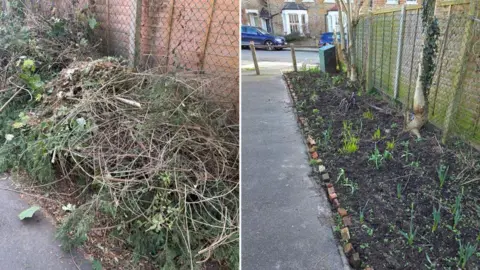
Four pilot schemes were already under way before the council formalised the policy, including an alleyway in Isleworth that had attracted antisocial behaviour with people drinking and smashing glass bottles, fly-tipping, graffiti and littering.
Volunteers were given permission to clear the litter, trim overgrown vegetation, and plant flowers.
Resident Stuart Court said: "The alley has been much better as a result of the clean-up and the work that has gone into it.
"It has helped bring the local community together to turn what was once an eyesore into a valuable community asset that everyone can enjoy."
Shaheen said the scheme aimed to empower people.
"There also wasn't a door at the council people could knock on before, no route to ask for permission and if they did ask, the answer would have been no.
"Now there's an open door, and anyone coming through will be given all the assistance and info they need and we're saying come along and step forward and we'll make it easy."
Listen to the best of BBC Radio London on Sounds and follow BBC London on Facebook, X and Instagram. Send your story ideas to hello.bbclondon@bbc.co.uk
