Unionists suspicious of Stormont reform, says Foster

 PA Media
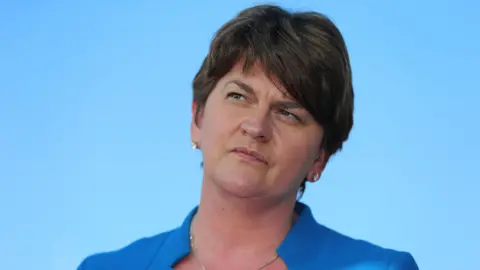
Stormont's former first minister Baroness Foster has said there is "growing suspicion" among unionists that calls to reform the devolved institutions are an effort to "tilt the constitutional balance".
The former Democratic Unionist Party (DUP) leader said any changes to Northern Ireland's power-sharing structures must "proceed in a way that commands broad consensus".
She was speaking at a Stormont assembly committee alongside Mark Durkan, a former deputy first minister and ex-leader of the Social Democratic and Labour Party (SDLP).
Durkan expressed support for reform, saying that some measures originally agreed were meant to be "biodegradable".
Baroness Foster told the Assembly and Executive Review Committee any reforms should have "broad consensus amongst unionists and nationalists alike".
"There is a growing suspicion from grassroots unionism that the language of reform is being deployed not to improve governance, but to tilt the constitutional balance or indeed to marginalise one tradition following election results," she said.
"And whether or not that perception is fair it exists, and in Northern Ireland - as I think we all know around this table - perception has real political consequences.
"So reform can't be something that's done to one section of the community. It must be something that is agreed in a broad consensus."
Baroness Foster said it would be "wrong" to seek "unilateral action from the government over the heads or elected representatives".
'Able to veto everybody else's mandate'
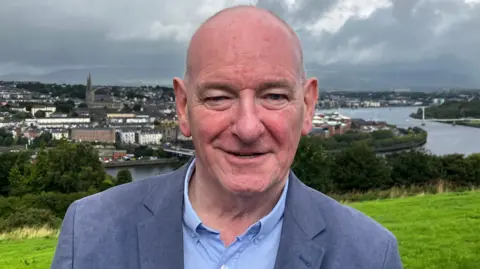
Durkan, who was involved in negotiations that led to 1998 Good Friday Agreement and the establishment of the devolved institutions, said he was "clearly in the camp that advocates reform".
"At the time we were negotiating the agreement, I can remember using the phrase that some of the measures that we were talking about would hopefully be biodegradable," he said.
The former MP reiterated his concerns over changes made under the 2006 St Andrews Agreement.
"We have ended up with a situation where people have been able to veto everybody else's mandate," he said.
"So structures that were designed to stop any one party's mandate being discriminated against have ended up in a situation where we have had everybody's mandate actually frustrated and the assembly itself grounded."
Durkan said he believed the titles of the first minister and deputy first minister should be "equalised" and the holders of the joint office elected by the assembly.
 PA Media
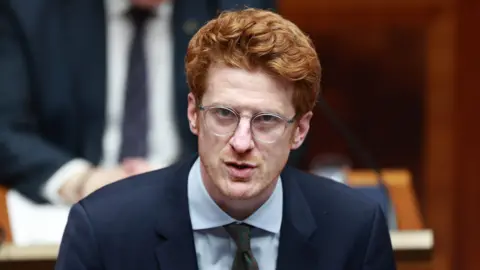
Baroness Foster was later asked by the SDLP's Matthew O'Toole, leader of the opposition in the assembly, whether she agreed that the titles should be the same.
The former DUP leader responded: "Well, I have no difficulty. I've always seen Michelle (O'Neill) as holding the same status as I did in the Executive Office."
She said it "wasn't really a discussion then" when they were both in post, adding: "Michelle referred to herself as joint first minister."
Sinn Féin assembly member Pat Sheehan said there was a perception among Irish nationalists and republicans that unionism remained "hostile" towards aspects of the Good Friday Agreement on "parity of esteem".
He pointed to legal action against the infrastructure minister's planned funding for Irish language signage at Grand Central Station in Belfast.
Baroness Foster described the move by Sinn Féin's Liz Kimmins as a "solo run" and said it should have been referred to the Stormont executive.
She said the Irish language has been used in the past "as a weapon against unionist areas".
"I regret that, but unfortunately that is very strongly the perception that is out there in the unionist community," she added.
"So therefore it was a controversial issue in my opinion that needed to come to the executive for discussion and for agreement."
