Should artists get a basic income like they do in Ireland?

 BBC
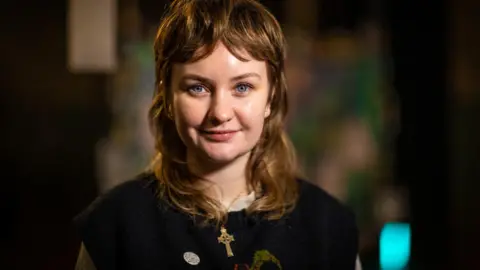
BBCAsk Kirsty McArthur what she does for work and she'll tell you: "I'm an artist."
After a brief pause, she'll add: "And lots of other things."
Like so many freelance creatives, Glasgow-based McArthur has juggled her visual art practice with various sources of income to make ends meet, from teaching art workshops to occasional hospitality work.
"I am so close to burnout - all the time," the 29-year-old says.
Unions and experts are increasingly warning that many are struggling to make a living in the arts sector due to low pay, patchy work and the high cost of living.
One potential solution now being looked into in Scotland is for the government to pay artists directly - a so-called basic income for the arts.
The idea comes from Ireland, where a no-strings-attached scheme paying 1,300 euro per month (about £1,134) to some musicians and artists was recently made permanent.
Leading Scottish artists and music industry figures - including the national poet and the head of Celtic Connections festival - are calling on the Scottish government to introduce a similar scheme or risk a cultural "desert".
Culture Secretary Angus Robertson told the BBC he's "looking into it".
The 'envy of the world'
Ireland introduced the 'Basic Income for the Arts' pilot scheme in the aftermath of Covid-19 in 2022.
The trial saw 2,000 individual artists - musicians, painters, comedians, poets and others - drawn from a lottery system to take part in the experimental arts funding scheme.
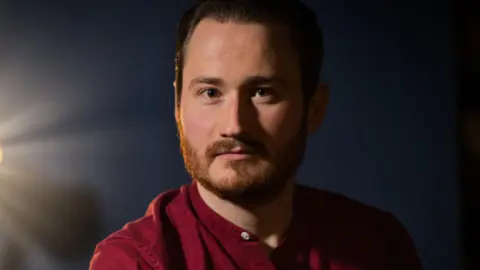
Brían Ó Súilleabháin quit his day job in a wine and spirits shop when he found out he was one of the lucky 2,000, now able to take a risk on acting work.
"It was life-changing," the actor, 29, says.
"Without the Basic Income, I would have had to go back to the day job, but because I had the Basic Income, I didn't have to do that.
"I had a sort of safety cushion that I could live on until the next job came along. And of course, the next job did come along."
For Ó Súilleabháin, trusting artists with direct payments is a "no-brainer" - one that he hopes will stop younger and less wealthy people giving up on artistic work.
"What does an artist like to do?" he says.
"They like to make art. If you give money to an artist, they will make art."
The Basic Income for the Arts was deemed a success and made permanent in October 2025.
Artists on the scheme reported being happier, spending more time on art and less time on non-artistic work, when compared with a 'control group' of artists not on the scheme.
Irish culture minister Patrick O'Donovan called the scheme "the envy of the world".
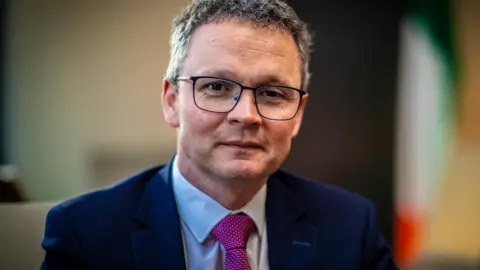
Supporting culture is important to Irish national identity, according to O'Donovan.
"It's the same as education, it's the same as health, it's the same as social protection or justice or filling potholes," he says.
"Investing in the arts is something that we know we get back."
Irish government assessments of the approximately €100m Basic Income for Arts grant scheme found that for every €1 invested - the scheme contributed €1.39 to the wider economy through administrative and welfare savings, social impacts, and tax generated.
With the permanent scheme due to start later in 2026, questions are being raised about what will happen to the 2,000 people on the pilot - such as Ó Súilleabháin - when the pilot scheme ends.
But while the scheme was made permanent - the Irish government does not plan to expand the scheme to many more people immediately.
"Rome wasn't built in a day," O'Donovan says to those who question why.
Scottish culture at a 'crossroads'?
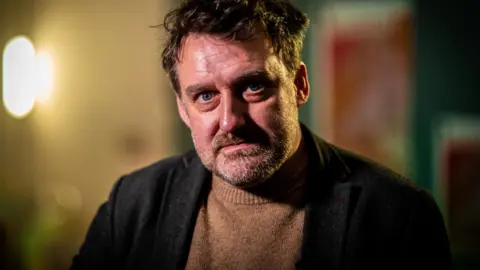
The Scottish national poet - the Makar, Peter MacKay - knows Ireland well. It's where he began his writing career.
He is among those calling for the introduction of a Basic Income for the Arts in Scotland.
"I think it will just contribute to the cultural life of the country in ways that we can't even understand right now," he says.
"There will be new things on the television, new things on the radio, on the stages, there will be new novels on the shelves."
MacKay acknowledges that some may question whether it would be a responsible use of money with public finances so tight but he thinks the potential far outweighs the risk.
"If we don't have this support for art, it will be very, very difficult for many people even to imagine that they could be an artist," he says.
"They won't have a chance to make a living that way. They might not think, when they're young, 'I could be a writer, I could be a professional musician' - and we'll lose lots of our culture.
"We'll lose new voices and new ways of thinking. Our entire culture will just wither."
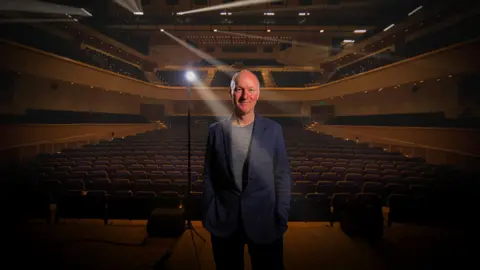
The man behind the Celtic Connections music festival, too, warns of Scottish culture becoming a "very dry desert" if more isn't done.
Donald Shaw feels Scotland is approaching a "crossroads".
"I think that we are at a point where it's harder and harder for musicians to find a way, particularly early in their life, where they go 'can I really believe in myself as a musician' and 'can I make a living from it and be someone - or do I have to sign up here for a job that allows me to pay the bills," he says.
Asked what one thing he thinks might make a difference, Shaw recommended a simplified, more direct funding model.
In other words: "A basic income. That would help," he says
Could Scotland adopt an artists' basic income?
 PA Media
In Scotland, culture funding has tended to be focussed on arts organisations.
But the wider approach is under review by the Scottish government.
This follows an independent report focussed on funding body Creative Scotland that found criticism in the sector of the 'trickle-down' funding model, from government to organisations to individual artists.
The same report notes demand for an Ireland-like scheme. A separate Scottish government-commissioned taskforce also recommended steps be taken towards copying the scheme in Scotland.
Unions, including the Scottish Artists' Union and Equity as well as the body representing trade unions, the STUC, are also calling for a basic income for arts workers.
The Scottish government is upping culture funding, with an extra £34m pledged in the latest budget, towards a target of an over-all £100m increase to annual funding.
But the calls for a different, more individual-focussed approach are being heard.
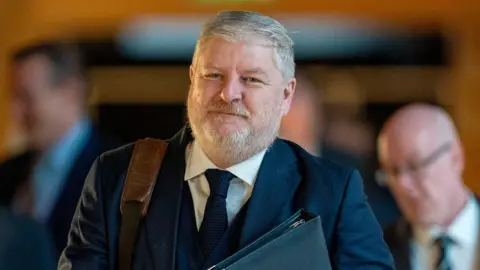
"It's very well known that there's a particular challenge for freelancers working in the culture and arts sector," Culture Secretary Angus Robertson says.
"We know this is an issue."
Robertson says work needs done to understand how such a 'basic income' type grant scheme could work with the Scottish tax and welfare system.
But he has made an enthusiastic commitment to "look into" copying the Irish scheme.
"This is about people making the most of their creative talents, and that pays back to society financially and in other ways," he says.
"If that works there [in Ireland] then it's definitely something we should be looking at here."
But with an election in May, major decisions on culture policy will depend on that election's outcome.
Ireland's public finance situation also differs from Scotland's. The Irish Government operates a budget surplus and plans to increase its savings coffers.
Kirsty McArthur hopes a basic income for the arts scheme will expand her city's cultural scene.
"Glasgow's best painters and filmmakers are stuck working in a pub for minimum wage," she says.
"It would only benefit everyone, if more people had access to creative work."
Donald Shaw agrees.
"You need to think about it as the seed that sown and the flower that comes up in the years to come.
"Not only the flower but the forest, really.
"It'll increase the number of people working in the arts and the traditional music scene."
