Potholes: What are they and why are they dangerous?

 BBC
BBCDespised by those on two, four or more wheels, potholes are the bane of road-users' lives. Not only do they pose a risk to drivers, cyclists and pedestrians - they also cost the taxpayer money to repair. But how bad is the problem, and what can be done about it?
What is a pothole?
It is estimated that, on average, there are about six potholes per mile on council-controlled roads in England and Wales.
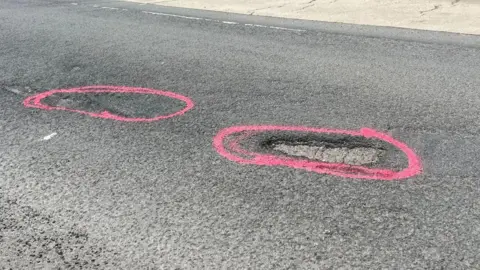
A pothole is a depression or hollow in a road surface, caused by ground water and traffic.
According to the RAC motoring organisation, there are currently more than one million potholes in the UK.
Its Pothole Index suggests that, in 2023, motorists were twice as likely to break down as a result of repeated wear caused by potholes when compared to 2006.
The most recent Automobile Association (AA) report found that 2024 saw the worst September on record since 2017 when it came to potholes.
Why are they called potholes?
According to the RAC, the term "pothole" can be traced back to the Roman Empire, when potters who could not afford clay stole from roads built on a layer of clay, causing deep holes in the surface.
What causes potholes?
 Getty Images
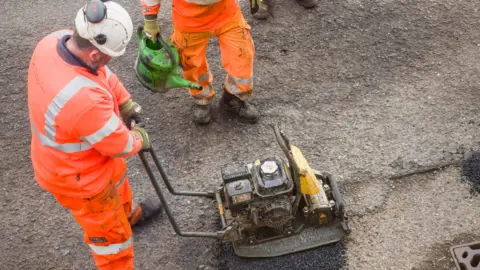
Potholes form when water seeps into tiny cracks in the road surface, usually caused by traffic. When this water freezes it expands and then, when it thaws, it gets smaller.
This makes the cracks larger, further weakening the road and increasing the amount of water that can get under the surface.
As the road surface weakens, traffic breaks it up to create a small hole, which expands as more traffic passes over.
Tony Rich from the AA said the poor weather had a "two-fold effect on driving conditions".
The heavy rain worsens existing potholes, but also delays essential road repairs as maintenance teams are redirected to fallen trees and storm damage.
How dangerous are potholes?
 Getty Images
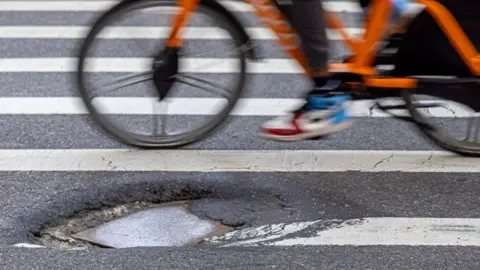
Depending on their size, potholes can cause significant damage to vehicles and pose a danger motorists, cyclists and pedestrians.
Although small potholes rarely cause major accidents, if a vehicle hits a lot of them over time, it can lead to damage to the tyres, suspension and steering system.
In January 2024, multiple motorists in Leicestershire complained that a "hidden" pothole had caused damage to vehicles.
Particularly deep potholes can lead to damage to the underside of a vehicle, but the RAC says most pothole-related accidents are due to loss of control.
However, potholes pose a real risk to cyclists and have been blamed for numerous serious injuries to riders.
In October 2023, a coroner ruled damage to a road in Lancashire had led to the death of a keen cyclist.
According to Cycling UK, 15% of the cyclists it helps after being injured in a crash were involved in a incident involving road defects.
The AA recommends drivers and cyclists avoid potholes where it is safe to do so, but when there is no other option than to pass over them, reduce speed and keep an increased distance from nearby vehicles.
How to report a pothole?
Potholes should be reported to the authority that manages the road in question. This could be the local council, or Highways England for motorways and A roads that they manage.
The Department for Transport recently published a road maintenance ratings map, which rates different local authorities based on the condition of their roads and how effectively they use government funding for repairs.
In the 2023-24 financial year, three councils in south-east England paid out more than £500,000 in pothole compensation.
