Managing cancer with fewer side effects

 BBC
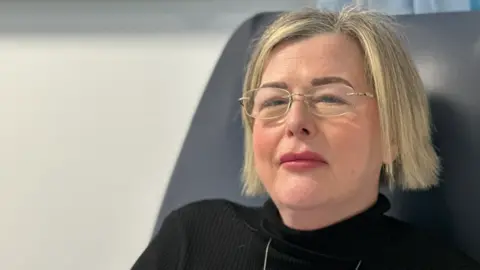
BBCFor Becky Smith, a trip to the opticians would change the course of her whole life.
"Got told I've got something in my eye. 'It's massive and it could be nasty'. And I was like, cancer? And they said yes."
We are chatting in a small room in a busy cancer clinic at Birmingham's Queen Elizabeth Hospital, as she waits for the next dose of immunotherapy drugs as part of her treatment.
She had her eye removed and then later discovered the cancer had spread to her liver.
The drugs she has been given every few weeks here at the hospital are working to stop the disease.
However, the side effects of those drugs were crippling.
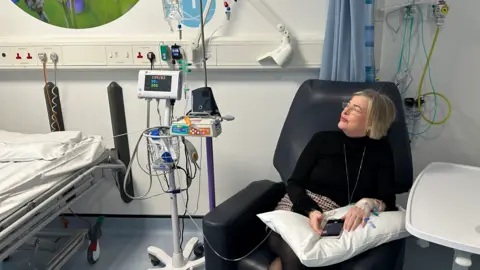
"My arthritis got to the point where I couldn't walk, I couldn't get out of bed and I had trouble getting up and down the stairs."
In very simple terms, her cancer is trying to evade her immune system by turning it off.
The drugs, on the other hand, switch the immune system back on so her body can fight the cancer.
However, the side effects of a supercharged immune system are that it starts to attack other healthy bits of the body.
Many patients having immunotherapy have to deal with all sorts of side effects, including itchy skin, inflamed gut and painfully swollen joints with arthritis-like symptoms.
Treatment is usually steroid-based which affects the whole immune system.
If the dose is too low, it will not work and at higher doses it might interfere with the cancer treatment.
So she is one of 70 patients recruited by a team here trying a new approach.
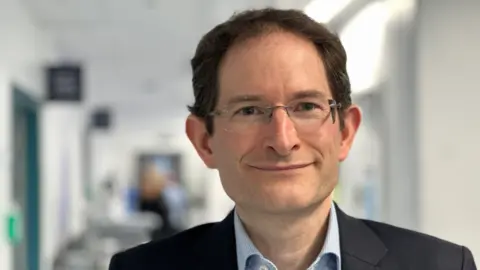
Prof Benjamin Fisher from the University of Birmingham explained: "We're going to start with much more targeted treatments much earlier on.
"The first moment the patient gets inflammation of the joints they can start a course of this drug aiming to switch off the arthritis quicker."
Half of the patients on the trial will be given steroids and half this new treatment.
The trial will aim to find out if this approach can stop the side effects while at the same time not affecting the cancer treatment.
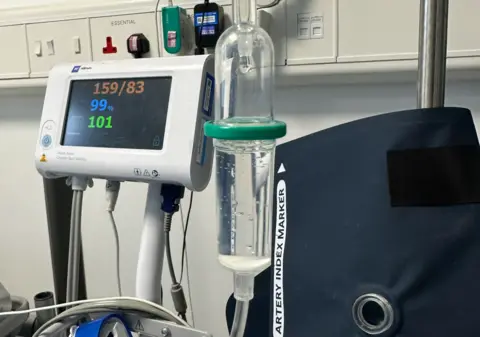
Becky Smith has been given the new treatment and for her it has been life-changing.
She is much more mobile and even back to wearing heels again.
"I can enjoy my life and it's one less thing for me to worry about."
In the end, surviving but not thriving is not what doctors want.
The hope is this new approach will help many more people return to as normal a life as possible after cancer treatment.
Follow BBC Birmingham on BBC Sounds, Facebook, X and Instagram.
