Do average speed cameras make roads safer?

 Getty Images
As part of an initiative to improve road safety motorists will soon have to be aware of average speed cameras (ASCs) as they drive through Dorset.
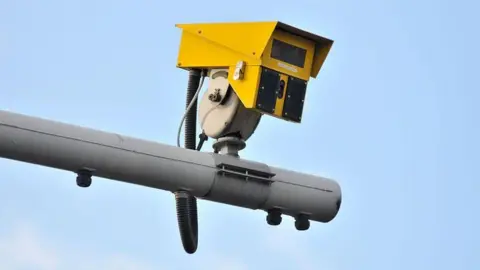
The cameras, which use number plate recognition technology, have become more prevalent on the UK's roads.
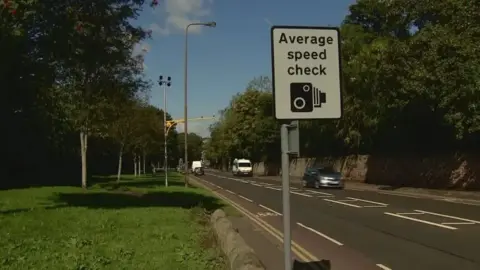
The systems calculate the time it takes for a vehicle to travel over a certain stretch of road, rather than just measuring its speed as it passes a specific point.
They have been commonly used to monitor traffic in roadworks and on motorways.
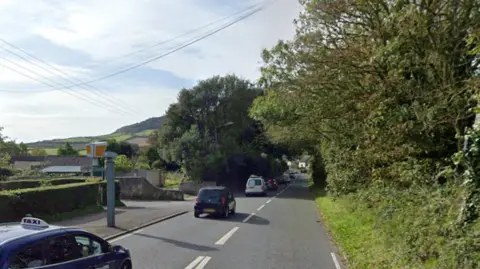
Now National Highways has announced ASCs will be installed in the villages of Winterbourne Abbas, Morcombelake and Chideock on the mainly single-carriageway A35, east of Dorchester.
In May, Thames Valley Police and Crime Commissioner Matthew Barber launched a plan to introduce them on the A420 in Oxfordshire.
However calls for ASCs to be installed in the New Forest to protect free roaming livestock were rejected.
In that case a feasibility study found they would "not meet the specific national criteria".
 Google
With speed being an accepted major cause of road accidents, cameras enforcing limits have been a feature of British roads since the early 1990s.
The first generation Gatso cameras, named after the company, that manufactured them, used radar technology to measure a vehicle's speed.
They would then take photos on 35mm film if it exceeded the limit - sometimes with the infamous flash that became well-known to some drivers.
With traditional "spot" cameras reaching the end of their working lives over the past decade, many have been replaced with newer ASCs with number plate recognition technology.
Mark Armstrong, head of road safety at Dorset Police, said the force "strongly" supported the National Highways' initiative for the A35.
"Driving at inappropriate or excess speed is one of the 'fatal five' behaviours that commonly cause a fatal or serious injury road traffic collision," he said.
The Royal Society for the Prevention of Accidents (Rospa) also welcomed "evidence-backed initiatives" that aim to curb death rates on Dorset's roads.
Senior policy manager Rebecca Guy said the scheme would "hopefully go some way in addressing the 199 collisions and three fatalities recorded over five years".
Are ASCs an effective deterrent?
Research published 10 years ago by the RAC Foundation, after the cameras first began to appear, found a significant decline in accidents on the roads they covered.
It found the number of fatal and serious collisions decreased by 36% after ASCs were introduced.
The average reduction in personal injury collisions was found to be 16%.
Whether average speed cameras are a more or less effective solution than those taking a single image is not a straightforward question, the foundation's director Steve Gooding said.
"The right question is which would work best in which high-risk environment," he said.
"For long stretches of road it can make sense to go with average speed cameras, as has routinely happened where there are roadworks on motorways.
"Whereas in the stop-go traffic of an urban environment a fixed camera makes more sense."
Do ASCs change driver behaviour?
With conventional speed cameras, a driver may slow down as they pass the camera at or below the speed limit, and then put their foot down as soon as they are out of the camera's range.
Shaun Helman, chief scientist at the Transport Research Laboratory, based in Wokingham, said: "Some drivers 'game the system' by speeding up after spot cameras for example, but not everyone does - many people are simply compliant.
"Average speed cameras are more difficult to 'game' in this fashion."
He added that with ASCs most drivers understood they were "generally required to be compliant continuously".
The AA also said ASCs were "widely accepted" by drivers and they tended to improve traffic flow.
Jack Cousens, head of roads policy, said: "Any speed cameras is a good tool in the arsenal when tackling speeding drivers, but we need more traffic officers to catch and pull drivers over.
"A camera will be able to spot the offender, but cannot discover the reason they were speeding was because they were under the influence of drink or drugs.
"More cops in cars also act as a deterrent which helps make drivers think again and creates safer roads."
