Forty-day moor fire caused by 'cooking in forest'

 Getty Images/Ian Forsyth/Stringer
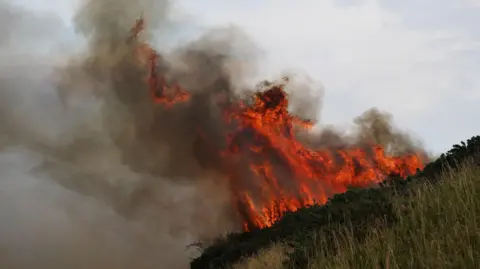
A fire which burned for more than 40 days on moorland was likely to have been caused by someone cooking using a campfire or gas burner, an investigation has found.
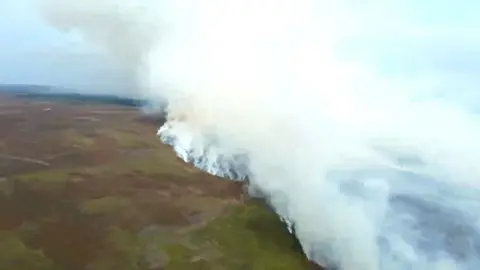
The main blaze started at Langdale Moor in the North York Moors National Park on 11 August and at its height covered nearly 10 sq miles (25 sq km).
North Yorkshire Fire and Rescue Service (NYFRS) said its conclusion followed an "in-depth" 150-hour investigation, including witness statements, reviewing footage, inspections of the site and analysis of fire patterns.
Chief fire officer Jonathan Dyson said the presumed cause was "a stark reminder of how quickly wildfires can take hold, particularly in hot, dry and windy conditions".
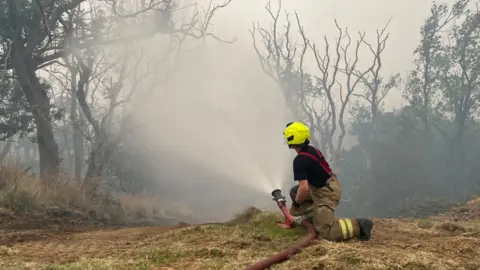
Fire crews worked for a "prolonged period in extremely challenging conditions to bring the incident under control", according to a report into the incident which has just been published by NYFRS.
It was particularly complex due to the location and nature of the site, which was "a very remote area of moorland with limited water supplies and difficult access for emergency resources", a spokesperson said.
Prolonged hot and dry weather together with strong winds also contributed to the scale and behaviour of the fire.
A fire was first reported at the ignition site within Langdale Forest on 26 June and burned throughout July. This incident was managed by Forestry England and control measures were put in place.
On 11 August NYFRS responded to a separate 999 call and then resumed responsibility for the incident.
The location of the original fire in June was described as "isolated", 90 minutes from any road and requiring specialist vehicles to attend. Firefighters had to walk 30 minutes from 4x4s to reach the site.
It was revealed earlier that the investigators discovered signs of "human presence" within the forest, including a tree branch that had been hacked off, teabags, items of food and other litter.
The fire spread through deep peat and ignited in several other locations.
The fire, near RAF Fylingdales near Pickering, was declared a major incident on 13 August due to its proximity to Critical National Infrastructure at the base.
RAF Fylingdales provides a continuous ballistic missile early warning service to the UK and US governments, with about 320 service personnel, Ministry of Defence Police and civilian staff working at the site.
During the incident, about 20 so-called "cook-offs" involving old ordnance occurred in the area - explosions triggered by temperatures exceeding 600C.
That required fire crews to "adapt their tactics and work closely with partner agencies to ensure the safety of everyone involved", the fire service said.
Local farmers also formed a so-called "Farmy Army" to work alongside firefighters as the moorland blaze raged.
 Oli Constable/BBC
Dyson said: "The Fylingdales Moor fire was one of the most complex multi-agency incidents the service has ever attended.
"I would like to once again thank local communities, farmers, gamekeepers and our colleagues from other fire and rescue services for the vital support they gave us."
"The fact that this fire is believed to have been started by cooking using a naked flame, such as a campfire or gas burner, is a stark reminder of how quickly wildfires can take hold, particularly in hot, dry and windy conditions."
Moorland, forestry and rural environments were "extremely vulnerable", with even small flames having "devastating consequences", Dyson said.
"I urge everyone who visits the countryside to follow safety advice to help prevent further wildfires and protect our landscapes, including respecting restrictions on camping and lighting barbecues/campfires, taking litter home and carefully disposing of smoking materials."
 North Yorkshire Fire Service/PA Wire
Dyson added that the fire service was "reviewing and strengthening our wildfire provision" following the Langdale Moor blaze.
"This includes increasing the number of specialist wildfire teams, enhancing our equipment, vehicles and protective clothing, and putting formal agreements in place with partner organisations to support us during major incidents."
The service was also moving ahead with plans to improve fire crews' ability to deliver large volumes of water at wildfire incidents, he said.
Listen to highlights from North Yorkshire on BBC Sounds, catch up with the latest episode of Look North.
