NHS chief answers patient questions

 NHS North East and North Cumbria
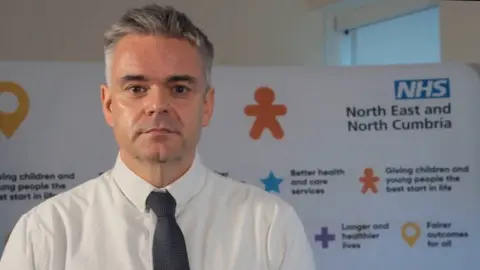
The BBC has put questions from patients in the north-east of England and north Cumbria to one of the region's NHS bosses.
Dr Neil O'Brien, chief medical officer at the Integrated Care Board covering the area, advised people to use online services to avoid the "scramble" for GP appointments and said more treatment at home could help avoid patients being on trolleys in corridors.
He also discussed the winter readiness of the service, a lower than hoped for flu vaccine uptake and preventative health measures.
Dr O'Brien said: "We've done a lot more planning this year, we feel we're in the best position we can be, but we're still expecting it to be very busy.
Questions were gathered by the BBC from local patients and put to Dr O'Brien.
A&E pressures
Tracy from North Shields asked if patients could expect to see rows of trolleys in hospital corridors.
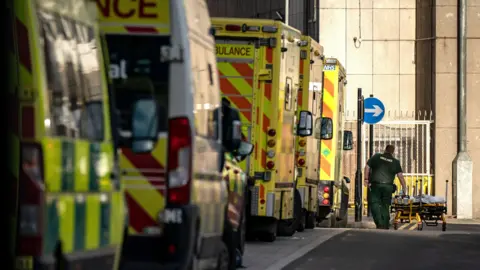
Dr O'Brien said work had been done to prevent that "corridor care that we all know is unacceptable", with measures designed to avoid the need for hospital admission.
He said more people were being looked after on "virtual wards", which allow patients to be monitored at home.
"We've opened up more access to acute respiratory illness hubs which offers more appointments out in the community for people who have chest-related problems."
On a related issue, Denise from Cumbria wanted to know why some patients were being sent to A&E for services that could be performed within GP surgeries.
Dr O'Brien said doctors tried to manage people outside of A&E unless there was a serious medical problem, however they might use same day emergency care.
He explained: "It isn't an emergency department, it's a bit like a ward environment that you can have any urgent tests done on the day.
"We're really trying to utilise that to take people out of emergency departments."
 PA Media
Wendy, in the North East, asked why A&E waiting times were so high with people waiting for three hours to be seen.
Dr O'Brien said it was important people chose the "right service for the issue they have", though he admitted waiting times were still too high.
He said the best way for people to find out where they needed to go was to phone the NHS 111 line or fill out a form on the NHS App.
"We would like the vast majority of people to be seen under four hours and we're doing reasonably well on that.
"About 70 to 75% of people will be seen in that timeframe but there's still more for us to do and the public can help us by choosing services wisely."
Susie, also from the North East, asked why people are "still having the 8am scramble for GP appointments", even for non-urgent appointments.
Dr O'Brien said a lot of work had gone into delivering more GP appointments and "improve access" with phone appointments and e-consultations.
He said he knew some people experienced problems but they were trying to "smooth that out".
"What I would say to people is if you have a routine problem, you can now email your practice via their website and they'll be able to get back to you at a more convenient time."
Flu jab plea
Phil, from Egremont in Cumbria, asked why hospital treatments were being "doubled up" and said he was concerned about "time wasting".
He went for a colonoscopy at his local hospital where medics found some polyps that needed removing.
He questioned why he was then referred to Carlisle 40 miles away instead of being treated there and then.
Dr O'Brien said: "The likelihood is that that transfer of care was for good safety reasons [but] I realise it's inconvenient for patients."
He also said the main driver of hospital admissions in winter were respiratory conditions and he urged those eligible for vaccines to take them up.
"It worries me that we can't get the number higher because the more people we get vaccinated, the less pressure that puts on the NHS.
"I think people need to remember flu can be a very serious illness."
He similarly advised those eligible for a Covid jab to take it.
