Waspi chair says pension age fight is not over

 Supplied
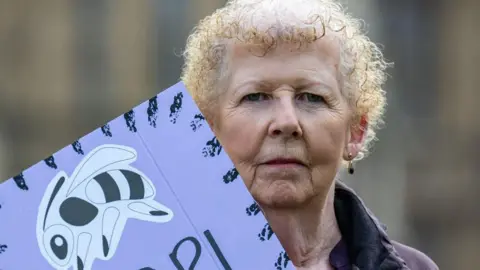
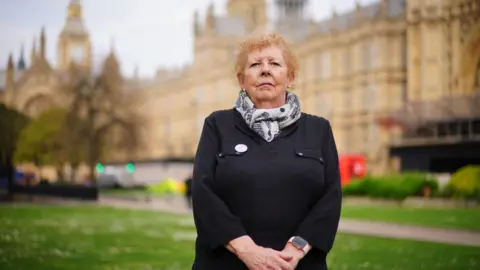
Angela Madden was a full-time carer for her mother when she received a letter from the government in March 2012.
It informed her she would not be eligible to receive a state pension for seven years, when she had expected to start receiving it in two.
She is one of an estimated 3.6 million women born in the 1950s, who campaigners say were not properly informed of the rise in state pension age to bring them in line with men.
And Angela, who has since become the national chair of the Women Against State Pension Inequality (Waspi), has said their fight is far from over, with the government still to decide whether to award the women compensation.
 Supplied
Angela stopped work at the age of 54 to look after her sick mother, but said she would have continued in employment if she had known she would not receive the state pension until the age of 65.
She added: "I couldn't get back into work then really. I could have got zero-hours contracts or cleaning jobs but I wasn't prepared to do that."
Angela's husband Joe, who worked in a bank, was able to support her financially until she turned 65.
But she said not everyone in her position was as lucky.
"Some women I know have had to move back in with husbands they chose to leave, because they couldn't afford to live on their own," she added.
"It's a whole emotional thing."
 PA Media
The change to women being paid the state pension at 65 instead of 60 was originally laid out in the 1995 Pensions Act.
It was originally due to be phased in over 10 years from 2010 for women born between 1950 and 1955.
But the 2011 Pensions Act then accelerated the process and left women like Angela waiting a further five years to receive payments.
Angela initially approached her local MP Natascha Engel, who put her in touch with other women in the same position.
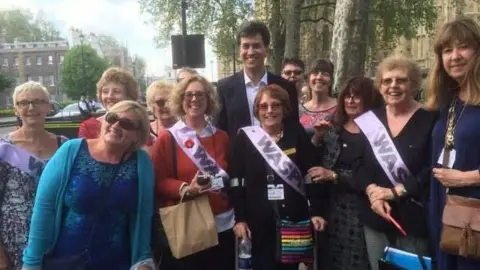
She then arranged a meeting for those affected in the Portland Hotel in Chesterfield, which became the North East Derbyshire branch of Waspi, and eventually travelled to London to lobby MPs on the issue.
Angela, who is now the national chair of Waspi, said the government of the time failed to communicate the changes laid out in the 2011 act.
"Apparently there were leaflets about it," she said. "But they were mainly in benefits offices and of course having never been unemployed, I didn't frequent benefits offices."
In addition to the leaflets, the government's website points out television adverts informing people of the changes were broadcast in 2008 and there had been a public consultation two years earlier in 2006, along with a national debate.
Compensation review
In 2024, a parliamentary ombudsman recommended compensation of between £1,000 and £2,950 for each of those affected.
But the government rejected the ombudsman's recommendation.
However, in November, the government agreed to review the decision over compensation after it said a document was not shown to Liz Kendall, who was Work and Pensions Secretary at the time. A report is due be issued in February.
A Department for Work and Pensions spokesperson said: "Last month we committed to retake the decision and as set out, we will do so within three months.
"This should not be taken as an indication that government will necessarily decide that it should award financial compensation."
Angela said the decision on compensation would come too late for an estimated 380,000 to 400,000 affected women, who had since died, including her own sister Imelda, who was also affected.
 Supplied
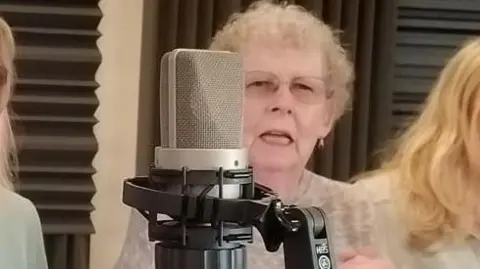
The Waspi women from North Derbyshire have dramatised their own story in a stage play, which has now been turned into a new audio play called Stung, which is available on the Dramafy platform.
Angela said: "People who have seen it or heard it think it is fantastic and when we performed it live, grown men cried.
"We still can't believe that the government who is supposed to work on our behalf neglected us so badly."
Follow BBC Derby on Facebook, on X, or on Instagram. Send your story ideas to eastmidsnews@bbc.co.uk or via WhatsApp on 0808 100 2210.
