'For 150 years my family have been dancing with swords'

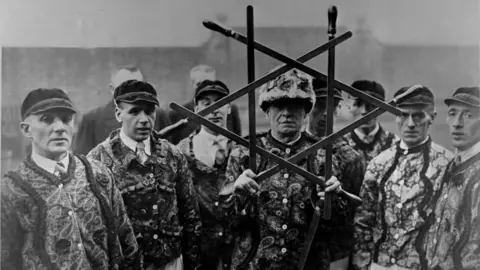 Grenoside Sword Dancers
For more than 200 years people have gathered in Grenoside, to the north of Sheffield, to witness the annual Boxing Day sword dance. And for one family their association with the event dates back almost as far.
"I've known the dance for most of my life," says 59-year-old Steve Mettam.
"My granddad was secretary of the team. He was with them for about 50 years performing, so we'd always come up to watch.
"[I later found out] that not only had my grandfather danced but my granddad couldn't court my grandmother until he had learnt the dance, and that was because her dad was in the team."
Going even further back Mr Mettam, who studied photography, said the earliest know photo of the team date back to "about 1885".
"There's two Wraggs and three Houselys [in that photo]," he said.
"My great-great-grandad was Joe Wragg, his brother was on the team, and three Houselys, my maternal grandmother's maiden name was Housely."
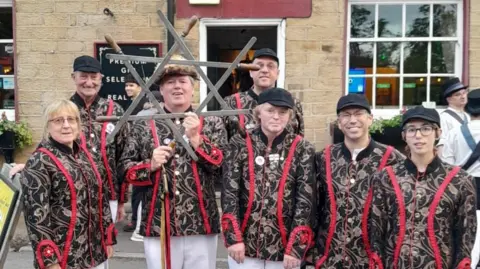 Grenoside Sword Dancers
It is not known exactly when the tradition of sword dancing began, but it is thought to date back to at least the 19th or possibly the 18th Century.
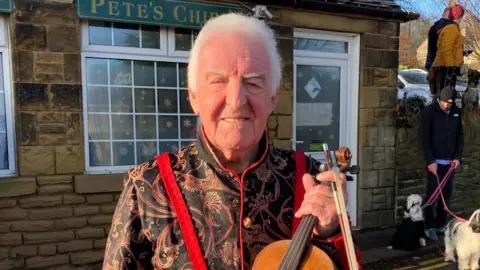
"We've been doing this in the village for 200 years or more [but] where it comes from, I've no idea," said Ray Ellison, 77, who is the current longest serving member of the team, having joined back in the 1970s.
Grenoside's team consists of six dancers, who each have a sword, a captain, who leads the dance, and a number of musicians, which usually includes a fiddler.
Members wears specialised clogs, which make a loud sound as they march into the village and then commence the dance.
Long sword dancing is similar to other forms of folk dancing, including Cotswold Morris and Rapper Sword, but uses strong, rigid swords about 3ft (1m) long which lock into each other.
"I always describe it as a long French pallete knife with a file handle on the end of it," said Mr Mettam.
The Grenoside Sword Dancers' Boxing Day performance is one of their most popular events in their calendar and even involves a mock beheading of the dance's captain.
"The agricultural year starts on the first of January and it's based all round that," said Mr Mettam.
"We cut the captain's head off and the hat falls off, it's the death of the old year, and when the music starts up and the captain gets up and puts his hat back on, it's the rebirth of the new year."
With such a proud history, the team is always keen for more people to join the group and continue the tradition.
"Sometimes I think 'is it a privilege or is it a curse?', the number of times I've been over the years, to a practice, and there's not been enough turn up to dance" says Mr Ellison.
Last year he was recognised with a special award for his service.
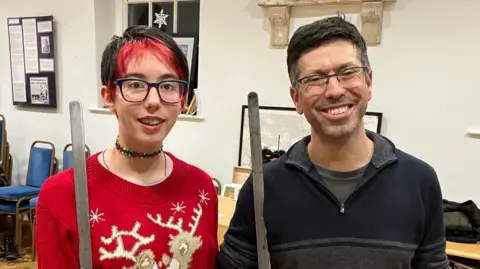
Among the newer members is 17-year-old Ambrose, who dances alongside their father, Richard.
"I'm definitely glad that I've been allowed on the team, I've grown up watching the dance so it's really nice to finally be able to be a part of it," he said.
Dad, Richard said: "I started dancing it when we moved to Sheffield 15 years back.
"To then be at a point where my child can join in with me it just makes me dead proud, it really does."
Listen to highlights from South Yorkshire on BBC Sounds, catch up with the latest episode of Look North
