Farmer's castle with mysterious origin listed

 Historic England
An "enigmatic" building with a misleading name and mysterious history has been recognised for its significance.
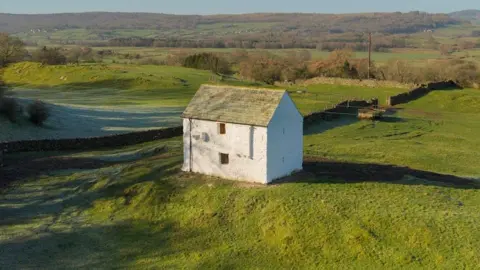
Henry's Castle at Underbarrow, near Kendal, Cumbria, has been given Grade II* listed status by the Department for Culture.
But do not let its name fool you - the small cottage-like structure does not tower over the surrounding countryside but fits in perfectly, with its moniker referring to Henry Willison, a farmer who owned at one point.
It is believed the building dates back to the 14th or 15th Century. It is not known what purpose it served, but its features indicate it was built for someone of high standing.
Historic England's listing team leader Sarah Charlesworth said the quality of its craftsmanship left "no doubt that this was a building of real significance".
"Henry's Castle is one of those rare buildings that raises more questions than it answers - and this mystery is part of what makes it so compelling," she said.
 Historic England
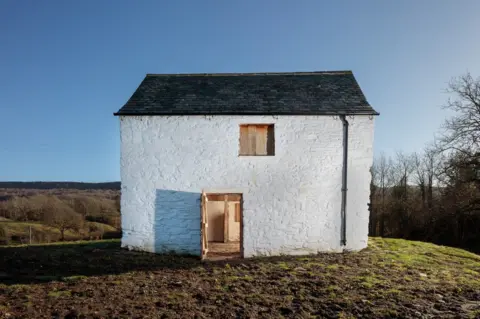
Experts said the building shared some characteristics with bastles, which were fortified farmhouses common to the Anglo-Scottish border.
While it is considered too small and too far south for it to be a bastle, it may have served as a look-out dwelling with a defensive purpose, Historic England said.
The building had a heated first floor and a garderobe latrine, a small closet built into the wall with a seat over a vertical shaft, suggesting the high status of its occupant.
Historic England said the building was later used as a home, with a fireplace added in the 16th or 17th Century.
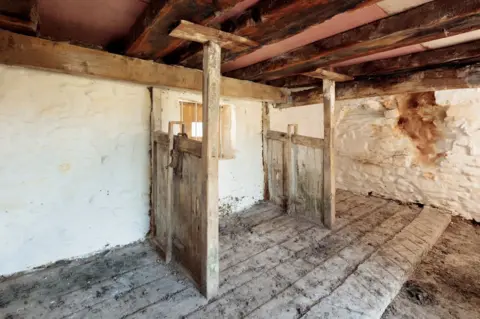
By the 19th Century it had become a field barn, with timber stalls installed on the ground floor.
 Historic England
A Corn Rent Map dating back to 1836, recorded it within "Stonehouse Field". Experts said this name was historically used in the area for a special type of stone structure, "hinting at a long-held sense that this was no ordinary building".
After falling into disrepair, it was restored in 2025 by the Lake District National Park Authority (LDNPA) using government funding.
Built environment adviser at the LDNPA Rose Lord said she was delighted to see the building's importance being recognised.
"After four years of close work with the site, this is a moment of real pride, particularly for the Lake District National Park, which has played a key role in rescuing and celebrating this special place."
Historic England is calling for people to share photos, stories and memories of Henry's Castle, as part of a project to piece together the stories of historic places.
Details on how to take part are on the organisation's website.
Charlesworth said: "Its listing at Grade II* ensures that this enigmatic structure will be protected and studied for generations to come."
