'Our church bells may fall silent after VAT change'

 BBC
BBCCampaigners in a North Yorkshire village have raised concerns that their 13th Century church bells may ring for the last time following a change in VAT rules.
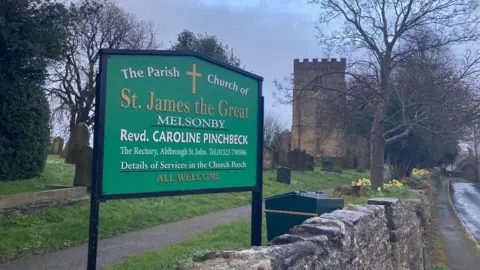
The Church of St James the Great is situated in Melsonby, close to the border of County Durham, and has been the village's main hub for more than 650 years.
Villagers had raised £170,000 to refurbish the fittings around the church's worn bells, but have to find an additional £30,000 following changes to the government's Listed Places of Worship Grant Scheme, meaning the church has to cover VAT costs.
Graham Smith of the parochial church council said: "I've got to say it was a bit of a kick, when you spend four years raising the money."
He added: "If they're not restored now then you can't imagine a team of people coming up and saying 'let's restore the bells at a cost of £200,000 as it stands now' and then learn to ring them, it's just not going to happen. It's now or never really."
As part of the grant scheme, places of worship such as churches were able to reclaim VAT on repairs but in January the government closed the scheme to new applications.
The scheme, which was originally started in 2001 by then Chancellor Gordon Brown, is going to be replaced with a new £92m Places of Worship Renewal Fund, the final details of which have not yet been revealed.
"It's not just about restoring heritage, it is that we've got a lot of people wanting to bell ring across the generations," said the Rev Caroline Pinchbeck, Rural Change Enabler for the Diocese of Leeds.
Church staff said they had a number of bell ringers who wanted to continue volunteering, but had left due to the condition of the bells.
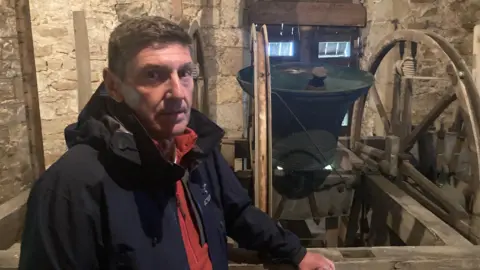
"They're on very old fittings, they're badly tuned, there's a long draft in the ringing chamber, all of which makes it very difficult to ring," said Robert Kirby, the church's tower captain.
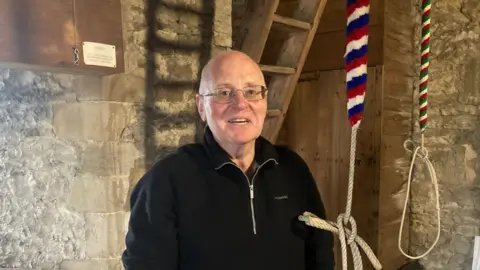
"I've trained a lot of ringers here, there are one or two who have learnt and then they've gone elsewhere because they've got bored in effect. They are limited on what they can ring."
Church staff have already signed contracts for the work on the bells and hope it will be completed in September, provided they can find the additional £30,000 to pay VAT costs.
The church is continuing to raise funds, and is also looking for individuals or businesses to sponsor the bells.
"Church repairs typically take between five and 10 years, so across the country we are now seeing a sharp uptake of churches that have suddenly been left with huge additional VAT bills," said Sir Philip Rutnam, chair of the National Churches Trust.
"These churches will now have to raise an additional 20% - just to pay tax to the government."
The Department for Culture, Media and Sport said more information on the Places of Worship Renewal Fund would be announced in due course.
Listen to highlights from North Yorkshire on BBC Sounds, catch up with the latest episode of Look North.
