'Ask us what we want' women urge city planners

 Elizabeth Baines / BBC
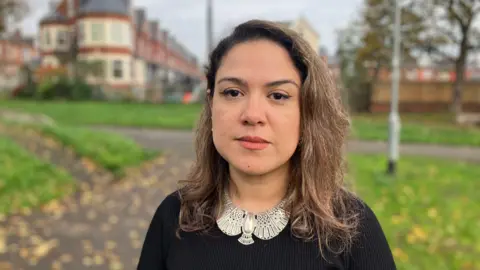
Women are being left "drained" by feeling unsafe on the streets and should be given greater consideration in the planning of public spaces, an academic has said.
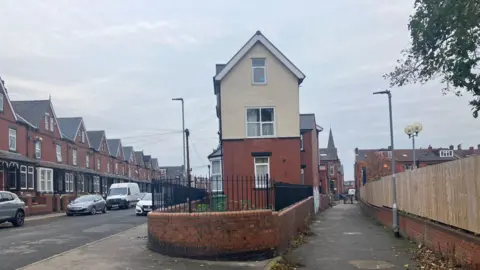
Research by Dr May Newisar, a lecturer in Architecture and Urbanism at the University of Leeds, suggests details including the number of windows on a street and the design of street furniture all contribute to women's perception of safety.
"When designing cities, it is usually men, there is the assumption that safety is similar for everyone but perception of safety is different for women," she told the BBC.
Leeds City Council said government funding was being used to "improve the physical space in parks in consultation with women and girls, to design spaces specifically for their safety and enjoyment".
According to Dr Newisar's study, women's fears in public spaces usually related to rape or harassment and increasing the input of women in city planning would help to alleviate stresses.
"Women were reflecting that they need to do a lot of safety precautions while walking in public spaces, let's say either parks or streets, it is very draining for them," she said.
"They share a location with families and hold keys as protective measures.
"If they feel a street is not safe or well lit they take longer journeys to their destination."
 University of Leeds
The areas in Leeds where women feel most unsafe have been mapped as part of the research.
It highlighted the city centre, Harehills, Beeston, Woodhouse Moor and the canalside as areas of "unsafe experience".
The BBC spoke to Dr Newisar following a series of sex assaults at Woodhouse Moor in the Hyde Park area of Leeds in October.
Following the attacks, women in the city called for more streetlights in order to improve their feelings of safety.
Shreena Gobey, Night Safe Space Coordinator for Women Friendly Leeds, said women felt less safe in the winter months.
"We have longer, darker hours in the winter, so these impact in an equitable life," she said.
 Elizabeth Baines
The Women Friendly Leeds initiative works to make the city safer for women and girls.
Collaborating with the council, it is campaigning to make Leeds the UK's first women-friendly city.
Ms Gobey said the design of buildings, roads and lights were "incredibly important" to women's perception of safety.
Women Friendly Leeds runs a night safe space bus, which is situated near the Corn Exchange close to the bars and clubs in Leeds city centre on weekend nights.
A spokesperson for Leeds City Council said tackling violence against women and girls was a "key priority."
In a statement, they said: "Walking day or night should never feel unsafe" and have launched "several initiatives to improve safety for women and girls".
Initiatives include the Walk Safe App and the Jog On campaign, which aims to address sexual harassment experienced by women exercising in public spaces.
"Working in partnership with West Yorkshire Police, the Walk and Talk initiative invited women to share their concerns regarding safety," they continued.
"We are using government funding to improve the physical space in parks in consultation with women and girls, to design spaces specifically for their safety and enjoyment.
"These campaigns take a whole system approach to improving the safety of women and girls in Leeds.
"This approach allows us to address specific concerns through increased vigilance."
 Elizabeth Baines / BBC
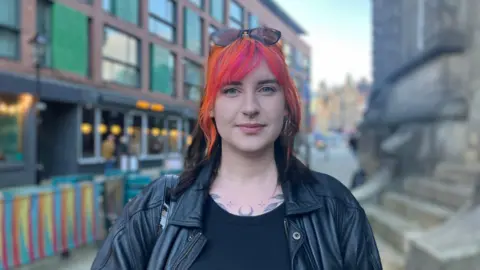
Lauren Gilbert is the founder of Women in Hospitality in Leeds which works to ensure the safety of women in the city's hospitality industry.
"Especially during the winter months, people who work within the hospitality industry live outside the city centre, so it is getting back to areas like Woodhouse, Hyde Park and Headingley in the dark," she said.
"Nine times out of 10 at four o'clock in the morning your only option is to find somewhere still open and wait for buses to restart or pay for a taxi.
"People walk because they cannot afford a taxi the equivalent of three or four hours work."
As the manager of the White Swan pub just off Briggate, Ms Gilbert agreed that city layout affected her and her members' perception of safety.
"I work down one of the alleyways but I avoid [other alleyways] like the plague if I am on my own."
 Elizabeth Baines / BBC
Dark corners, poorly lit streets and a lack of CCTV have led to a change in her behaviour to keep herself safe.
"Like many girls, I walk at night and check where cameras are," she said. "If I am waiting for a taxi, I hang out under CCTV.
She agreed that women should be considered more in the design process as cities develop.
"Ask us what we want," she said.
Dr Newisar said considering women in planning and design should be a next step alongside existing efforts to keep women and girls safe in Leeds.
"We need to make sure their voices are included and they are part of this decision-making process," she said.
"Everyone has a right to feel safe."
Listen to highlights from West Yorkshire on BBC Sounds, catch up with the latest episode of Look North.
