Streeting praises response to meningitis outbreak

 Getty Images
Health Secretary Wes Streeting has praised the "Herculean efforts" to protect people from the meningitis outbreak in Kent and care for those affected.
He gave his condolences to the families of the two students who have died in the outbreak and said his thoughts were with those in hospital "fighting this terrible disease".
"It has been an incredibly difficult week for those affected and for those working on the frontline response to this outbreak," he said.
"As we look ahead to another challenging week, I wanted to pay tribute to the Herculean efforts of everyone who has worked tirelessly to care for those affected and keep people safe."
The health secretary thanked UK Health Security Agency (UKHSA) officials and NHS teams, as well as school, college and university staff, and the "thousands of students, pupils and other members of the public who have so readily and responsibly come forward for antibiotics and vaccination".
Meanwhile, the number of confirmed and suspected cases of meningitis has changed.
Confirmed cases have dropped from 23 to 20 after further testing. Suspected cases have been reduced from 11 to nine, also after further testing.
The agency said it expected some "probable cases" to be downgraded in the coming days.
Sixteen of the 20 confirmed cases were university students and four were secondary school students, he said.
Streeting has urged the public to follow medical advice, adding: "Keep living your lives, and keep looking after one another."
Juliette Kenny, a sixth form pupil at Queen Elizabeth's Grammar School in Faversham, was one of the two young people to die from the infection last weekend. The second was an unnamed University of Kent student.
Other schools in the Canterbury area with confirmed or suspected cases are Norton Knatchbull School in Ashford, Simon Langton Grammar School for Boys in Canterbury and the Canterbury Academy.
The UKHSA has written to students at EKC Canterbury College asking them to be alert to the signs and symptoms of the disease.
Close contacts of the person affected are being offered antibiotics, it said.
The college was closed on Sunday but students "can continue to attend college as normal", the agency said in the letter, seen by the BBC.
Some businesses in the city have told the BBC they have seen a decline in footfall as students "hide in their bedrooms".
 PA Media
The UKHSA has rolled out a targeted vaccination programme against Meningitis B (MenB), which can be life-threatening, with bacteria invading the lining of the brain and poisoning the blood.
A total of 9,360 people have received jabs and 12,733 people have been given antibiotics, as of Saturday.
The MenB vaccination offers the "best longer-term protection" but "taking preventative antibiotics is the most important immediate action in response to the current outbreak", said the UKHSA.
Streeting praised the "Herculean efforts of everyone who has worked tirelessly to care for those affected and keep people safe".
He added it had been an "incredibly difficult" time for those affected and people working on the front line.
 Supplied
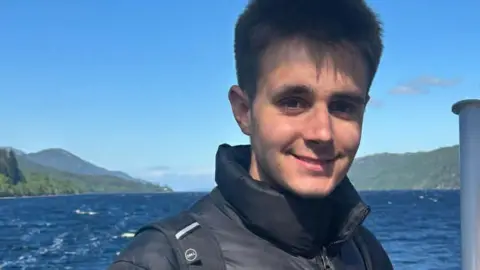
A University of Kent student, who had returned home following the outbreak, said he got up at 04:00 GMT on Friday to drive from Ipswich with his mum to get the vaccine.
It "felt like a moment in history," said James Thompson.
The 20-year-old said he had felt "complete terror and panic" when the fatal outbreak was announced on 15 March.
Prof Shamez Ladhani, from UKHSA, previously told the BBC he was confident the outbreak was being controlled.
"We're not talking about flu or Covid, where the virus designs itself to be spread through coughing and sneezing," he said.
He added there was only a "baseline risk" to the public.
Routine vaccinations against MenB only began to be rolled out in 2015, meaning the current generation of students and others in their late teens are not protected.
Streeting has said he will seek advice from the Joint Committee on Vaccination and Immunisation on whether the vaccine should be made more available.
Follow BBC Kent on Facebook, on X, and on Instagram. Send your story ideas to southeasttoday@bbc.co.uk or WhatsApp us on 08081 002250.
