'It was life or death and donors saved him'

 NHSBT
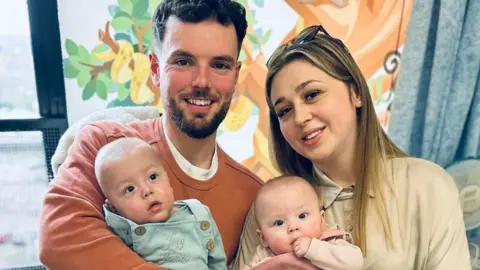
NHSBTA mum says she owes her son's life to the strangers who donated the rare type of blood he needed as a critically ill newborn.
Meghan's son, Joey, now two, received multiple transfusions after being born prematurely, and she believes he would not have survived without the supply of special blood kept for babies in intensive care.
"Every time Joey went into surgery the doctors weren't sure if he was going to make it. It was life or death, basically," she said.
As the NHS calls for more volunteers who carry this rare blood type, Meghan said she wanted donors to know the impact they have.
About 200,000 donors in England have blood suitable for newborns — labelled NEO — which is used to help critically ill babies in their first 28 days of life.
Newborns can only receive blood that is free of cytomegalovirus (CMV), a common virus that most adults are exposed to during their lives.
NHS Blood and Transplant (NHSBT) said one in four donors had blood suitable and safe to be given to babies in neonatal care needing transfusions.
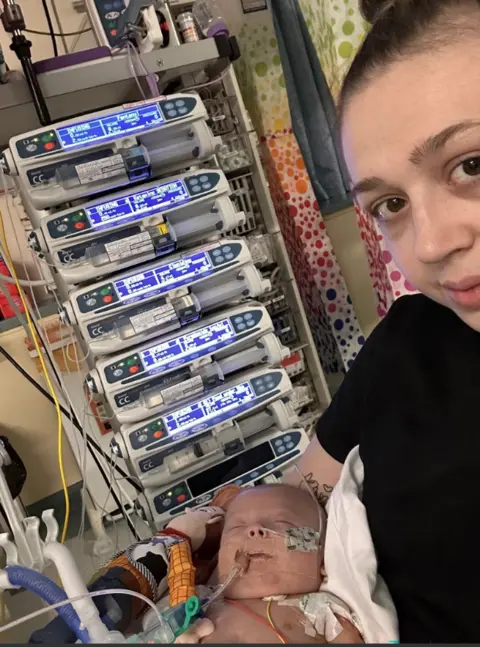
Joey and his twin sister Eva were born at 27 weeks and had to be admitted to neonatal intensive care at Nottingham's Queen's Medical Centre two days later.
His body went into septic shock and he needed an emergency transfusion to survive. He remained in the unit for eight months and had further blood transfusions.
Meghan, 26, who lives in Lincoln with her partner Cobie, said:" It wasn't just the doctors who saved his life, it was blood donors too. Joey would not be here if the hospital did not have the blood he needed in that moment."
Why do newborns need CMV-negative blood?
 NHSBT/ PA media
Part of the herpes virus family, CMV is very common and usually harmless, causing mild flu-like symptoms or none at all. But for some people it can be serious.
In babies, who have underdeveloped immune systems, it can cause seizures, sight and hearing problems as well as damage to the liver and spleen. In rare cases it can be deadly.
Why are more donors needed?
 NHSBT
NHSBTThe NHSBT said there was "a particular need" for more B negative, O negative and Ro blood, especially from Black and ethnic minority communities.
A single donation can help three adults or six babies, it said.
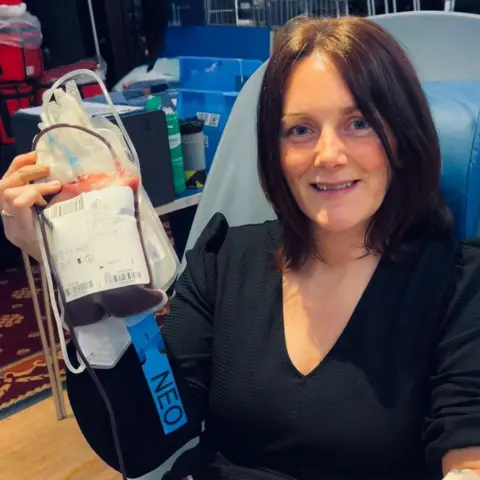
Mother-of-two Katie Parker, 43, from Birmingham, recently found out her blood donations were suitable for newborn babies.
"I had no idea I had NEO blood until the donor carer at my last donation told me my blood was suitable for babies and showed me the blue tag," she said.
"I'd tell anyone who is considering donating to give it a go."
Gerry Gogarty, director of blood supply for NHSBT, said: "Every donor can be proud that their generous act will save or improve the life of a seriously-ill child or adult."
He said the NHS needed new donors to "maintain the supply of lifesaving blood to patients of all ages".
Listen to highlights fromLincolnshire on BBC Sounds, watch thelatest episode of Look North.
Download the BBC News app from the App Storefor iPhone and iPad orGoogle Play for Android devices
