Water supply cut in Moldova after oil spill blamed on Russian strike in Ukraine

 CNMC Moldova
An oil spill which has been blamed on a Russian attack in Ukraine has polluted a major river in Moldova, prompting authorities to cut water supplies to the northern city of Balti.
Ukrainian authorities said oil began leaking after a Russian strike on the Dniester hydroelectric plant on 7 March, with the first slicks appearing three days later on the Dniester river - a vital source for most of Moldova and the Odesa region in southwestern Ukraine.
Moldova imposed a 15-day state of alert in the Dniester river basin on Monday as a precaution.
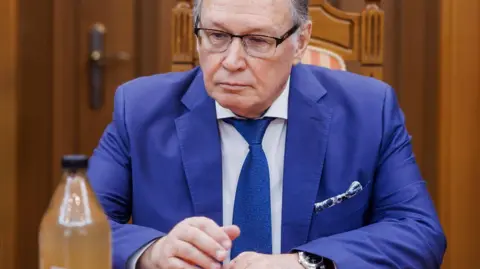
Russia's ambassador was summoned by the foreign ministry in protest and shown a bottle of cloudy water from the polluted river.
He refused to comment to reporters as he left the meeting, according to Moldovan media.
Moldovan Environment Minister Gheorghe Hajder said supplies would only be restored once oil levels had been brought down to the recommended limit of 0.1mg per litre of water.
He added that Monday night's readings were too high for northern areas including Balti, the third-largest city in Moldova, and further results on Tuesday would indicate whether or not the water could be pumped back into the pipes.
Three other northern towns have been hit by the water crisis.
The pollution has also affected water supplies in Ukraine, with contamination in the Chernivtsi, Vinnytsya and Odesa regions, according to Ukrainian Deputy Minister Iryna Ovcharenko.
 Moldovan Foreign Ministry
Hajder said earlier that Ukrainian officials had assured him the source of the oil pollution had been contained.
Schools in the Balti area have moved to online learning, while authorities focus on delivering tankers of drinkable water to the local population.
Maia Sandu, Moldova's pro-European president, has been a strong supporter of Ukraine since Russia's full-scale invasion in February 2022, praising Kyiv for protecting her own country from attack.
She has said Russia "bears full responsibility" for the oil pollution.
Russia has long accused Sandu of being "Russiaphobic". She won a second term as president of Moldova in 2024 despite what the EU called "unprecedented interference [in the election] by Russia".
Moldova has a population of 2.4 million, but Russia still has a military base in the Russian-speaking, breakaway region of Transnistria, which lies along much of Moldova's eastern border with Ukraine. Local TV reports say oil has been spotted in Transnistria although officials there do not expect to impose restrictions on drinking water.
Meanwhile, Moldovan police have said an "active" Russian drone, armed with an "explosive device", has landed 500m (1640ft) inside the Ukraine-Moldova border in the village of Tudora.
