Producer's pride at legendary debut 20 years on

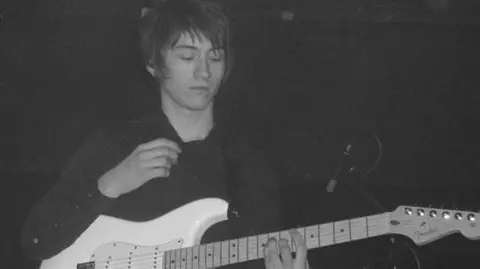 Omar Solliman
One of the producers responsible for shaping Arctic Monkeys' legendary first album has spoken of his pride at working with the Sheffield band, exactly 20 years on from its release.
Whatever People Say I Am, That's What I'm Not became the fastest selling debut album by a British band in chart history after it came out on 23 January 2006.
Packed with hits such as I Bet You Look Good on the Dancefloor and When The Sun Goes Down, it sold 360,000 copies in its first week and went on to sell 2.5 million copies worldwide.
Alan Smythe, one of the album's two producers, who also mixed the band's early demos which went on to form their debut, said: "I'm very proud of it. I knew we were working with something very impressive. The lyrics are astounding - don't forget they were 17."
"They were everything you'd expect: very excitable, really good fun to be around, very funny, witty, charming, annoying. Exactly as you'd imagine for kids at that age," he remembered.
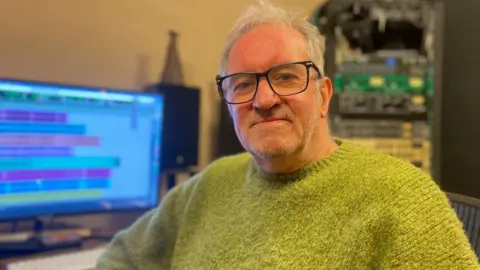 Simon Thake
The producer, who had previously worked with Pulp, another Sheffield band, had originally put together 18 tracks by Arctic Monkeys that went on to form their Beneath the Boardwalk collection of demos, which the band would give out at gigs.
Smythe said he remembered seeing the band perform at an early gig at The Boardwalk in Sheffield in 2003.
"They did about eight or nine songs, four of which were their own," he recalled.
"But it's the quality between their own songs and other people's songs. There was something immediate for me."
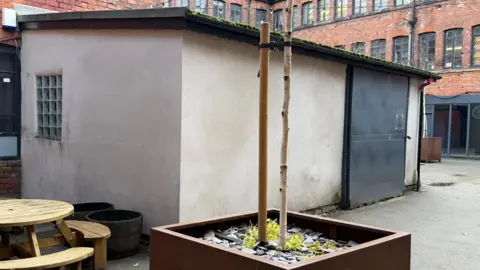
Lead singer Alex Turner had already approached Smythe about working with the band after meeting the producer at his unassuming 2Fly studio on John Street in Sheffield city centre.
Smythe recounted: "John McClure, who went on to form Reverend and the Makers, was in a band called Judan Suki, who I used to produce.
"Alex Turner and Matt Helders were in that band, too. Alex was the guitarist and Matt was doing bongos and percussion.
"During one session, Alex popped himself into the little control room that I had at that studio and said, 'Alan, we've got another band that we're in called Arctic Monkeys'."
Smythe said everything was recorded "at a pace" by Turner's new band.
"We had to work fast. You're talking about kids who had no money, so we did four songs every two days," he said.
Smythe explained that one of his tricks to ensure the band played in time and "tight" was to use a click track for the first minute of each song.
"It was a timing reference point. There's a tendency when bands are wearing headphones to not be quite as akin with everyone else in the room," he said.
"It kind of locked the song down, because they had a tendency to just start accelerating a bit."
After working with Smythe in Sheffield, the band recorded the rest of the album over a two-week period at Chapel Studios in Lincolnshire, with producer Jim Abbiss tasked with capturing their raw energy in late 2005.
According to Smythe, replicating the band's live sound was always the biggest challenge.
"Jim kept on coming back to 2Fly and he kept saying, 'how did you do this? How did you make it sound so alive?'," he said.
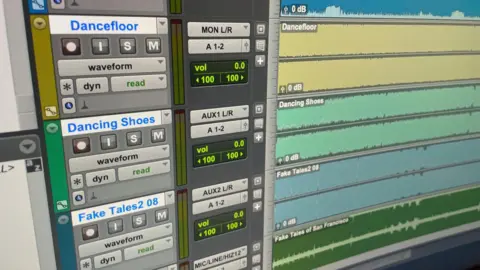 Simon Thake
On the Sunday night before the album launch, a "not so secret" unofficial album launch took place at the Leadmill in Sheffield.
Arctic Monkeys were supported by other local acts Milburn, Harrisons and Reverend and the Makers.
The gig was "rammed all night from seven all the way until midnight", according to Omar Solliman, a student at the time who is now writing a book about the band.
"It was so full on, you couldn't move. It felt like such a celebration for the Sheffield scene," he said.
The HMV store on Fargate in Sheffield then opened at midnight to give the band's keenest fans an early opportunity to get their hands on the album.
 supplied
Arctic Monkeys later headlined Glastonbury for the first time in 2007 and went on to play the Pyramid Stage at the festival twice more, in 2013 and 2023.
The band has so far released seven further albums, selling over eight million albums in total worldwide.
Back in their home city, Smythe's 2 Fly studio has since moved from John Street to a new setup on Bailey Road, near the University of Sheffield.
Smythe said he still worked with young local bands, but he continued to enjoy listening to the early Arctic Monkeys recordings.
"The songwriting is great and you can't really go wrong with good songs," he said.
"The way Alex sings over the top and plays his guitar at the same time, I don't know how he does that.
"I'm a guitarist and I play, but I can't do what he does on that album."
Listen to highlights from South Yorkshire on BBC Sounds, catch up with the latest episode of Look North
