Risk of dying from cancer in Scotland at lowest rate on record

 Getty Images
The risk of dying from cancer in Scotland is at its lowest rate on record, new figures from Public Health Scotland (PHS) show.
Cancer mortality rates fell by almost a quarter (23.8%) between 2000 and 2024, dropping from 379.3 per 100,000 people to 288.9 in 2024, while the past decade saw rates fall by 12.1%.
PHS said cancer remains the most common cause of death in Scotland and encouraged anyone invited to a screening or for a vaccine to take up the offer.
The Scottish government said the figures reflect earlier detection, more effective treatments and investment in cancer services.
Despite the reduction in mortality rates, there has been a small increase (2.1%) in total cancer deaths over the past decade, rising from 16,011 in 2015 to 16,352 in 2024.
PHS said cancer is more common in older people and that the figures reflect the country's ageing population.
In 2024, almost three quarters (70%) of all cancer deaths occurred in people aged 70 and over, an increase from 66% in 2015.
The average age at death increased for both men and women between 2000 and 2024, rising from 70.9 to 74.4 years for men, and from 72.4 to 74.2 for women.
PHS said the increase in average age at death reflected the changes towards types of cancers that are diagnosed at older ages, as well as better survival rates as a result of earlier cancer detection, more effective treatment and improvements in overall life expectancy.
Cancer screenings and vaccines
Prof David Morrison, consultant in public health at PHS, said: "Cancer remains the most common cause of death in Scotland, but the risk has been falling over time.
"Deaths from lung cancer have fallen by a quarter over the past 10 years, and oesophageal and bladder cancer deaths have also gone down.
"We can see the huge benefits of fewer people smoking and more successful treatment of cancer in these latest figures.
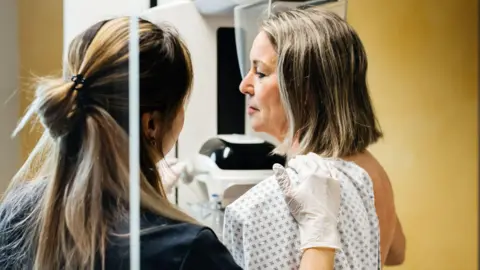
"Among women, the chances of dying from breast cancer have fallen by 11% over the last decade. Breast screening picks up cancers at an earlier, more treatable stage and new treatment options have become available.
"I would encourage anyone invited for cancer screening or offered HPV vaccination to take up the offers."
 Getty Images
Sorcha Hume, Cancer Research UK's public affairs manager in Scotland, said: "The elections are approaching and we're asking the next Scottish government to reduce cancer death rates by 15% by 2040 by fully funding and delivering Scotland's 10-year cancer strategy, tackling unacceptable waiting times, and strengthening NHS workforce capacity.
"We also need to see bold action on cancer prevention, earlier diagnosis and cancer research, as well as tackling deep rooted inequalities, so that everyone in Scotland can live longer, better lives free from the fear of cancer."
The figures also show the most common types of cancer in Scotland, with lung, colorectal (bowel), prostate and breast cancers together accounting for 46% of all cancer deaths in Scotland.
Lung cancer remains the most common cause of cancer death, accounting for a fifth of all cancer deaths. PHS said most of these deaths could be avoided by eliminating smoking.
A Scottish government spokesperson added: "The risk of dying from cancer in Scotland is now at the lowest rate on record for both men and women, falling by 12.1% over the past decade.
"This encouraging trend reflects earlier detection, more effective treatments and our continued investment in cancer services.
"While more people are being diagnosed with cancer due to our ageing population, survival outcomes are improving, with the average age at death from cancer rising steadily since 2000.
"We have invested £14.24m to address cancer waiting times and updated our referral guidelines to support earlier detection."
Scottish Labour health spokesperson, Jackie Baillie, added: "The risk of dying from cancer in Scotland may have decreased but, with the overall number of deaths rising, SNP ministers must wake up to the harrowing inequalities in cancer care and broken treatment targets across Scotland."
