How a Tuscan vision saved a mining town from 'the brink of disaster'

 BBC
BBCMore than 30 years ago Barnsley was a borough on the brink of collapse. Like many other communities built on mining, it was left reeling when the industry that sustained it vanished.
Yet this year, with more than nine million visitors to date, the South Yorkshire town is expected to rival York for footfall. While high streets across the country are fighting for survival, how has Barnsley become one of the most surprising success stories?
To understand Barnsley's revival, one must first turn to the past.
Recorded in the Domesday Book of 1086, Barnsley has a long tradition of glass-making, dating back to the 17th Century. But ask most people what the town is famous for and there's only one answer - coal.
Mining did not just provide employment, but houses, recreation, social care, education, sports facilities and a culture of solidarity and resilience that would endure long after the pits closed.
When the industry collapsed more than 20,000 mining jobs and a further 20,000 ancillary jobs were lost in Barnsley, leaving behind soaring unemployment, a frail economy and a borough in decline.
The council knew it had to act. Barnsley was transitioning but, according to council leader Sir Steve Houghton, not in the right direction.
The legend of the Tuscan hill town
Pens at the ready, plans were sketched to regenerate Barnsley and turn it into "the UK's leading market town".
The ideas were bold, but the purse strings were tight, recalled Sir Steve, who was first elected to the council in 1988.
Help eventually came from the European Union and the then-Labour government.
But before any construction started, the council needed to persuade the people.
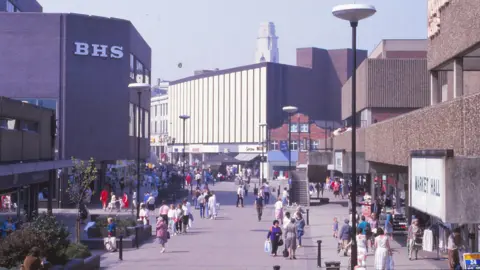
On one weekend in March 2002, well over 3,000 residents, young and old, and from every corner of the borough, came to a public consultation.
"We had to convince them that Barnsley had to change," said Sir Steve.
"We had to convince people that coal wasn't coming back, that it wasn't some blip on the landscape and suddenly it would all return.
"It's interesting, I never meet anyone who doesn't want things to get better [but]you don't meet many people who want things to change."
While some residents were sceptical of the council's ambitious plans, they were clear about what they wanted in a new town centre: a thriving market, activities for young people, a multiplex cinema, a library, and a better mix of shops and nightlife.
By far the most popular request was a water feature, Sir Steve said, with some suggesting a river running through the town centre, though "that proved a bit too much for us in the end" he laughed.
 Barnsley Archives
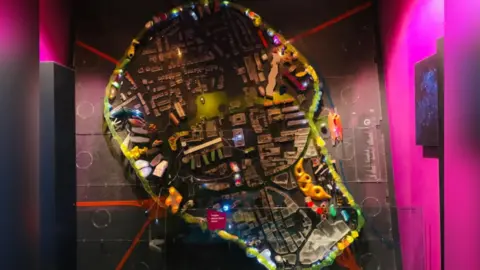
During this very meeting, maverick architect Will Alsop, who had designed the masterplan for Barnsley, explained his vision for the town and, unwittingly, created a local legend.
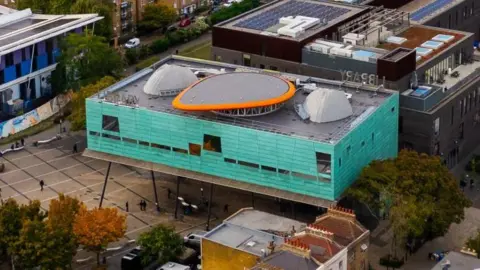
Alsop, who had already designed the award-winning Peckham Library and North Greenwich tube station in London, highlighted the importance of defining a town centre by creating what he called a "living wall".
When one resident asked him to explain, Alsop offered a comparison: "Well, have you ever been to Tuscany in Italy?"
He drew parallels with the region's hill towns, where he said walls create a clear sense of arrival and departure, though he was careful to stress Barnsley would not suddenly become an Italian idyll.
However, a few days later, on 1 April, a Guardian article titled "Mamma mia, whatever's happening to Barnsley?" appeared, proclaiming it would be just that.
 Getty Images
Given the unfortunate timing, many thought it was an April fools joke and councillors in Barnsley were left scratching their heads, unsure of how to respond.
"There were TV crews from all over the world coming to Barnsley to see this Tuscan hill town that we were going to build," Sir Steve said.
Embracing the free publicity, the council decided to lean into it and pledged it would build "our version" of a slice of Italy.
 Will Alsop
Regeneration in Barnsley went far beyond shops and a new public square, with the council taking on infrastructure, education and health head-on.
A new road connected hard-to-reach communities, while a £150m investment saw every secondary school rebuilt, GCSE results boosted, and youth centres such as "I Know I Can" introduced to foster ambition.
"We used to have a saying 'the very least we can do for our kids is give them the means to get out'," said Sir Steve.
"[And] 'the very most we can do is give them a reason to stay'."
Retail was next.
Instead of trying to compete with places like the nearby Meadowhall shopping centre or Leeds and Sheffield, the council decided to offer something different, an experience that people could not get elsewhere.
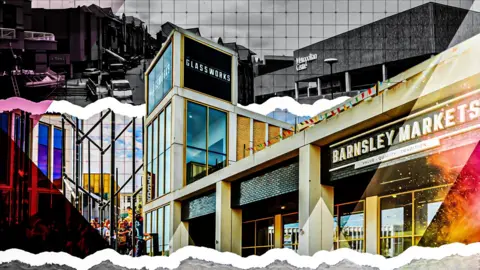
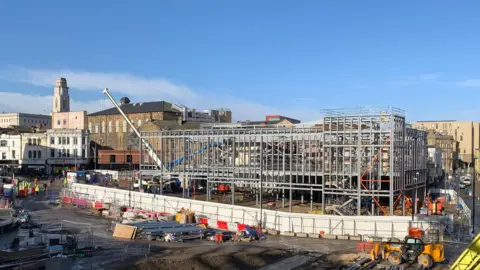
And so the idea for the £220m Glass Works project was born, uniting a cinema, bowling alley, independent traders, and high street brands, with a bustling market at its heart.
Yet even on the day ground was broken, Sir Steve recalled one sceptical resident turning to him and saying: "It'll never happen."
 Barnsley Council
Maria Cotton arrived at Barnsley Council in 2016, and quickly learned Barnsley's heart was not shiny new retail but market trading, a tradition that had been alive in the town since 1249.
"People in Barnsley had this unwavering commitment to shopping at the market," said Mrs Cotton, the council's former business development manager.
"I once compared Barnsley Market to the old Nokia phones because they're indestructible."
As part of a redesign, all the market's scattered sites were brought together and rebuilt where the old market had always been, with the council determined to create a space tailored to residents rather than "simply lift a London market and drop it into the middle of Barnsley".
 Barnsley Archives
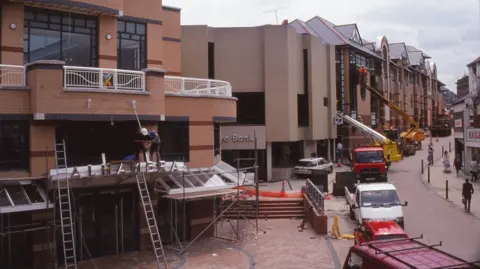
Barnsley Market, which opened in 2018, was the easy part, Mrs Cotton said, the real challenge was creating a new food court.
Many doubted that people would ever come to Barnsley Market for a night out.
"It seemed the most outlandish thing possible to suggest drinking in a market," she said.
To prove them wrong, the council researched what local people wanted, shared evidence of spending power and reduced the risk for stallholders by offering turnover-based rents and covering some of the operating costs.
When Market Kitchen opened in 2019 the reaction stunned even the optimists.
A hall that served breakfasts to the sound of market chatter suddenly rolled seamlessly into late-night bar service. Originally planned to shut at 8pm it pushed that back to 11pm within a week.
"It was an absolute runaway success," said Mrs Cotton.
 Barnsley Archives
However, she said the regeneration was not just about buildings. The council also worked on safety, transport, lighting and taxi ranks.
Equally, Barnsley's night-time economy was reinvented, guided from the start by the council's aim to achieve Purple Flag status, the gold standard for a safe and welcoming evening economy.
This included having neighbourhood policing teams and council wardens to tackle low-level crime.
The visionary
While Alsop, who died in 2018, never truly set out to design a Tuscan hill town, some of his other ideas for Barnsley were met with equal disbelief.
A light show to project a halo into the sky? A hospital right in the heart of the town centre?
"Everybody went, 'oh no, you're never going to do that, never'," said Sir Steve.
Yet what once seemed audacious and improbable gradually became reality.
In April 2022 a Community Diagnostic Centre opened in the Glass Works, and earlier this year, outpatient appointments were moved into the Alhambra shopping centre.
Elsewhere, three Yorkshire Rose sculptures are being constructed at the Seam Digital Campus. They will provide hourly light shows and music - another nod to Alsop's imaginative vision.
 Barnsley Council
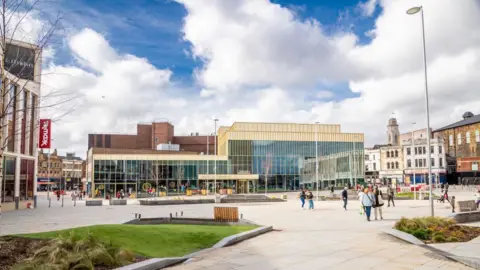
Footfall in Barnsley has soared and is expected to rival York, thanks to the town's retail offer, activities and events such as the Christmas market and food festival.
Latest figures show vacancy rates are down to 10.2%, while independents now make up 61% of town centre businesses.
By no means, Sir Steve said, was Barnsley an overnight sensation, nor its successful regeneration down to luck but rather the result of years of hard work, collaboration, and dedication from local politicians, council officers, and community partners.
Matthew Stephens, the former president of the Barnsley & Rotherham Chamber of Commerce, said the success stemmed from strong, consistent leadership and a genuine willingness by the council to listen to businesses.
"I go to other towns and authorities and say, 'you need to look at Barnsley'," he said.
"I think what what you have in Barnsley now is a really good grounding to take things forward."
 Barnsley Council
Looking ahead, he said the next phase should focus on making the town centre a place to live, not just visit, with more high-quality housing, hotels, and repurposing large vacant buildings such as the former M&S store.
"I think it's such an important thing to have a diverse economy," Mr Stephens, who helped deliver the Barnsley Gateway Plaza project, said.
"It's no good having a town centre that's busy in the day and dead at night."
Equally, he said the chamber had warned the council that regeneration should extend beyond the centre, with initiatives now reaching outlying areas through shopfront improvements, grants, and support schemes.
The future
Barnsley's success, compared to neighbouring Rotherham and Doncaster, came down to forward-thinking planning, said Sir Steve.
"We stole a march on them both," he said.
"We're now seeing Rotherham and Doncaster doing similar things for their residents, which is great."
But there is no room for complacency. City status? "Who knows," he said, but progress must continue.
Plans are already under way to revamp the Alhambra shopping centre, expand university and cultural facilities, and turn Barnsley into a high-tech hub.
"We're proud of the town centre and all we've done," he said.
"We took a borough from the brink of disaster and gave it a future."
Listen to highlights from South Yorkshire on BBC Sounds, catch up with the latest episode of Look North
