At least 30 deaths in small boat crossing avoidable, inquiry finds

 BBC
BBCThe deaths of at least 30 people who drowned while attempting to cross the English Channel in 2021 could have been avoided, an inquiry has found.
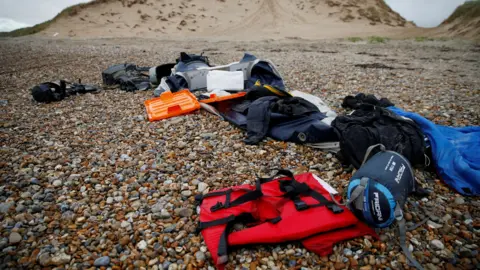
The dinghy they were travelling on became swamped and capsized in the early hours of 24 November 2021, in what became the deadliest Channel small-boat incident on record.
Only two people survived, and were found almost 12 hours after they called for help.
The inquiry chair Sir Ross Cranston pointed to a "significant, systemic failure on the part of government", and said that several of the casualties were preventable.
Twenty-seven bodies were found after the boat sank, and another four were confirmed missing.
The victims set off from a beach near Dunkirk in France and came from a number of countries, including Iraq, Somalia, Ethiopia, Egypt and Afghanistan.
Sir Ross's report said HM Coastguard in Dover was placed in an "intolerable position", with chronic staff shortages and limited capacity leaving them unable to rescue victims.
A surveillance aircraft that should have provided critical intelligence on the number of crossings never launched due to poor weather conditions - and there was no contingency plan, the inquiry found.
It was also found that calls and messages from the vessel were missed or not followed up, and search assets were not briefed on the possibility that a dinghy was sinking or that there were people in the water.
There was also a widely held belief that migrants calling from small boats exaggerated the distress, meaning the Coastguard underestimated the emergency.
The inquiry said that the deaths could have been prevented, and pointed to three fatal errors: people smugglers overloading the boats, the slow response of French Naval vessel, Flamant, and flaws in the Coastguard's search and rescue operations.
Survivors, and the victims' families gave testimonies in the inquiry having waited more than two years for the proceedings to start in March 2024.
'The human cost behind the statistics'
 Reuters
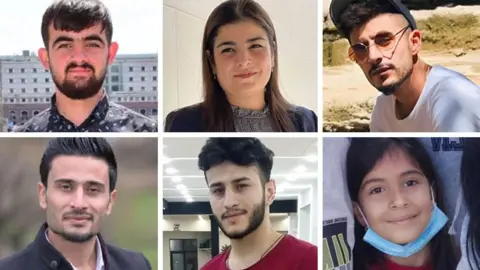
The 454-page report identifies the 27 men, women, and children who died, describing them as "a stark reminder of the human cost behind the statistics".
Sixteen of the named victims were born in Iraq. Others were from Ethiopia, Iran, Somalia, Afghanistan, and Egypt.
The youngest, Hasti Rizghar Hussein, was seven years old.
Many victims survived for several hours in the water, with experts suggesting that more people could have been rescued if operations had continued through to the morning.
Speaking at the start of the inquiry in March 2024, Issa Mohamad Omar, who survived the crossing, recalled how he hung on to the remains of the boat for hours until he had been rescued.
If emergency services had responded more quickly, he said that he believed that "half of those people would be alive today."
Omar said he felt that they were "treated like animals" because they were refugees, and described the "tremendous impact" the incident had on his physical and mental health.
Families of the dead and missing paid tribute to their loved ones throughout the proceedings.
Rasul Farkha Hussein said he hoped his missing son, Pshtiwan Rasul Farkha Hussein, could still be found and that he is certain he is alive somewhere.
"If someone finds him and he contacts us, our lives would be saved and filled with joy," he said.
Witnesses also said that during one call at around 01:30, a 16-year-old Iraqi Kurdish boy told the coastguard that everyone was in the water. He was told by the coastguard that help was coming, and to stop calling.
By 07:00 on the morning of 24 November, the incident had been marked as resolved.
"The practice of small-boat crossings must end. Apart from other reasons, it is imperative to prevent further loss of life," Sir Ross said.
"Travelling on board a small, unseaworthy, and overcrowded boat, and crossing one of the busiest shipping lanes in the world, is an inherently dangerous activity.'
Solicitor Maria Thomas, from law firm Duncan Lewis, who represented families at the inquiry, said the findings that more lives could have been saved was "consistent with the beliefs of the families and survivors".
The report recognises the dedication of the Coastguard, Border Force and Royal National Lifeboat Institute.
The inquiry accepted that while the Coastguard now has more resources to draw on, "systemic change is needed to support and strengthen their efforts".
The report recommended the Coastguard gives specific training to its staff about how to deal with small boats, as well as investing in new technology.
A Maritime and Coastguard Agency spokesperson said: "Our thoughts remain with the family and friends of those who died and the survivors of this tragic incident. We will now carefully consider the findings and recommendations of the report. HM Coastguard remains focused on our vital role in safeguarding life at sea."
A government spokesperson said the capsizing was "a tragic incident" and "sympathies remain with the survivors and the loved ones of those who lost their lives."
They said while "crucial improvements" had been made to Channel responses, "the business model which sees criminal gangs send people out to sea to risk their lives in unsafe boats without safety equipment must be ended".
The government said it would provide a full response to the inquiry's 18 recommendations, including oversight and resources of the Maritime and Coastguard Agency, in due course.
Transport Secretary Heidi Alexander said the government would also carefully consider the report.
Steve Smith from the Care4Calais aid charity said that "consecutive governments have dehumanised refugees" for too long.
He added: "If the government heeds the findings of Cranston, they will create safe routes for refugees to claim asylum in the UK. Overnight, it will put an end to deaths in the Channel, and save lives."
"That's the justice that those who lost their lives, and their families, deserve."
The French coastguard said it won't comment on the report as a judicial investigation is still ongoing.
Additional reporting by Alex Forster and Lebo Diseko
