Parties pledge to get tough on HMOs before election

 BBC
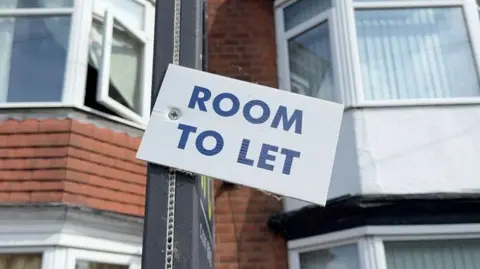
BBCBolton has witnessed a sharp rise in the number of Houses of Multiple Occupancy (HMOs) in recent years.
Concentrated in the town centre, as well as in Farnworth and Horwich, as of a year ago (for which the most up-to-date figures are available) there were 720 HMOs in the borough.
This has prompted significant concerns and pledges from local politicians to restrict any further growth.
A renewed clampdown is promised by Labour in the Greater Manchester borough if it continues to lead the council after the local elections on 7 May.
Labour, which introduced more stringent vetting for new HMOs last year, plans to bring in retrosprective registration fees and rules on minimum standards for existing properties.
Hyper-local parties in communities particularly affected by HMOs say the council could have already taken such action, not least because tighter regulation has been in place in areas with large student populations - such as Manchester and Salford - for some time.
Hyper-local parties have exerted pressure on the local authority by bringing forward motions at council meetings.
Farnworth and Kearsley First Councillor Paul Sanders said: "The huge increase in HMOs across the borough in recent years has caused growing concern and anger.
"Whilst some HMOs provide an option within the housing market for residents, the loss of family homes to HMOs - that we are seeing more of in places like Farnworth and Kearsley - is having a huge impact on residential streets and neighbourhoods."
'Planning process'
Data from local authorities shows the number of HMOs in the Bolton area has increased from 170 to 720 in recent years.
However the true number is unknown because until June 2025 there was no obligation to apply for planning permission for a property with a maximum of six tenants.
Nearly a year ago, Bolton Council enacted a rule called a Article 4 Direction which means all HMOs must now go through the planning process.
Labour councillor Sean Fielding, who is responsible for housing, said: "HMOs are part of the overall housing mix and they provide a place for students and people living away from home to work to live.
"But we do think that in some places there is just too high a concentration and unfortunately we do have some landlords that don't take care of them and don't have consideration for the neighbours on the streets where these HMOs exist.
"So the action that we've taken is to require all HMOs to seek planning permission, which wasn't previously the case, and also require all HMOs - including those that already exist - to apply for a licence.
"In order to get that licence, they'll have to meet a set of standards, and where they don't, we will shut them down."
In Horwich, residents set up a campaign group called Say No to HMOs after family homes were converted into dwellings subsequently used to house asylum seekers.
A spokesperson for the group said: "Article 4 is an important development because it does put the brakes on unscrupulous people buying up properties to house people into these HMOs.
"Since it's been implemented in our area in Horwich every HMO that's been put forward has been refused, basically because now people have the ability to object."
The leader of the Horwich and Blackrod First Independent party, Councillor David Grant, said HMOs were "part of the housing mix but it shouldn't be to the detriment of the overall requirements of a community".
He added: "It shouldn't be artificially inflated by organisations coming in, buying up all these properties to just convert them into HMOs and excluding families."
'Detrimental impact'
Since the Article 4 Direction was implemented there has been a reduction in new HMOs being granted planning permission.
An increased awareness from concerned residents has meant applications often face strong local opposition.
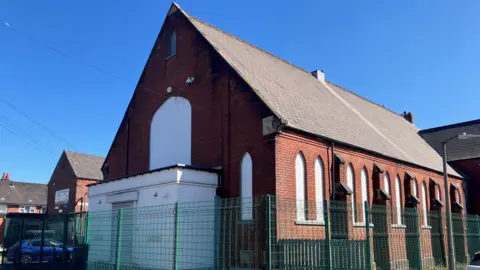
Notably, plans to create a 24-bedroom shared house within a former church were rejected in November 2025.
Council planners said the proposal for the Victorian Wesley Mission building on Hardman Street near the centre of Farnworth would have "a detrimental impact on the character and appearance of the existing building and surrounding area".
BBC Radio Manchester has been to Farnworth town centre to hear people's views.
"If it's three bedroom house, it's three bedrooms, not eight bedrooms," said one local man.
Another resident said: "I think we've quite sufficent [numbers of HMOs] around Farnworth - they do need to tighten it."
And a second woman added: "People need somewhere to live and we've got a problem with homelessness but really they should have thought about the infrastruture more before they allowed it. It definitely needs controlling."
'Rigorous licensing'
The BBC has asked the other political parties standing candidates across Bolton for their policies on HMOs.
Conservative group leader in Bolton, Councillor Nadim Muslim, said: "Bolton Conservatives were instrumental in securing an Article 4 direction to limit the number of HMOs in Bolton.
"Working with other opposition parties has ensured this would be implemented immediately, rather than delaying for a year. Too many HMOs are not suitable and often used to house people from outside the Bolton area, not providing the homes we actually need."
Meanwhile, a Reform UK spokesman said: "It is unacceptable that HMOs are being used to place unvetted illegal migrants into local communities without proper checks or local consent.
"Reform will crack down on migrant HMOs and in councils where we have housing powers we will enforce rigorous licensing, use Article 4 directions to stop further conversions, and ensure the rules are properly applied."
'Empower councils'
The Liberal Democrats said: "Liberal Democrats have already successfully campaigned for an end to no-fault evictions, a register of landlords and a Decent Homes Standard to apply to all private rented housing. We now want to see [the level of] private rent increases capped and tougher HMO inspections.
"We also want to see proper planning oversight on HMOs - so that communities aren't hollowed out by over-development - and ensuring councils have the tools to manage HMO density in their neighbourhoods."
A spokesperson for the Green Party said: "Communities are being hollowed out by the unchecked spread of HMOs and we believes this is the result of a broken, extractive private rental system.
"We would empower councils to take back control - limiting HMO over-concentration, enforcing rent controls, and investing at scale in genuinely affordable council housing - so that homes are places to live, not assets to exploit."
A government spokesperson said it was "taking decisive action to ensure rental properties, including HMOs, are safe, well-maintained, and properly managed.
"Local authorities already have planning powers to limit the increase of HMOs within their area, and our landmark Renters' Rights Act is going further to drive up stronger enforcement powers for councils."
Listen to the best of BBC Radio Manchester on Sounds and follow BBC Manchester on Facebook, X, and Instagram. You can also send story ideas via Whatsapp to 0808 100 2230.
