MSPs reject protected status plea for wild goats

 Getty Images
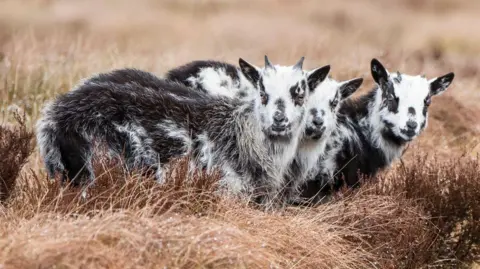
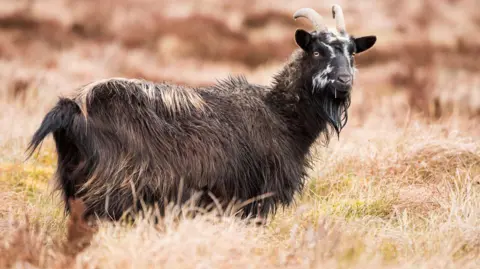
A bid to secure protected status for an ancient herd of wild goats has been rejected by MSPs.
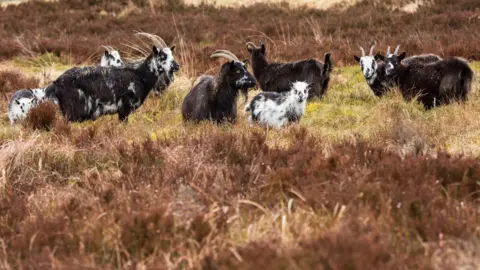
Nearly 22,000 people signed a petition calling for protection for the wild goats that roam moors between Langholm and Newcastleton.
Landowners have argued that that there are too many goats and culling the herd will reduce their environmental impact.
MSPs on the petitions committee said they had "no choice" but to reject the protection plea after the government agency NatureScot said the goats were not eligible because they were a non-native species.
The committee expressed frustration that urban gulls were protected while the "cute goats" which roam the moors were not.
Convener Jackson Carlaw compared NatureScot to a "dead sheep with its legs in the air" and said he wished it was more proactive.
He said the committee was well aware of the "strength of feeling" in the Langholm area.
However, he added that the guidance was that because the goats were considered non-native they were not eligible for protected status.
"I do find it utterly bizarre that we are protecting seagulls who attack humans and we are not protecting these lovely, cute goats," said MSP Maurice Golden.
"Unfortunately I believe the committee has no choice but to close the petition."
He said that was because the proposals had already been debated and refused by another committee.
"I just wish that NatureScot would become a more proactive organisation and not just resemble a dead sheep with its legs up in the air," said Carlaw.
"This won't satisfy anybody locally, I don't feel.
"What seemed like a widely-supported view from people who represent the community locally has been set aside in favour of - I don't know - a rule book."
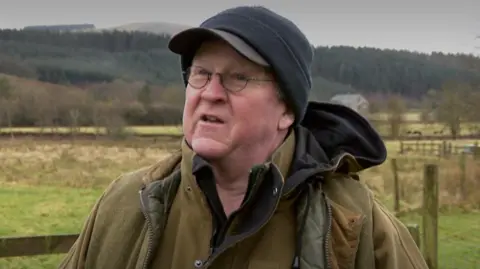
The committee was considering a petition - signed by nearly 22,000 people - calling for protection of the goats.
Landowners have argued that that there are too many goats and culling the herd will reduce their environmental impact.
The Wild Goat Conservation Trust (WGCT) said that the goats meant a lot to people living in the area and deserved protection.
Nicola Hood - who has lived in the area for nearly seven years - said she had a "close bond" with them.
"They are very special to me, they just make it home really," she said.
"They are the heart of this place - there is not anything else like them."
She said she feared they could become extinct if the culling continued.
 Getty Images
David Braithwaite, chairman of the WGCT, said he was "bitterly disappointed" by the decision.
"Today, 21,790 people who have signed the petition calling for change and a fair deal for the wild goats have been let down by Scotland," he said.
"There is little point in asking people to participate in Scottish politics in this way and then simply dismiss their concerns with a flippant throwaway comment.
"We were left astonished by the lightweight nature of Jackson Carlaw's committee.
"We are now setting our plans out to curb the culling of our much revered and beloved wild goats."
 Getty Images
Rewilding company Oxygen Conservation - which bought a slice of the moor in 2023 - said it was not seeking to eradicate the goats.
It said that goat numbers were significantly higher than historic levels and there was a need to manage the whole landscape.
In a written submission on the petition, NatureScot said it recognised the "strength of feeling" that existed about the subject.
However, it said feral goats were an invasive non-native species that could cause "serious damage to the natural environment".
It also noted that their populations had the potential to increase in size rapidly if they were not "properly managed" and recommended "collaborative engagement" between landowners on a sustainable goat management plan.
It is not illegal to cull goats in Scotland as long as animal welfare standards are followed, as they are not a protected species.
Campaigners had hoped to persuade Scottish government ministers to grant the animals that protection.
However, the committee closed their petition saying that it had no other option.
