South West Water admits drinking water offence

 Ben Birchall/PA Wire
South West Water (SWW) has pleaded guilty to supplying water unfit for human consumption after a parasitic outbreak in Devon.
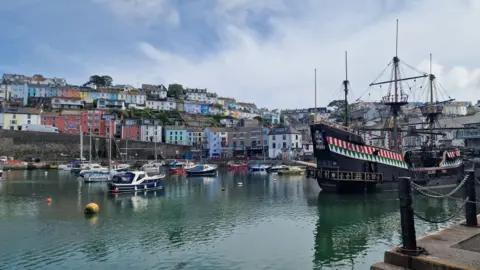
The prosecution was brought by the Drinking Water Inspectorate (DWI) after the incident left four people hospitalised and more than 140 confirmed cases of cryptosporidium in and around Brixham, Devon, in May 2024.
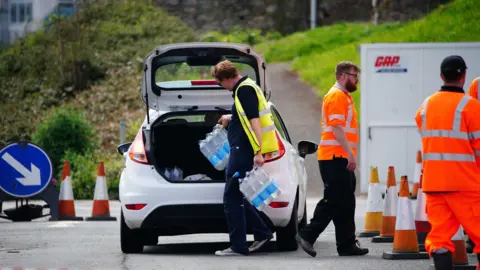
About 16,000 households were initially advised not to drink tap water without boiling it first.
SWW, which admitted the offence, contrary to the Water Industry Act 1991, at Exeter Magistrates' Court, said it offered a "full and unreserved apology for the impact of the incident". It will be sentenced at a later hearing.
The outbreak occurred in the run-up to the May Bank Holiday and led to a significant impact on the local tourism economy.
The first confirmed cases of people affected by the water parasite outbreak were confirmed by the UK Health Security Agency (UKHSA) on 14 May 2024.
The firm told customers the water was safe to drink at that time.
On 15 May 2024, the company confirmed that traces of cryptosporidium had been found in the supply network and issued a boil water notice to about 16,000 homes and businesses in and around Brixham.
The outbreak led to more than 140 confirmed cases of the diarrhoea-type illness, with four hospitalisations.
Advice not to drink tap water without boiling it first remained in place for 54 days for some properties, before it was finally lifted on 8 July.
Previously, SWW said it believed a damaged air valve on private land was the cause for the outbreak.
The Pennon Group, which owns the utility, said the parasite outbreak contributed to a nearly £40m bill for the company.
Customers who were affected by the boil water notice, and those who were unwell, were offered compensation by SWW.
The DWI asked for the case to be sent to Crown court for sentencing as it was "high-profile or exceptionally sensitive", and a Crown court could hand down stiffer penalties.
Lawyers for SWW said the utility pleaded guilty at the first instance and it was not a complex case that the magistrates' court could not deal with.
The firm now faces being fined when sentenced at the magistrates' court on 2 June.
Reacting to SWW's admission, South Devon MP Caroline Voaden said the utility claimed last year that "customers were among the company's top priorities".
She said: "This admission of guilt has been a long time coming. I am glad that SWW have owned up to their serious failures. This awful event should never have happened.
"But the mismatch between rhetoric and action plagues our broken water industry. Whether it is protecting customers or the environment, too many water firms say one thing then do another.
"Last summer, the government finally started to overhaul our water industry by promising to abolish Ofwat, but progress has been glacially slow.
"They must go much further and faster - this industry must be properly regulated and held to account."
'Abhorrent incident'
Water Minister Emma Hardy said: "Contamination of drinking water is rare - but it is utterly unacceptable.
"The communities affected by this abhorrent incident in Brixham deserve answers, and today's guilty plea is a crucial step toward accountability.
"I thank the DWI for their thorough investigation and for their ongoing work to protect public health and ensure that our drinking water is safe."
Marcus Rink, chief inspector of the DWI, said: "The company's decision to plead guilty to the offences relating to the Brixham incident reflects the seriousness of the failings identified during our investigation.
"As sentencing is a matter for the court, it would not be appropriate to comment further on the specific circumstances of the case at this stage.
"While such incidents are very rare, this incident had a significant impact on the public and the wider community.
"The court will now decide what the outcome of the failing should be."
SWW said after the hearing: "We want to reiterate our full and unreserved apology for the impact of the incident in the Brixham area in 2024.
"We have co-operated fully with the Drinking Water Inspectorate throughout its investigations.
"Today is another stage of this legal process which we will continue to support."
Follow BBC Devon on X, Facebook and Instagram. Send your story ideas to spotlight@bbc.co.uk.
