'Hitman confessed to me about unsolved murder'

 Daily Mirror/Mirrorpix/Getty Images
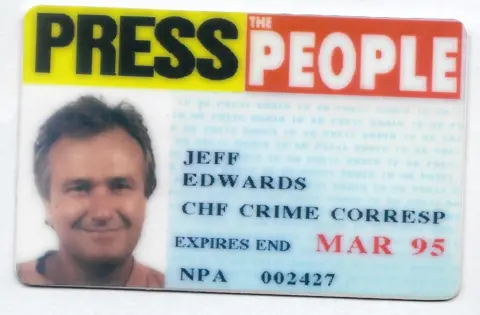
Crime correspondent Jeff Edwards spent a lot of time interviewing notorious prisoners such as East End gangster Reggie Kray and serial killer Dennis Nilsen before concluding "99% of them are pathological liars."
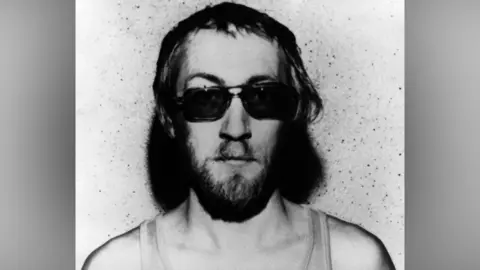
So when he met "Britain's most prolific hitman" John 'Bruce' Childs, Edwards said Childs confessed a series of additional murders to him, which he mostly dismissed as fantasy.
But one stood out.
"There was one murder which he confessed to which I strongly believe he really did commit," the former Daily Mirror journalist from Hertfordshire, told the BBC.
Childs was jailed for life in 1980 after confessing to the murders of six people, including the 10-year-old son of one of his victims.
 Jeff Edwards
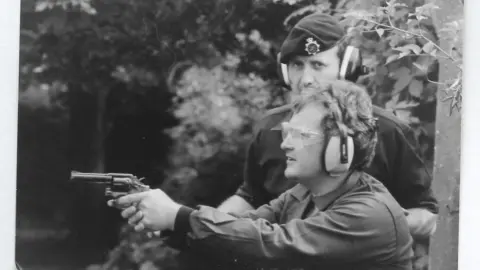
"He was arrested in 1978 for a big armed robbery in Hertfordshire, about £550,000," said Edwards, 77, who knew police officials involved in the case.
"They hijacked the security truck and tied up the crew, put on their uniforms and went to the bank pretending to be the crew".
He said the organised police department, known then as the Flying Squad, offered Childs a more lenient sentence under the "supergrass system", if he named other criminals.
"They thought he was going to put his hands up to a load more armed robberies but instead he said, 'Well I've been involved in a series of murders and I can tell you everything'," Edwards recalled.
Childs is serving a whole life tariff, meaning he will never be released.
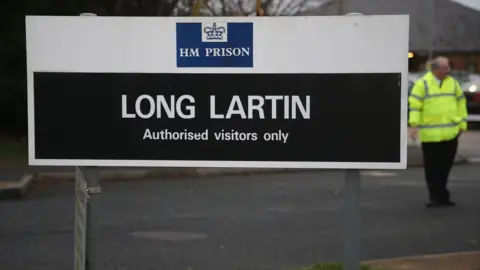
In 1998 and 1999, Edwards - who also worked for The People newspaper - visited Childs at HMP Long Lartin in Worcestershire and HMP Frankland in Durham.
"Childs told me he had committed several more murders which he hadn't before admitted.
"But as he couldn't give me dates, names, or exact places for most of these incidents, I formed the view it was all lies."
That is, except for a crime that was the only unsolved murder in Lincolnshire at the time – of 60-year-old petrol station attendant Gordon Snowden.
 Getty Images
"Childs had gone with another man to dispose of a body - his fifth murder victim. They wanted to sink his car into the River Nene and brought a Vauxhall car to come back in."
Edwards said Childs told him he had stopped to get petrol late at night when he decided to "rob the till".
"The cashier, Snowden, became so nervous he could not remember how to open the machine, which was a new electronic version.
"Childs, in his own description, said he lost his rag and hit him on the head with an iron bar.
"Snowden was felled and unconscious, so Childs grabbed the till, put it in the back of the Vauxhall and they left."
"He told me he never intended to kill Snowden, who was a grandfather in his 60s, and did not know he had caused a fatal injury until he read about it in the papers a couple of days later."
'Penchant for violence'
Snowden's murder took place in Sutton Bridge in April 1979.
Edwards said: "It is an established fact that Childs had accompanied his co-conspirator Henry McKenney to this location in April 1979, so they could sink a Chevrolet car which belonged to their fifth victim, Ronald Andrews."
He was persuaded this account was true.
"Childs had an extraordinary penchant for violence and also had 'form' for armed robbery.
"Lincolnshire Police withheld details of the cash register at the time, yet Childs' description of it tallied perfectly. It was an unusual model for the time," he added.
After his exclusive story was published, Edwards said Lincolnshire Police contacted him.
"After long and friendly conversations with detectives from their major crime branch, we all concluded Childs was very likely telling the truth."
He said although papers were sent to the Crime Prosecution Service (CPS), no prosecution followed.
"This was probably because in the the absence of any supporting evidence, either witness or forensic, a prosecution might be problematic - and Childs might change his mind at court and say he had made it all up for attention.
"He was in jail for the rest of his life anyway."
The CPS said its retention policy meant it only kept records of cases and decisions for a set amount of time, and it did not have an existing record of this case
It added that Childs was described as a "pathological liar" by former Chief Justice Lord Woolf at the Court of Appeal in 2003.
 Jeff Edwards
Edwards' new book The Murder Guy also explores his coverage of serial killers and unsolved crimes such as the Jill Dando shooting and Suzy Lamplugh disappearance.
As well as responding to breaking news, Edwards built up relationships with people on both sides of the law to gain exclusive stories.
"I spent a lot of time in Northern Ireland and developed contacts in all sorts of interesting places including prohibited groups like the Provisional IRA or the Ulster freedom fighters," he recalled.
He said he often went undercover with police and reported on their sting operations.
"I was present with the Flying Squad in 2004 when they ambushed a gang at a warehouse in Heathrow airport.
"Had the robbery been successful, they would have got away with about fifty million in gold bullion and another 50 million in mixed currencies."
He said: "During that period, I never told my bosses what I was doing. They gave me a huge amount of autonomy.
"I had a natural appreciation from very early on that it was necessary to play ball with people. Scotland Yard alone had 30,000 employees.
"It takes years to build a good reputation but it takes five minutes to this to destroy that," he said.
Do you have a story suggestion for Beds, Herts or Bucks? Contact us below.
Follow Beds, Herts and Bucks news on BBC Sounds, Facebook, Instagram and X.
