Multi-million pound mansion gets swimming pool go ahead despite planning row

 monmouthshire council
Plans for a home gym and swimming pool at an historic manor visited by royalty have been approved – despite the owner refusing to tear down a greenhouse which planners called "objectionable" for being too "domestic".
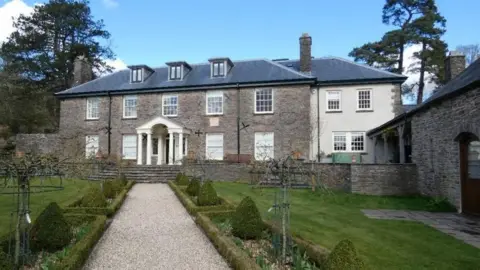
Andrew Blowers owns Grade II-listed Great Campston Manor in Grosmont, near Abergavenny, Monmouthshire, a 200-acre estate that went on the market in 2018 for £4.5m.
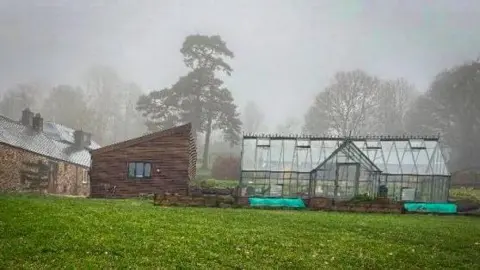
He built a "modern and highly reflective" greenhouse without planning permission on the site, which has connections to King Charles I.
Planners said they failed in a "lengthy negotiation for its removal", but gave permission to build the gym and pool, as well as listed building consent.
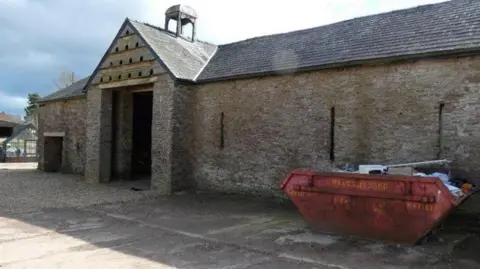
The 11-bedroom house, which dates back to the 17th Century, was listed in 1952 with a notable enlargement in 2002, while a barn in the grounds was Grade II listed in 2002. There is still a working farm on site.
Monmouthshire council's planning department considered rejecting the application, submitted in April last year, over the greenhouse.
 Monmouthshire council
In a report, planning officer Kate Bingham described the greenhouse as "domestic, modern and highly reflective" and as such said it was "particularly detrimental in the setting of the listed buildings".
The report stated though the greenhouse will remain in place it will not be covered, or approved, by the application.
"It has been considered objectionable and although lengthy negotiation for its removal on plan and in physical form has failed to reach agreement, it will be conditioned that notwithstanding the application, 'a greenhouse is not consented as part of this consent'," it said.
 Monmouthshire council
The council said refusal of the entire application, which includes the change of use of 226 sq metre (2432 sq ft) of the existing farmyard to residential curtilage to make space for the swimming pool and a new four-bay car port, would be "considered disproportional".
During the application the plans were revised and the design for the building "significantly improved" so that it was considered acceptable in "scale, form and design".
According to the plans, evergreen planting south of the greenhouse would also "break up" views, along with improvements made to the site's biodiversity.
Great Campston Manor history
A public footpath running along the driveway south of the site was one of 17 monastic granges belonging to the Cistercian Abbey of Abbey Dore, which was established in 1147 and colonised by monks from the Champagne region of north-east France.
The last Welsh-born prince Owain Glydwr suffered a heavy defeat to the English in the Battle of Campston Hill at Grosmont in 1404.
Following the dissolution of the monasteries in 1536, Great Campston was granted to John Cokke of London before being acquired in 1600 by John Pritchard, a notable figure in the history of the village.
King Charles I visited the house in 1645 on his way to Raglan after the Battle of Naseby.
