How a chocolate bar wrapper solved an archaeological mystery

 BBC
BBCWhen archaeologists began work on the site of Scotland's first skatepark last August, there was one prominent question being asked - when had the ground actually been filled in?
It was a mystery solved through research, hard work - and a chocolate wrapper more than 40 years old.
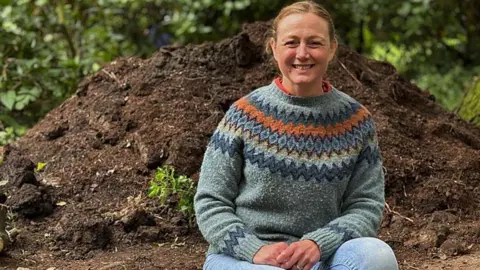
A team from the University of Glasgow team worked with volunteers and students to excavate the former Kelvin Wheelies park in Kelvingrove Park.
Now the work on the skatepark will feature in an episode of the BBC's Digging For Britain programme, due to air 7 January.
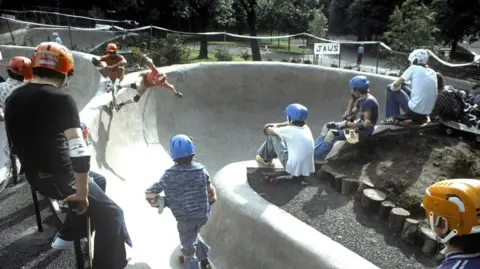
The skatepark opened in May 1978 and featured bowls, a slalom run and a half-pipe, all with names like Jaws, Torpedo and Bazooka.
At the time it was considered state of the art and hosted events like the Scottish Skateboarding Championship, but several years later the site was out of commission, after a decline in popularity, concern about maintenance costs and safety risks.
Exactly when it closed was a matter of debate, though.
Speaking to Digging For Britain host Dr Tori Herridge, Dr Kenny Brophy of the university of Glasgow explained that while it was known that the skatepark was out of use by the early 1980s, an exact date had not been confirmed.
He said: "Even the smallest bit of evidence could help us say when this was backfilled, because there is actually no record of when this happened. Everyone is saying was it 1982 or 1983 or 1984, but no-one remembers exactly when.
"It's amazing how quickly people forget - archaeology can bring those memories back."
 Iain Urquhart
The team, which included a number of modern skaters who use the current park at Kelvingrove - yards away from the original site - then got to work, using the same techniques that would be used on sites hundreds or thousands of years old.
They analysed soil and rubble within the original slalom they discovered, while on another section members of the team discovered two white lines - which they eventually guessed was a way of telling skaters where to aim for when performing a trick.
Skaters young and old gathered to appreciate the discovery - one younger skater said hearing about the old park was like "hearing fairytales" and like nothing she had ever skated on before.
Another called the find interesting because skateboarding has changed so much, meaning parks like the 1970s one no longer exist.
For Jamie Blair, who owns Glasgow skateboarding shop Clan Skates, the excavation brought back many memories.
He was a member of the Kelvingrove skateboard team, and as a teenager would perform tricks and flips on a regular basis at the Kelvin Wheelies.
"It was a great shame that this park got filled in, it broke a lot of skateboarders' hearts," he told Dr Herridge.
"It was good to roll back, and see it, and it was fun trying to find things you remembered from the past – 'oh, this is where that was…'
"My other reaction was 'jeez, am I that old?' - I was literally digging up the bones of my childhood! But skateboarding is alive and well, so it's all good."
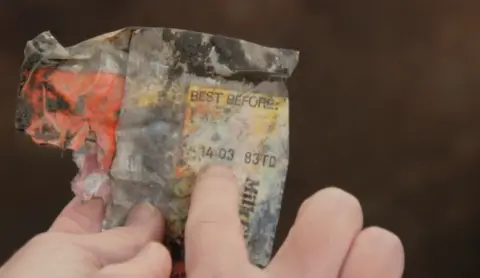
However, it was later in the dig that the team were finally able to establish a more definitive date for when exactly the skatepark had closed.
The solution involved Scottish football great Denis Law, and a couple of popular chocolate brands.
"In terms of dating some of the material, we have been quite lucky," says Kieran Manchip, a project officer with Archaeology Scotland.
"We were able to find sweetie wrappers that had best before dates on them. So we have a six pack of Penguin biscuits and on the rear side it says 14 March 1983, and we found a lovely Twix wrapper at the bottom of the rubble.
"It says 21 May 1983, so we know the site was backfilled by May 1983.
"We found a hologram sticker or poster of Denis Law wearing a Man Utd shirt, which can be dated to the early 70s (Law left Manchester United in 1973).
"The processes are the same with archaeology – you can apply them to any time in the human past."
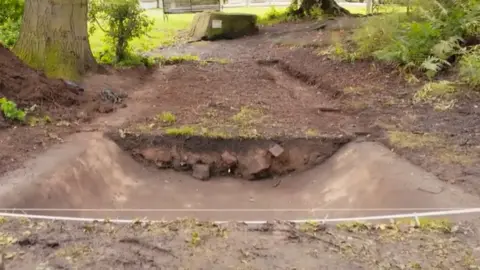
Dr Brophy hopes the work on the skatepark site will help ensure it is remembered by future generations.
In Jamie Blair's case, the excavation brought the past flooding back.
"I remember the laughs you had, your friends, your teammates. We were just crazy for skateboarding."
