Fuel supply 'flowing normally' - but why are some pumps closed?

 BBC
BBCEvery motorist will have noticed one of the major economic consequences of the conflict in the Middle East – rapid price rises for both petrol and diesel.
Some 20% of the world's oil trade, the raw ingredient for producing both petrol and diesel, has been halted by the closure of the Strait of Hormuz.
But closures closer to home have caught motorists' attention.
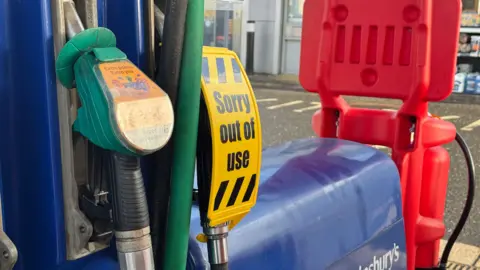
Over the weekend, sporadic reports of closed pumps at some petrol station forecourts in Northern Ireland sparked fears of fuel shortages.
But trade bodies, the RAC and the government are adamant that supply remains healthy in spite of the conflict and that panic buying isn't necessary.
In a joint statement, Fuels Industry UK and the Petrol Retailers Association said: "We're aware of reports circulating about fuel availability at a small number of forecourts in Northern Ireland.
"Supply is flowing normally and there is no need for any change in usual buying habits in Northern Ireland."
Why were some petrol pumps closed?
Pumps running dry, especially in rural locations, is something that happens occasionally, even without pressure on global oil prices, but there is no doubt the war is impacting the fuel market.
While there isn't any nationwide shortage of petrol or diesel, there are localised challenges with some retailers struggling to get deliveries.
Some local shortages are also due to consumer demand.
As prices continue to rise, motorists are quick to take advantage of any retailer offering a lower price for fuel.
Petrol stations selling fuel for cheaper than average could see a boom in trade – effectively drinking those pumps dry until their next delivery.
Anecdotal reports that some petrol stations linked to supermarkets had been slower to raise fuel prices, may explain why forecourts at Sainsbury's and Tesco temporarily closed some pumps over the weekend.
A source with knowledge of the UK wholesale fuel market told BBC News NI that there was still sufficient supply available for retailers to purchase, but added that it was a question for supermarkets as to why they haven't done so.
A spokesperson for Sainsbury's, who still have several pumps closed at locations across Northern Ireland, has rejected any suggestion that the retailer wasn't trying to buy all available supply.
The company said it expects its forecourts to be fully restocked later this week.
One Tesco forecourt in Belfast, which had struggled with supply over the weekend, has reopened this morning. A spokesperson said the company still had good availability of all fuel grades, with regular deliveries to all fuel stations.
How much is petrol and diesel?
According to the Consumer Council for Northern Ireland's weekly fuel price checker, the average price for one litre of petrol was 144.6p last week - a rise of 19.8p since 26 February.
The same amount of diesel has an average cost of 169.7p - a rise of 37.1p since the conflict began.
 PA Media
Industry warnings
Asda executive chairman Allan Leighton acknowledged that his company had experienced similar issues with closed pumps at forecourts, but expected them to be resolved by the company's next delivery.
"Our fuel volumes are up quite significantly and clearly demand has been outstripping supply," he said.
"Supply is tight and we are all trying hard on that."
Shell Chief Executive, Wael Sawan, had warned that fuel shortages could occur as early as next month should disruption to fossil fuel supplies continue.
 Getty Images
The International Energy Agency, of which the UK is a member, has published guidelines encouraging a global reduction in energy use – from fewer car trips to reduced use of electricity in homes and offices.
Some countries have already begun to ration their supplies.
Where does the UK get its oil?
The UK is heavily reliant on oil and gas imports, with the lion's share of those imports coming from the US and Norway.
The price of oil on the global market determines how much the UK pays for it.
Though the UK does get oil from the North Sea, most of that is exported for refining elsewhere.
