Developer urged to sell protected ancient woodland

 BBC
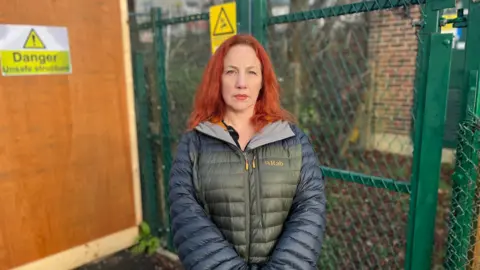
BBCA landowner is being urged to sell an ancient woodland in Lewisham at "fair market value" by Lewisham Council amid claims from residents it has been left to deteriorate for decades.
Gorne Wood is listed as one of 50 London green spaces under threat from developers in a new CPRE London report, despite being designated as protected Metropolitan Open Land containing 500-year-old trees and endangered species.
Campaigner Anna Maria Cahalane said the site has been "shut off to the local community for about 25 years" and criticised its £3m sale price, saying it was "valued at £60,000".
AA Homes, which owns Gorne Wood has not responded to requests for comment. Lewisham Council has not specified who the land should be sold to, only that the developer should find a way forward, given that the land is protected.
Tawny owls
Cahalane, added: "There are about four local schools all within a 10‑minute walk of this space who want to use this space, including one school, Turnham School, where most of the children don't even have access to a garden."
The former scout hut on the neglected site is close to collapsing, with rubbish including old sofas and chairs is blighting "what could be a beautiful woodland with sweet chestnut trees", according to Cahalane.
The Fourth Reserve campaign group has raised £130,000 to try to save the land, which they claim is only worth about £60,000.
Cahalane said the group was not sure why the land had a £3m price tag, but added that "if they have planning permission to build 28 houses" it would be "worth that figure".
She said the land does not have planning permission, and that one application had previously been rejected.
Councillor James‑J Walsh, Lewisham Council's cabinet member for Inclusive Regeneration and Planning, said: "We secured its designation as Metropolitan Open Land in our adopted Local Plan, recognising its biodiversity value and providing significant long‑term protection from development.
He said this means "there is very little scope for development at Gorne Wood".
"We would urge the landowner to engage constructively with the campaign and agree a way forward, including the sale of the site at a fair market value that properly reflects those protections."
Cahalane described what she loves about this piece of land.
"In the spring and summer you've got so many birds. You've got great spotted woodpeckers, you've got tawny owls.
"It's just an amazing space and it's very different to a public park or a leisure space because you're actually among the trees," she said.
Gorne Wood is one of many examples of land at risk, with CPRE London finding that the worst affected boroughs include Bromley, Greenwich and Havering, each with four or more sites under threat.
The report said at least nine parks, eight playing fields and eight nature reserves are currently at risk from further development, including Whitewebbs Park, Wimbledon Park and Greendale Park.
The most immediate threat CPRE London identifies is the government's grey belt policy, which aims to release lower‑quality sections of the green belt for housebuilding.
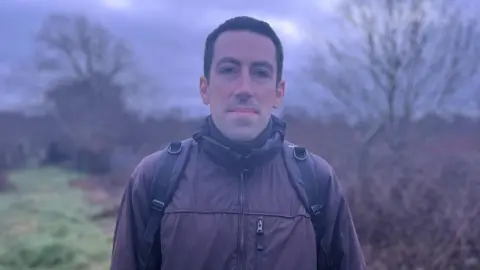
John Sadler, operations director for CPRE London, said: "They have said that grey belt land could be used for development and that has created uncertainty.
"There shouldn't be uncertainty because green belt land is highly protected land, it shouldn't be considered for development, and that has opened the door to developers to use the sites they own to try and make a profit and to sell off those sites for development."
A Ministry of Housing, Communities & Local Government spokesperson rejected these claims and said: "Our planning policy offers clear protection from development on important green spaces."
The ministry said it would build the 1.5 million homes the country needs to restore the dream of homeownership in London and across the country, and that this would not come at the expense of the environment or green spaces.
However, Cahalane made her message clear: "We need people in power, public bodies, to recognise the value of green space and to actually acquire these spaces for the community and for the public to love and enjoy.
"Developers can't hold on to spaces for decades and destroy them."
Listen to the best of BBC Radio London on Sounds and follow BBC London on Facebook, X and Instagram. Send your story ideas to hello.bbclondon@bbc.co.uk
