Disease may wipe seals from coastline, says charity

 Shaun Whitmore/BBC
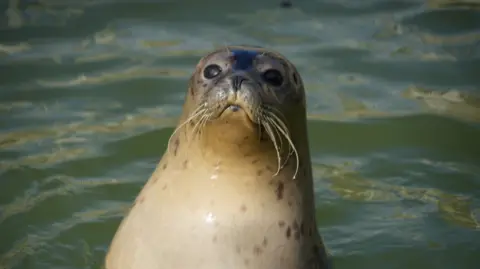
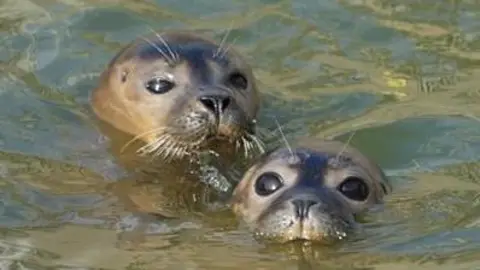
There is a "distinct possibility" harbour seals could be wiped from the Norfolk coast due to a disease, an animal charity said.
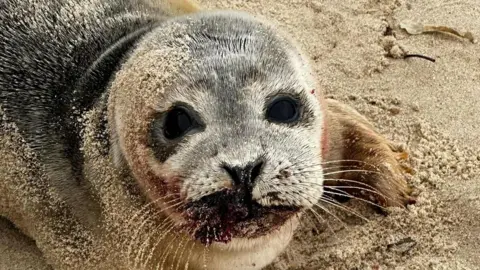
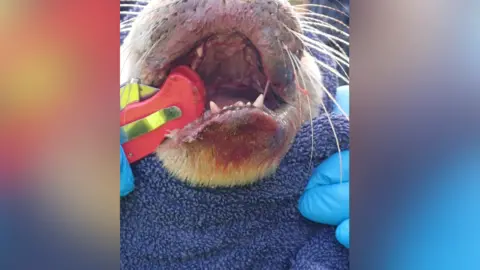
The seals, also known as common seals, were suffering from mouth rot, which caused mouth lesions and ulcers in newly weaned pups.
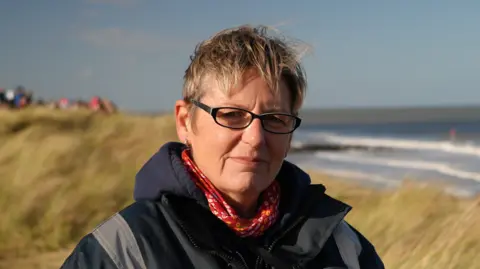
Sally Butler, chairperson of Friends of Horsey Seals, said the group had euthanised 25 pups this year due to the condition, which had been "totally heartbreaking". Some cases had also been reported in Suffolk.
Dr Jamie Bojko at the National Horizons Centre, Teesside University, Durham, was investigating the cause of the disease along with the Department for Environment, Food and Rural Affairs (Defra).
 Sally Butler
Cases of the disease have been rising over the past few years, with Norfolk having some of the highest numbers, according to the British Divers Marine Life Rescue (BDMLR) charity.
Some cases have also been reported in Suffolk, with more reports elsewhere across the UK.
 Shaun Whitmore/BBC
"It's awful... these common seal pups are in so much pain and it's just the best way to euthanise them and put them out of their misery," Ms Butler said.
"Often it's gone through to the bone or gone through to the tongue so that the pup often can't eat, and it's just suffering.
"The best thing to do is euthanise it, but it has been a really difficult time for the rescue team."
She added: "Harbour seals are already in decline, especially in this area, so not many common seal pups have survived this year.
"There will be a few, but not many."
 Shaun Whitmore/BBC
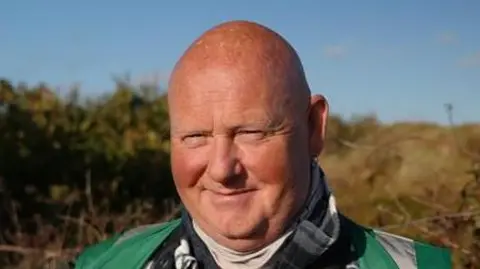
Mick Davis, a seal warden at Friends of Horsey Seals, had noticed a decline in the seals in the area over the years, which he believed was due to the disease.
"I used to be here 10 years ago, and I'd be counting six, seven, eight harbour seals, and now we're lucky with one or two," he said.
"So the numbers are dwindling now."
 Sally Butler
Dr Bojko is working with the BDMLR on a five-year investigation into the cause of the disease, which he believes was due to one of two viruses.
"We aim eventually to produce a diagnostic that we can then use to help determine whether a seal has these agents when they come into either a veterinary care system or into the rehabilitation system," he said.
He added that while stopping the cause of the disease would be "extremely difficult", veterinary and rehabilitation care systems should work to stop infected seals interacting with those that had been cared for and were due to be released back into the wild.
 Shaun Whitmore/BBC
Evangelos Achilleos, manager at RSPCA East Winch near King's Lynn, said the teams had seen the disease for "a few decades".
"It can be very bad and they can have massive ulcers in the palate," he said.
"It can eventually lead to lesions, it can lead to holes in their palate as well, so it can be sore and painful.
"We always do try to treat it, and thankfully, we are able to release some of the seals that have had ulcers in their mouth successfully."
Teams use antibiotics and mouthwash on the seals to treat the disease, but Mr Achilleos said success varied on a case-by-case basis.
 Shaun Whitmore/BBC
Defra said it recognised mouth rot was a "serious condition" and it was funding further research to develop testing to diagnose and manage it.
"If you're concerned about a seal's welfare, keep your distance and call British Divers Marine Life Rescue," a spokesperson added.
"If you find a dead seal, contact the Cetacean Strandings Investigation Programme."
Follow Norfolk news on BBC Sounds, Facebook, Instagram and X.
