Woman shrank nearly a foot after rare diagnosis

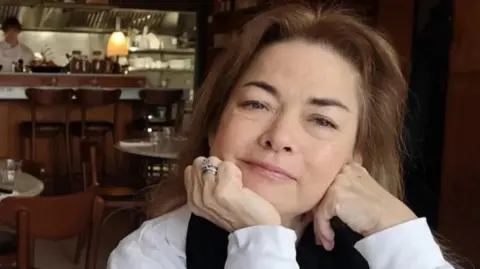 British Liver Trust
A woman who shrank by nearly a foot after being diagnosed with a rare liver condition has shared her story to encourage others to "never give up".
When Caroline King, 63 from Wiltshire, went to the optician suffering with "scratchy" eyesight she never could have imagined it was one of the first symptoms of a life-threatening liver condition.
To mark Rare Disease Day, she is now speaking out about her experience with granulomatous hepatitis to raise awareness of rare liver conditions and the impact they can have.
"Looking back, I still can't quite believe what's happened and that I'm still here," she said.
Prior to having a liver transplant, her symptoms were so severe that she was forced to use a wheelchair after suffering from extreme fatigue and mental confusion, but said she is sharing her story to encourage others in similar positions to "never give up".
King's story began in 2018 while at home watching television, when her eyesight went "scratchy" and out of focus.
"I thought, that's really, really odd," she said, and was later diagnosed by an optician with an inflammatory condition affecting part of her eye.
But in 2019 after her eyes and skin turned yellow, a liver biopsy revealed the condition granulomatous hepatitis - which doctors said is so rare they might only get one case every 10 years.
It took six months for King to receive a transplant, during which time severe osteoporosis in her spine caused by her medication saw her height drop from 5ft 4ins (1.63m) to 4ft 6ins (1.37m).
Six years on, both her eyes and liver function are now under control, with her height back up to 5ft (1.52m).
She told the BBC her message to people is to "never give up".
"The human body is amazing," she added.
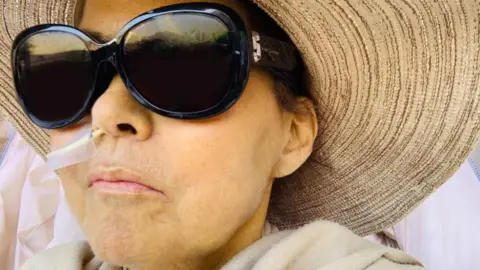 Caroline King
According to the British Liver Trust, thousands of people in the UK are living with rare liver diseases, many of which can take years to diagnose due to a lack of awareness and limited research.
Pamela Healy, chief executive of the British Liver Trust said that while the diseases "may be less common" they can have a "life-changing" impact.
"Too often, a lack of awareness leads to delayed diagnosis and unequal access to specialist care," she added.
"We need greater understanding, earlier diagnosis and sustained investment in research to ensure no one living with a rare liver condition is left behind."
Rare Disease Day takes place annually on the last day of February to raise awareness for the 300 million people worldwide living with a rare condition.
Follow BBC Wiltshire on Facebook, X and Instagram. Send your story ideas to us on email or via WhatsApp on 0800 313 4630.
