People assume I can't speak Welsh because I'm not white

 Brandon Brown
A black presenter and journalist says it is frustrating that her ability to speak Welsh is doubted because of the colour of her skin.
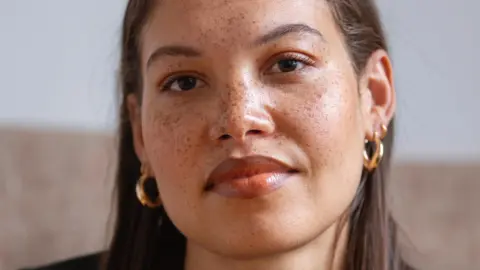
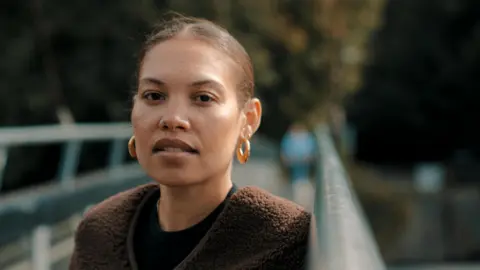
Seren Jones, from Cardiff, said she did not experience "the same assumption as [her] white friends", with some Welsh speakers switching to English when they see her.
Now living in London, Seren said: "I doubt I'm the only person of colour in Wales that's had that experience."
The 2021 census showed an increase in the number of Welsh speakers in Wales from Asian, black or other ethnic backgrounds.
Actress Mali Ann Rees said inclusivity was key to encouraging more people to speak Welsh, with "no excuse" for unconscious bias.
 Andy Pritchard/Rondo
"I've got quite a neutral accent because I've lived in London for almost a decade and I've moved countries throughout my life," said Seren.
"Also I'm not a white person, and I think a lot of people in London and in England, when they think of someone Welsh speaking Welsh, they think of someone who's more white."
The 2021 census showed 18.4% of white people in Wales (around 533,000) spoke Welsh - a decrease from 19.5% in 2011.
Of those identifying as Asian or Asian British, the figure rose from 6.3% to 6.4%, and for those who were from a black, black British, Caribbean or African background, it rose from 5.6% to 6.1%.
Welsh speakers among people from other ethnic groups increased from 5.5% to 5.9%.
 Seren Jones
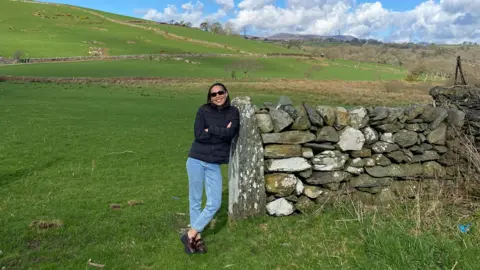
Seren has fronted a number of podcasts and documentaries, including Yn Fyw yn y Dwr on S4C.
Brought up in a Welsh-speaking household, she said non-Welsh people were often shocked that she could speak the language because of her accent as well as her background.
But she said the same assumption was also made by people closer to home.
"I think it is the fact that I'm a person of colour and that I'm a black woman and that I look like I'm a black woman," she said.
"To the people in Wales who don't know me for my work or maybe haven't seen me on TV, they wouldn't speak Welsh with me first, they'd speak English," Seren said.
One experience that stood out for Seren was when she was working in north Wales.
She said: "I was staying in a hotel and the woman in reception was speaking Welsh to everyone, but when she saw me she said, 'good morning, how was your night?'
"I answered in Welsh and it took her aback, but she was so happy.
"What's different between when I explain I'm a Welsh speaker in England and in Wales is that in Wales it's celebrated."
Despite the positive reaction, Seren said she was tired of hearing the assumption and has talked about her experiences on social media.
"I don't get the same assumption as my white friends, and that's something I have to deal with and navigate, and that can be frustrating," she said.
Aliya Mohammed, chief executive of Race Equality First, said language should "be a space of inclusion and pride, not one where people feel questioned or othered because of their race".
"Addressing this kind of unconscious bias is an essential part of anti-racist work in Wales, because true inclusion means ensuring everyone feels a sense of belonging in our national culture, languages and public spaces, without having their identity questioned," she said.
 Mali Ann Rees
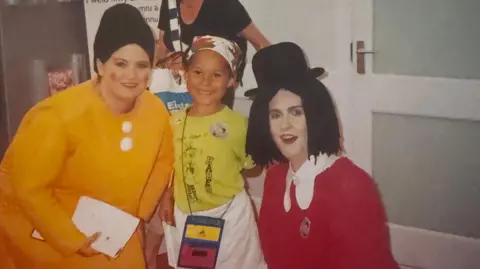
Actress Mali Ann Rees, known for role in BBC's The Pact, said the Welsh language was a "big part" of her identity.
The Cardiff-born writer said: "My mum and sister are white, so the experience is quite noticeable when someone speaks to us as a family.
"Even if they know I can speak Welsh they turn to English, but they would speak to my mum and sister in Welsh and that has happened several times.
"Speaking Welsh is really important to me in many ways, so when people don't see that as something that's part of me, it feels like they don't see me for who I am."
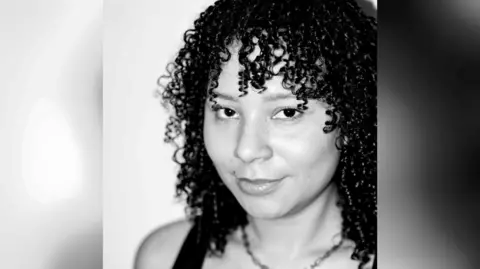 Andrezza Vieria
With more representation within Welsh language media, Mali said there was no reason for people to hold those attitudes.
"Now it feels more offensive because I feel like there is no excuse any more," Mali said.
"People know that brown people like me exist who can speak the Welsh language.
"There's a target for a million Welsh speakers by 2030 and if we're going to reach that, people need to be inclusive in everything we do.
"The world is changing and people need to move with it."
