Plans to cut number of police forces 'distressing and triggering'

 Simon Dedman/BBC
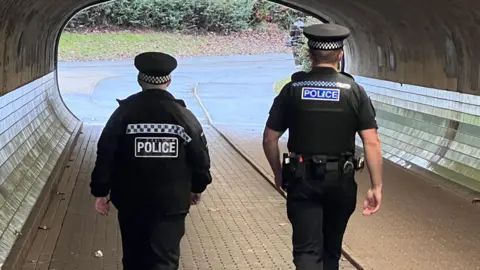
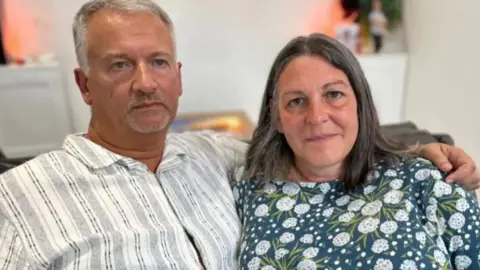
Plans to cut the number of police forces are "deeply distressing and triggering", according to a mother whose son was killed in a car crash.
The government has announced proposals that could see the existing 43 forces reduced to just 12 - in an attempt to lessen bureaucracy and save money.
Tracey Crawshaw's son, Jacob, 19, from St Neots in Cambridgeshire, died when the work van he was a passenger in crashed on the A14 in Northamptonshire in October 2021.
A retired detective constable faces gross misconduct proceedings over his handling of the investigation, and Ms Crawshaw told the BBC the reforms were needed to "restore trust with communities who have lost faith".
Government ministers said last week that performance across forces varied too much across England.
 Steve Hubbard/BBC
Home Secretary Shabana Mahmood was due to announce a consultation into plans to "significantly" reduce the number of forces in England and Wales, following calls by police chiefs to create 12 "mega forces".
Mahmood is expected to say new larger forces should focus on tackling serious and organised crime, as well as complex cases, like murder and drugs.
Every borough, town and city would also be part of a Local Policing Area, with officers focusing on neighbourhood policing.
 Crawshaw family
During the investigation into Jacob's death, the van driver was drug tested too late to establish whether he was under the influence at the time of the incident.
His parents have been trying to find answers from Northamptonshire Police.
His mother described the police reform plans as "deeply distressing and triggering for us, especially coming after everything our family has been through trying to secure even the most basic accountability from Northamptonshire Police for our son".
She added: "Bigger structures risk pushing decision-making even further away from the very people who rely on the police in their darkest moments.
"If local accountability and community confidence are not strengthened, this reform will feel like another step backwards rather than forward."
Northamptonshire Police has previously said it could not comment on the case because there was a live investigation by the Independent Office for Police Conduct.
 Amy Holmes/BBC
The government has previously announced it planned to scrap the role of Police and Crime Commissioner (PCC) when their current terms end in 2028.
PCCs set forces' budgets and hold chief constables to account.
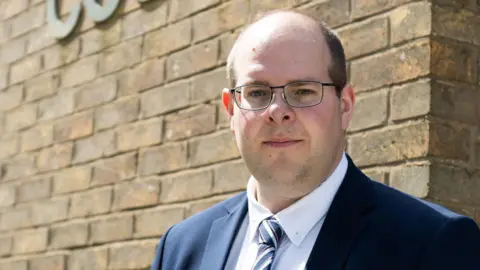
Reacting to the reform plans, Hertfordshire's Conservative PCC Jonathan Ash-Edwards warned "bigger does not mean better".
"Huge regional police forces will be slower to respond, less interested in local priorities, harder to hold to account and more likely to divert resources away from neighbourhood policing," he said.
The British model of "policing by consent", he added, required "local, accountable policing".
"At a time when every pound should be going into front-line policing and crime fighting, this regional reorganisation risks wasting millions on management reshuffles, consultants, rebranding and empire building."
Scotland saw its police forces merge into Police Scotland in 2013.
Ash-Edwards' office pointed to a report published this month by HM Inspectorate of Constabulary in Scotland that said the proportion of people who said "police in their local area were doing an excellent or good job" had fallen from 61% in 2012-13 to 45% in 2023-24.
 JO THEWLIS/BBC
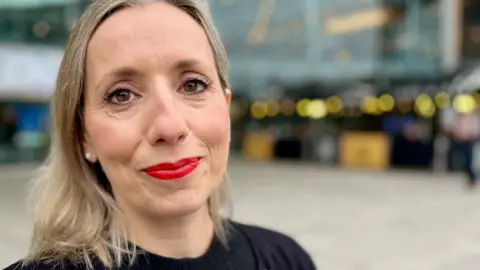
Norfolk's PCC Sarah Taylor, who quit the Labour party after the home secretary announced she would scrap PCCs, said she was "troubled by the suggestion of regional forces" that would prioritise serious crimes like murder and drugs offences.
"These are crimes which have profound impacts on individuals, families and local communities," she said.
"It would be a serious misjudgement to detach the policing of those crimes from local communities, and an even graver misjudgement to remove the ability of those local communities to hold the police to account."
Bedfordshire's Labour PCC John Tizard said he agreed with the home secretary that "tackling serious and organised crime is best done through effective collaboration between police forces".
But he added he was "concerned" about rumours of "moving to only 12 forces".
He believed "local policing and specialist teams must be integrated under the same command".
"Policing must also have local democratic accountability and work with local authorities and local criminal justice services," he continued.
Matthew Barber, the Conservative PCC for Thames Valley, said he was "opposed to wholesale force mergers" that would create regional forces.
He added: "Regionalised policing would result in a more remote service for the public in addition to increased costs for the local taxpayer."
What is already shared?
Each region in England and Wales has a special operations unit (SOU), working across county boundaries to tackle terrorism and serious organised crime.
The Eastern Region SOU includes more than 850 police officers and staff, covering Bedfordshire, Cambridgeshire, Essex, Hertfordshire, Kent, Norfolk, and Suffolk.
Forces in the East of England also share ideas and try to reduce duplication through the eastern region innovation network.
Northamptonshire is a member of the East Midlands SOU, while Thames Valley is part of the South East SOU.
Bedfordshire, Cambridgeshire and Hertfordshire forces also collaborate in several other areas.
They have shared major crime, roads policing, dog and scientific support units, as well as collaborating on armed police, firearms licensing and human resources.
Likewise, Norfolk and Suffolk have a special operations joint command, which includes criminal justice, roads policing, firearms, dogs, operational support and firearms licensing.
The two forces also share some IT and human resources functions.
According to Suffolk Police and Crime Panel papers for next week, the overall collaboration has saved the two forces a combined £57.6m.
Essex Police shares a serious crime directorate with Kent Police, which includes serious and organised crime, serious economic crime and modern slavery units.
Follow East of England news on X, Instagram and Facebook: BBC Beds, Herts & Bucks, BBC Cambridgeshire, BBC Essex, BBC Norfolk, BBC Northamptonshire or BBC Suffolk.
