NHS dentistry is rotting. Will the plan to fix it work?


 BBC
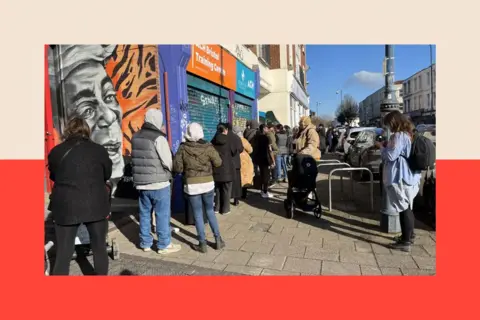
BBCAs queues go, this one was impressive.
It started on a quiet residential side street, then turned left past a giant blue mural before snaking 100m down the main road to the doors of a new dental practice.
Carol Sherman, a local artist, was second in line when the doors opened back in 2024.
"I was that desperate, I put some chairs and blankets in the car and got there at five in the morning," she says. "So many people round here can't get a dentist… so it's been an absolute lifesaver."
Three times in the last two years, hundreds of people in Bristol have been forced to queue for hours just to register with a NHS dentist in the city.
Other parts of the country face the same situation.
In both England and Wales changes are about to come into force meant to make it easier to access dental treatment on the NHS.
"Without fundamental change, NHS dentistry will remain a service that has gone for good in many parts of the country," says Mark Dayan, an analyst at the Nuffield Trust, a health think tank. "At this stage, it's just unhelpful to pretend there is still some kind of comprehensive system in place."
But will the reforms, which the government is calling the most significant in 20 years, be enough to save a system that has not been working for millions of patients?
The race for appointments
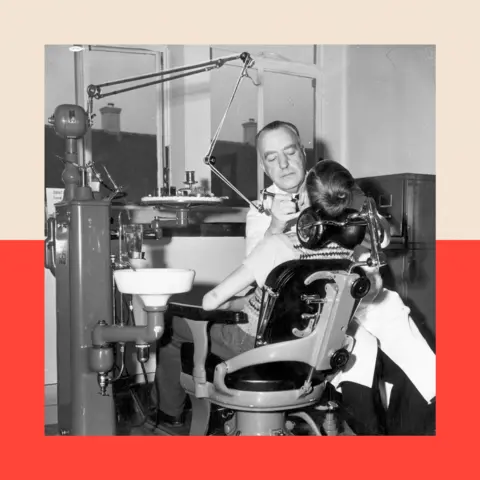
Back in 1948 when Labour's Aneurin Bevan founded the NHS, dental care became free alongside hospitals and GPs.
But the country's teeth were in an appalling state after World War Two and pent-up demand was much greater than politicians anticipated.
To keep a lid on costs, the first routine charges (of £1) for NHS dental work were quickly introduced, alongside fees for prescriptions and glasses. Bevan, by then minister of labour, resigned in protest.
From the earliest days, that decision to charge patients set dentistry apart from almost every area of the health service. Except for some groups (like children) who get free treatment, patients in England can expect to pay £27 for a checkup, rising to £75 for a set of fillings and £327 for a bridge or dentures.
But – crucially – those prices are meaningless if patients cannot get an NHS appointment in the first place.
 Getty
GettyIn 2021, Jean Ann Green, 66, moved from Hertfordshire to Beccles in Suffolk. Cancer treatment and osteoporosis had damaged her teeth, leaving her with six lost fillings and toothache.
"We had a great NHS dentist where I used to live," she told me. "Over the last four years I must have phoned every dentist in Suffolk and not a single one is taking on new NHS patients.
"You hope and pray your nerve dies so the pain goes away, which cannot be right."
Jean's only long-term option is to go to one of the many private dentists in her area, but she says the amount of work she needs could cost thousands.
When I ask if she can afford it, she laughs.
"Because of my postcode I can't have the treatment on the NHS that I desperately need and that's just immoral," she says.
Going private
In the UK there are around 12,000 high street dental practices, from large chains to small businesses. Those firms can decide to bid for an NHS contract, carry out private work instead or, more likely, juggle a combination of the two.
It's that balance which has shifted dramatically.
Back in 1990, spending on private dental care made up just 14% of the market, rising to 42% by 2010 and a record 69% in 2024, according to the consultants LaingBuisson.
Healthwatch England, a watchdog which represents patients, says it receives more complaints about dentistry than any other subject.
"It's a constant source of frustration, anxiety and distress," says Rebecca Curtayne, its acting head of policy. "Too many on low incomes are being forced into private care they struggle to afford or are going without treatment altogether."
The watchdog's own polling suggests the situation has got worse since the pandemic. Around 32% of people said they used private dentistry last year, a sharp increase from 22% in 2023.
Official data shows that more complex care, in particular, has become much harder to access on the NHS. Over the last ten years, the number of routine NHS examinations has fallen by 6% in England while the number of root canals, where an infection is removed from deep inside the tooth, has dropped by 49%.
"I have lots of colleagues who just won't touch [NHS] root canals now, it's a complicated procedure and such hard work," says one dentist from the east of England, speaking anonymously so she can speak freely. "It's ridiculously remunerated so you can end up spending so much time on it and lose money."
Some patients are given a choice: have the tooth removed on the NHS or have specialist root canal work to save it, but only if they are prepared to go private, she says.
Anger over the contract
At the heart of this whole problem is the NHS dentist contract - described as "ridiculous and discredited" by the British Dental Association (BDA), a trade union.
Under a system introduced in England and Wales in 2006, dentists are not paid for each procedure they carry out, or for time spent with a patient.
Instead they are awarded points, known as Units of Dental Activity (UDAs), based on a band which the patient's whole course of treatment fits into.
That can mean someone needing two crowns, root canal work and three filings, for example, would generate the same number of points as someone needing just a single crown.
The BDA has long argued it's too complicated and does not fairly reflect the cost of treating patients, particularly those with high needs.
"The whole system is just absurd and unfit for purpose," says Dr Shiv Pabary, a dentist from Newcastle who chairs the BDA's general dental practice committee. "The government wants us to take on more high-risk patients, but if we do that then we lose money and that's the problem."
The union's main gripe is that total government spending on NHS dentistry in England has been falling over the past decade, once inflation is taken into account. At the same time, the population has been growing and ageing, and older people tend to need more complex dental care.
Labour's plan
The Labour government claims it is spending £350m more a year on NHS dentistry by forcing health boards to reinvest the money they get back from under-performing contracts, something the last government also tried to do.
It also says it will employ thousands more dentists from overseas and boost dental school places in England by 50 spaces a year to plug staffing gaps.
Then from next month it will press ahead with what health minister Stephen Kinnock is calling the "first step towards a new era of NHS dentistry".
The UDA system is being tweaked, with new payments for some complex treatments and preventative work.
But the big new idea is to force each practice to ring-fence 8% of its local NHS contract just for emergency care. In theory this should make it easier for someone who isn't registered with an NHS dentist to call 111 and get a quick referral for a broken tooth, severe toothache or bleeding, rather than having to ring round private dentists in their area for the best quote.
Kinnock says the changes are part of a wider, long-term plan meant to reform the whole dental contract before the next election, although exactly how the government will do that is still being worked out.
'Piecemeal' changes
At St Pauls dental surgery in Bristol, the scene of those long queues back in 2024, the staff are far from convinced.
In the small back office, the practice coordinator, Shivani Bhandari, and the principal dentist, Dr Gauri Pradhan, are making tea (with sugar!) and showing off their spreadsheets and contracts.
"This will just be another piecemeal fix that won't improve anything," says Pradhan, who is also a qualified facial surgeon.
There are limits on the total amount of NHS work dentists can carry out - and so the worry is that Labour's plan to boost emergency appointments will just mean fewer slots for routine and preventative care.
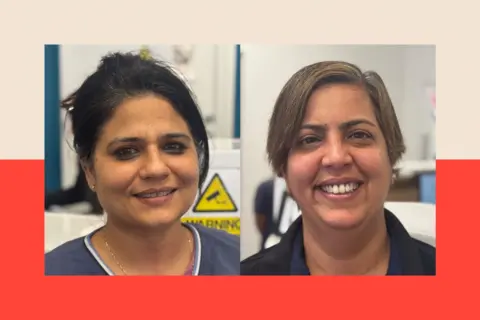
"It could actually make things worse because the government might look at the numbers [of emergency patients] and see they have gone up, but we will only see the consequences in two or three years' time," says Bhandari.
What the staff in Bristol would like to see is a simpler system, like the one in Scotland and Northern Ireland, where dentists get paid for each individual item of care they provide.
In Wales, meanwhile, the UDA system is being scrapped from April with those patients who are not exempt paying 50% of the cost of treatment, and dentists paid £150 an hour for their time.
Private sector boom
Of course, some patients are more than happy to pay for a faster private service with cutting-edge treatments. But the private market for dental care comes with a different set of problems.
Connor Greenlees, 33, from Sheffield says he lost his place with an NHS dentist in 2021.
When he recently needed emergency treatment, he had to phone around private dentists. He was quoted £250 to get each infected tooth removed. At the surgery he was then told the extractions were so complex the price would go up to £350. When he explained he just couldn't afford it, the bill was reduced again to £220.
"I felt really seedy negotiating with them, but I was in so much pain, I just had no choice," he says.
Connor is now saving up to travel to Poland or Romania where he says the longer-term treatment he needs costs a third of the amount it would in Sheffield.
This month the UK competition watchdog launched a review into private dentistry, saying it wanted to make sure it was "working well for consumers". It came after research showed the price of some private care had jumped by 30% in just two years, with huge variations between regions.
The BBC has spoken to both patients and dentists, some working for large chains, who have concerns about the way some companies have been operating.
One dentist said that patients were "lied to" and told they couldn't be seen on the NHS in an "attempt to force them to go private" even when spare appointment slots existed.
Another said that some of her colleagues felt the need to "hard sell" private work and make NHS treatment look substandard.
 EPA-EFE/REX/Shutterstock
"I hate that because it shouldn't be seen as inferior, but I do understand why some dentists feel they have no choice but to do it," she said.
These are just anecdotal examples, and it will be the job of the watchdog to decide if there are wider problems in the sector.
The BDA, which represents NHS and private dentists, says there is no clear evidence of abuse, and has accused the Chancellor Rachel Reeves of triggering the investigation to cover up funding problems.
Unpopular options
The problem for politicians is that all the long-term choices look unpalatable.
"I do worry that we're beyond the point that NHS dentistry can be saved," says the BDA's chair Eddie Crouch. "If we've got no money to improve the service, then we need to have a serious conversation… about what sort of minimum level of dental service is available, or who will actually get NHS dental services in the future."
One option is simply to throw more money at the problem, boosting the value of contracts and maybe even setting up more NHS-run community clinics which can employ dentists directly.
That might cost around £2bn a year according to some estimates, a fraction of the total £196bn NHS budget in England but still a significant amount in cash terms.
But many of the patients who would benefit from that access might already be well off and happy with private treatment.
Bringing those individuals back into the NHS would not lead to any health improvements and could be hard to justify when crumbling hospitals and outdated cancer units also need the money.
Others want to rip up the funding system entirely.
The former health secretary, Sir Sajid Javid, would like all adults to be given a £150 dental voucher each year which they can put towards private treatment or insurance costs, an idea advocated by the right-leaning think tank Policy Exchange.
The BDA is extremely critical, saying it could mean tripling the cost to the taxpayer and "comes with the sound of barrels being scraped."
Without extra long-term funding or major reform, the dental union and other groups (like the Nuffield Trust) say the NHS might be forced to radically scale back what it is trying to do.
That could mean providing some form of dental A&E for emergency cases, perhaps alongside free routine care for children and those on very low incomes. Everyone else would pay for private insurance or treatment in the same way they do in the US or Australia.
That though would be a difficult political choice and would violate a founding principle of the NHS – that our health services should be available to all.
 EPA-EFE/REX/Shutterstock
This all matters because oral health matters.
Research suggests the state of your teeth affects everything from maternal and childhood outcomes, to the risk of heart disease and diabetes, to the chances of finding and keeping a job.
"When I had just one of my teeth missing, I couldn't smile and my self-confidence was going," says Carol Sherman, who was at the front of that huge queue in Bristol two years ago.
"The first thing you do when you greet a person is smile at them, that's the first connection you have, so for me, it's about being a human being with dignity and pride."
Top image credit: Getty Images

BBC InDepth is the home on the website and app for the best analysis, with fresh perspectives that challenge assumptions and deep reporting on the biggest issues of the day. Emma Barnett and John Simpson bring their pick of the most thought-provoking deep reads and analysis, every Saturday.Sign up for the newsletter here
