Pumping station volunteers are our 'gold dust'

 BBC
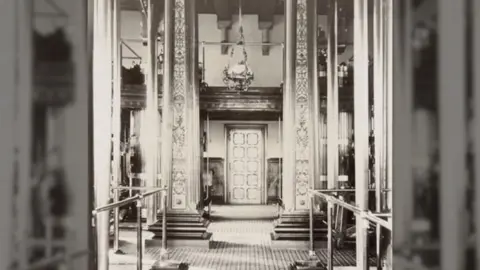
BBCIt was an industrial powerhouse of the Victorian age, pumping millions of gallons of fresh water daily to a rapidly growing population of Nottingham.
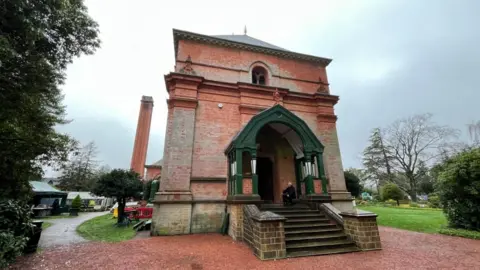
Now a band of volunteers work to preserve Papplewick Pumping Station's history and heritage at its rural home near Ravenshead in Nottinghamshire.
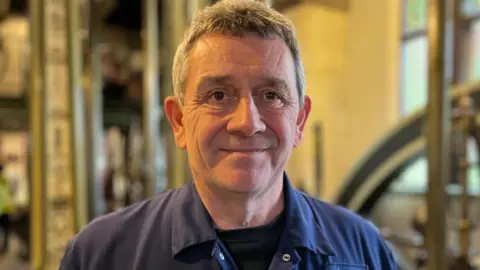
Glenn Saint, trustee chairman, has been a volunteer at the site since it opened as a museum 50 years ago.
Marking the anniversary milestone, he said the museum volunteers were our "our gold dust" and all "love the place".
 Papplewick Pumping Station
Nottinghamshire-born engineer Thomas Hawksley came up with the idea for the scheme, which drew "really nice clean water" from the Bunter sandstone beneath the site, said Mr Saint.
Hawksley would ultimately be responsible for more than 100 water supply schemes across the country throughout his life.
But the necessity of the site was as much about economics as about health, Mr Saint said.
"Of course there's method in their madness, the Victorians, because if you're a mill owner and your workforce has got typhoid, then investing in clean water for your workforce really makes a difference.
"Water was being taken from the Trent, but of course people were throwing their effluent and everything into the water, and there were big outbreaks of typhoid and cholera," Mr Saint said.
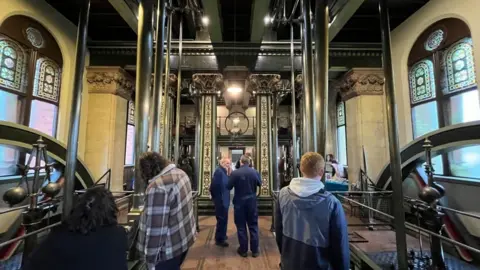
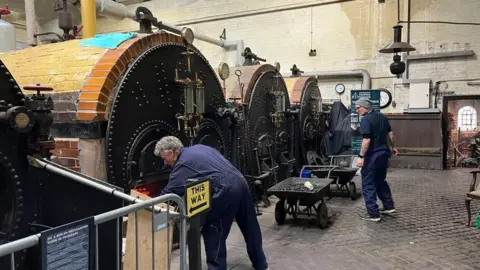
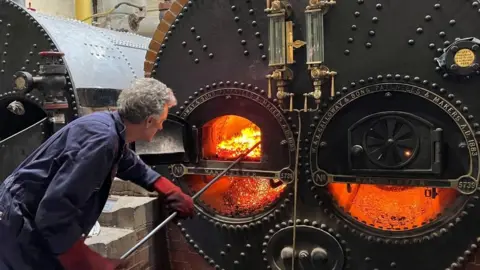
The end result was a system with two James Watt-style steam engines, powered by six coal-fired boilers, Mr Saint said.
With each stroke of an engine, 96 gallons (363 litres) of water would have been lifted to the surface as a 13-tonne beam got pushed in-and-out of the ground.
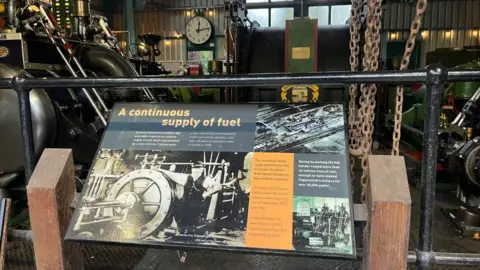
There were also two huge flywheels, one for each beam engine, which kept everything running "nice and smoothly" by storing excess energy, Mr Saint said.
However, despite the ingenuity, the technology was actually old for the time.
James Watt-style steam engines were an improvement on earlier designs because they ran far more efficiently, but they were already more than 100 years old by the time Papplewick Pumping Station was built in 1884.
"But being a water pumping station, Nottingham City Water Company wanted engines that they knew would be reliable," Mr Saint said.
"They knew it would work, and work it did, from1884 right the way through until 1969, when it was superseded by electrical pumps."
Those electrical pumps are still operated by Severn Trent, which remains the landlord of the site.
"So we're still a live site, we still pump water for Nottingham," Mr Saint said.
"We were fortunate because the pumps were fitted in a pilot well on the other side of our cooling pond, which meant this machinery didn't have to be removed."
That allowed it to become a museum in 1975, and Mr Saint has been a volunteer since the beginning.
He said over the years he had seen a variety of challenges to keep the site running.
This included an "obvious" lack of manuals or internet videos on how to maintain the machinery.
"But obviously over time, we've created our own manuals, we train people to do the individual jobs, but we also attract quite a number of people that have fitting skills," he said.
However, Mr Saint said the main challenge that the pumping station faced now was funding.
"When I first volunteered here, the costs were very low, with minimal insurance, and we could open the doors with a few hundred people and it would work," he said.
"But today, in the commercial world, that doesn't happen. The cost of energy, the cost of insurance, mean we have to operate as a commercial business."
Costs included the price of coal, which, he said, had more than tripled in price, from £150 a tonne to £500 a tonne, because of the end of coal mining in the UK.
The museum did however receive a big boost earlier this year when it was removed from Historic England's Heritage at Risk Register.
It followed a £580,000 repair project, which was paid for by Art Council England's museum estate and development fund and Severn Trent.
This helped Mr Saint feel confident that the museum would continue for years to come.
"The money that we generate goes towards general maintenance, but when it comes to a major structural element, we rely on grant funding like that.
"But we always say 'the volunteers are our gold dust', because they're putting in their efforts free of charge and keeping the place going."
He also said there was no sign he would slow down, despite spending the majority of his life volunteering with the museum.
"If you ask that question - why have I done it for so long - to all of our volunteers you'd pretty much get the same answer," he said.
"They all love the place."
Follow BBC Nottingham on Facebook, on X, or on Instagram. Send your story ideas to eastmidsnews@bbc.co.uk or via WhatsApp on 0808 100 2210.
