Trump aims to end Iran war but nuclear issue remains unresolved

 Getty Images
After weeks of promises from President Donald Trump, a deal to end the US-Iran war is set to be signed on Friday.
It is expected to reopen the Strait of Hormuz in return for the US lifting its blockade on Iranian shipping.
However, key questions remain about what it will say about Iran's nuclear programme, including its uranium enrichment - a key component of a nuclear weapon.
There is expected to be a period of further negotiations on nuclear issues but the deal is likely to be judged against the 2015 agreement negotiated by the Obama administration and other nations, and later abandoned by Trump.
What discussions were held before the war?
Both sides were already engaged in discussions about Iran's nuclear programme before the war started on 28 February.
Talks in Oman on 6 February were described by Iran as a "good beginning". However, US Secretary of State Marco Rubio said discussions would have to go beyond the nuclear issue for "something meaningful" to be achieved.
On 17 February, following further talks in Geneva, Iran said it had reached "an understanding" with the US and Washington said "progress was made".
Two day later, however, Trump warned that Iran had to make a meaningful deal, "otherwise bad things happen".
Ahead of a further round of talks on 26 February, Iran said an agreement was "within reach". But Trump said: "They're not willing to give us what we have to have."
Talks were set to resume in Vienna, but were called off after the US-Israeli strikes.
Former UK ambassador to Iran Sir Simon Gass says the conflict "hasn't resolved the nuclear issue" and argues that Trump's agreement "takes you back not to the days of the 2015 Iran nuclear deal, but actually to the position before 28 February."
"There will be very little trust going into these negotiations and both sides will have their expectations," he adds.
 Getty Images
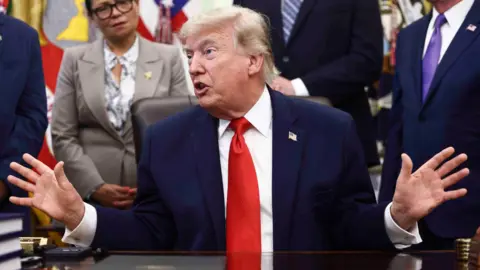
Trump has repeatedly said Iran needs to surrender its enriched uranium stockpiles - which he regularly calls "nuclear dust".
Iran, however, has said "zero enrichment" is a red line and a violation of its rights.
Uranium is a naturally occurring radioactive element. When it is "enriched" it can be used to fuel nuclear power plants, but also help develop nuclear weapons.
The fate of Iran's uranium stockpile was also central to the 2015 nuclear agreement - the Joint Comprehensive Plan of Action (JCPOA) - which imposed strict limits on its enrichment activities.
 Getty Images
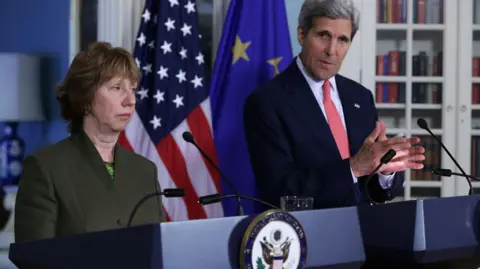
"The number one issue that was running at that time was whether Iran was going to go for building a nuclear weapon," former JCPOA lead negotiator Baroness Ashton told BBC Verify.
When it was introduced, the Obama administration declared that Tehran had agreed to "extraordinary and robust monitoring, verification, and inspection".
In exchange, the US agreed to lift sanctions against Iran, including on oil, trade and banking.
Under the deal, Iran had to reduce its stockpile by 98% (to 300kg; 660lbs), could enrich only up to 3.67% purity and limits were placed on its centrifuges - the machines used to enrich uranium.
Low-enriched uranium - typically 3-5% purity - is enough to produce reactor fuel required for a nuclear power station, but weapons-grade uranium needs to be at least 90% enriched.
The breakdown of the 2015 deal
The International Atomic Energy Agency (IAEA), the UN nuclear watchdog, reported that Iran was complying with the agreement until the US withdrew from it in 2018.
"The deal was remarkably successful," argues Kelsey Davenport from the Arms Control Association (ACA), a national nonpartisan membership organisation.
"Any move to nuclear weapons, any deviation from the JCPOA's terms would have been detected," Davenport told BBC Verify.
In an April 2018 report, the US Department of State said Iran was "transparently, verifiably, and fully implementing the JCPOA".
However, when President Trump announced the US withdrawal from the agreement in May 2018, he called it a "horrible, one-sided deal that should never, ever have been made".
He said it failed to address Iran's ballistic missile programme, that the inspection requirements lacked mechanisms "to prevent, detect, and punish cheating" and that Israeli intelligence showed Tehran's "history of pursuing nuclear weapons".
Jacob Olidort, chief research officer at the America First Policy Institute, says Trump was right.
"All of these issues were completely pushed to the sidelines, completely deprioritised and not included in the arrangement," he told BBC Verify.
Baroness Ashton, who negotiated the deal on behalf of the UN Security Council, rejects this.
"There was plenty of opportunity afterwards to talk about other issues, ballistic missiles, drones etc. And indeed the Trump administration in its first term could have done that," she added.
"If President Trump felt that the deal was inadequate, then the answer was to build on it, not to rip it up."
Olidort says the time-limited nature of the deal meant Iran could have eventually pursued a nuclear weapon.
"It was always made explicit in the deal that the terms of the deal would expire… The sunset clauses in effect nullify their effectiveness," he argues.
Davenport says that because some limits on the uranium enrichment level and stockpile size were only set for 15 years, "by January 2031, Iran could theoretically expand its enrichment programme".
But many other features were permanent, including IAEA safeguards, she said, adding: "There was still a whole host of other provisions that would have provided assurance that any move in that direction [towards a nuclear weapon] would have been quickly detected".
Lifting sanctions
Under the JCPOA, Iran gained access to billions of dollars in previously frozen assets and benefited from the lifting of international sanctions.
Trump has repeatedly criticised this, telling NBC on 7 June: "Obama signed that stupid deal where he paid them billions, and billions of dollars. He thought he could bribe them."
Baroness Ashton says sanction relief was necessary to secure the agreement.
"If you sanction someone because they're doing some behaviour and they change the behaviour, then by definition the sanction cannot stay."
Olidort, however, argues lifting sanctions helped Iran fund its conventional weapon programmes in addition to its nuclear one.
In the years after the US withdrew from the agreement, Iran began to accelerate its uranium enrichment.
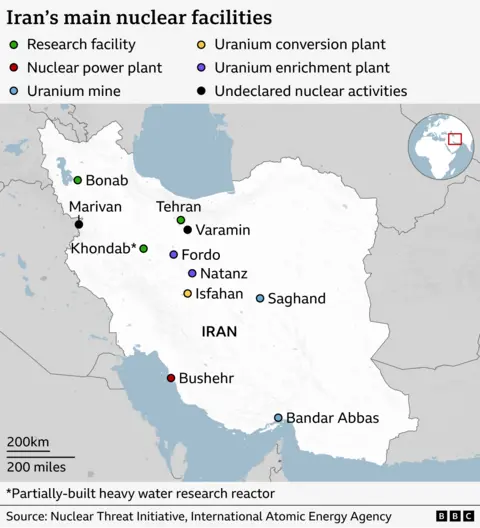
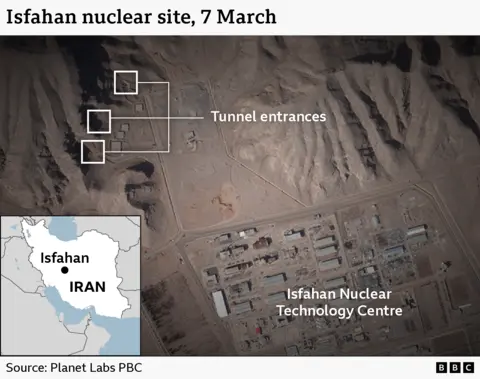
When the US and Israel attacked Iran's facilities in June 2025, the IAEA estimated Iran had obtained 440.9kg (972lbs) of uranium enriched up to 60% purity.
Nuclear negotiations
In a Truth Social post last month, Trump declared his envisaged deal would be "far better" than the JCPOA.
However, so far there is very little detail and Sir Simon is careful about drawing comparisons with the JCPOA.
"That was a very lengthy, very detailed, very precise agreement setting out obligations on both sides.
"What we appear to have here is a framework agreement, which leads into a process of negotiations for 60 days", he told the BBC.
Davenport argues Iran will expect to benefit economically from the agreement.
"Iran is not going to agree to a deal that does not include sanctions relief and assets or access to its frozen assets. Tehran has made very clear that those are key issues", she says.
Trump will likely want to show he secured concessions that Obama could not, she adds. That could include a temporary suspension of enrichment and the disposal of Iran's existing stockpile.
Olidort believes the US is negotiating from a position a strength and does not see a deal being weaker than the JCPOA.
While the details of any agreement remain unclear, Baroness Ashton argues that military pressure alone is unlikely to secure a lasting settlement.
"All I can say is in my experience, the way that negotiations work is that people have to feel that they've got enough to make it worthwhile participating in that negotiation".

