Installing smart meters could cost 'well over £500m'

 Getty Images
Installing smart meters across Northern Ireland's electricity network could cost well over £500m, Stormont has been told.
The cost of that installation will ultimately be borne by consumers through their bills.
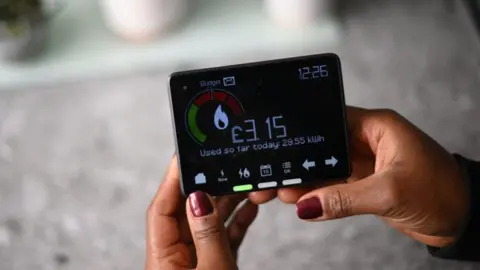
Smart meters provide automatic readings to energy suppliers and give households information on their usage and costs.
They have been installed in Great Britain since 2011 with the government aiming to complete the roll-out there by the end of 2030.
The meters are seen by some as a critical feature of the power system as they can encourage consumption patterns that are more aligned with intermittent renewable power sources such as wind and solar.
A smart meter roll out in NI is part of Stormont's energy strategy and has been worked on since 2021.
A cost/benefit analysis commissioned by the Department for the Economy in 2022 suggested there would be modest benefits for consumers, mainly by prompting reduced consumption.
DUP assembly member Diane Forsyth asked officials from the Utility Regulator if it was correct that the NI roll-out could cost from £400m to £500m.
Brian Mulhern, the regulator's director of networks, said the cost could be "late hundreds of millions" once IT costs were considered.
He said the costs to consumers still had to be assessed and would depend on a number of factors.
"Different elements will be recovered over different periods of time," he told Stormont's economy committee.
"It might be IT systems will be over 10 years and the meters could be over 15 or 20 years."
'Security and stability'
The cost of modernising Northern Ireland's electricity system is having an increasingly important impact on what makes up consumer bills.
For example, when Power NI, the largest electricity supplier, raised its prices by 4% in September the regulator was clear that was not due to rising wholesale energy prices.
Instead the regulator said the increase was "due to a rise in the non-energy elements that make up a customer's bill.
"These components are essential in ensuring the security and stability of the entire electrical system.
"Additionally, as we continue to strive to meet government climate change targets, there is a need to invest in grid infrastructure to facilitate renewable energy sources."
