Campaigners trying to save home of Auld Lang Syne

 Colin Hattersley
Campaigners are trying to raise £12m to save the historic farm where Robert Burns wrote Auld Lang Syne.
The funds will be used to restore Ellisland Farm north of Dumfries and create a "world-class cultural destination" on the site.
Detailed plans to revive the home that Burns built will be revealed early next year.
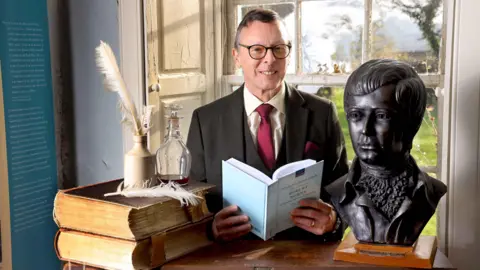
Duncan Dornan, who chairs the Robert Burns Ellisland Trust (RBET), said it had the potential to become a "national landmark and a source of enduring inspiration".
 Colin Hattersley
The launch of the campaign coincides with the premiere of a specially-commissioned film highlighting the significance of the farm.
The trust said the category A-listed building was facing "serious challenges".
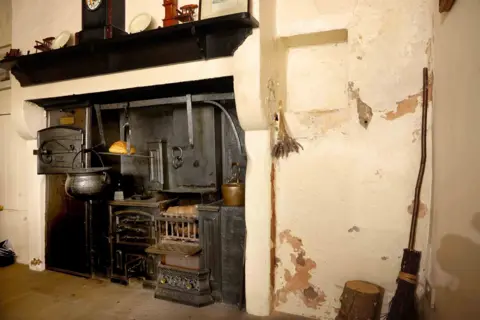
It said it had suffered years of "damp, decay and structural deterioration" and required extensive repair and restoration.
Mr Dornan - who previously led the £68m Burrell Renaissance - said he knew what could be achieved "when vision meets determination and commitment".
"This is our opportunity to preserve the home where the world's most famous song was born and ensure it thrives for generations to come," he added.
Project director Joan McAlpine said a revived Ellisland could provide a major economic boost for the area.
"Over the past few years, we've undertaken extensive research and consultation to understand what Ellisland needs structurally, and to explore what it could become," she said.
"It quickly became clear to us that we had to find a way to also make the site sustainable – generating income to support the heritage and culture.
"This site has immense potential as both a cultural destination and an engine for regional economic regeneration."
 Colin Hattersley
Last year RBET secured almost £500,000 to develop and take forward its plans.
It plans to recreate the farm as it was during Burns' time and create a "centre for song" along with visitor accommodation and a dedicated museum space.
It is hoped it will support dozens of jobs and attract about 17,000 visits a year.
The campaign also hopes to attract support from around the world to safeguard the future of the farm.
Auld Lang Syne is one of Burns' most famous works and is regularly sung on Hogmanay (New Year's Eve).
First verse and chorus
Should auld acquaintance be forgot,
And never brought to mind?
Should auld acquaintance be forgot,
And auld lang syne?
For auld lang syne, my jo,
For auld lang syne,
We’ll tak a cup o’ kindness yet,
For auld lang syne.
