Skin graft helped spot lung transplant rejection

 PA Media
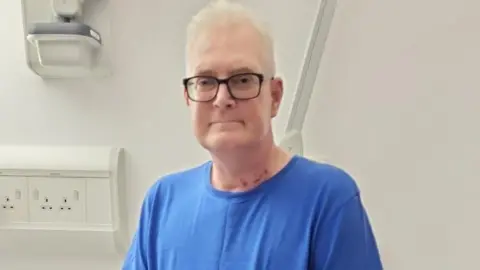
One of the first transplant patients to have a skin patch from their donor grafted onto them in a bid to spot organ rejection faster has hailed the method for helping him get faster treatment.
Darren White was given steroids when tests showed his body was rejecting his new lung three months after his transplant.
More than a year on, the 53-year-old is doing well and said he can be "more of a dad" to his toddler as he is able to walk and take him to the park.
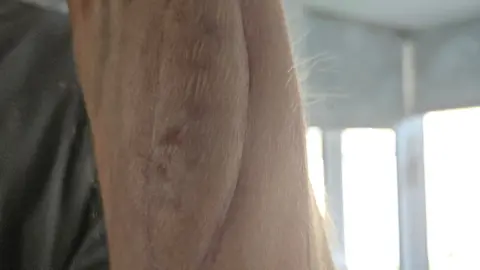
Oxford-based experts leading the Sentinel trial said the skin patch acts as a "window" after it is grafted onto the forearm of patients at the same time as their transplant.
Scientists believe the skin rejects earlier than other organs and is more visible, meaning doctors can treat rejection as soon as a rash appears and slash the risk of permanent damage.
So far, 10 patients have received small skin patches from their organ donor as part of the study - including White, a former bus driver from Stockton-on-Tees, who had a lung transplant in late 2024.
"Anything that might help to avoid rejection was worth a try," he said.
"Having something that might be able to catch it much sooner than otherwise, was really appealing."
 PA Media
According to NHS Blood and Transplant, lung rejection is hard to detect as it can involve blood tests, biopsies and x-rays - despite happening in almost a third of patients.
Three months after having his transplant, White noticed a purple rash on the skin patch - with a biopsy showing mild rejection before he was treated with steroids.
"I definitely believe the skin patch helped to stop the lungs from being rejected," he said.
"I'm over a year post-transplant now and doing really well. Who knows if that would be the case if the rash hadn't shown up and rejection wasn't spotted until further down the line."
The Sentinel trial skin grafts are being carried out by plastic surgeons at the University of Oxford.
Henk Giele, chief investigator of Sentinel and an Oxford plastic surgeon said: "It seems logical that having a window to your transplant can provide an early warning system of rejection or reassure you that you don't have rejection but we have to prove it works.
"We hope it will change what we know about transplant and makes patients lives better and longer," he added.
The trial is set to run until 2027 and will recruit 152 patients at five centres; Freeman Hospital in Newcastle, Harefield Hospital in London, Queen Elizabeth Hospital in Birmingham, Royal Papworth in Cambridge and Wythenshawe Hospital in Greater Manchester.
You can follow BBC Oxfordshire on Facebook, X (Twitter), or Instagram.
