First homes connected to £15.5m steam-powered heat network

 Cardiff Council
New flats in Cardiff are the first residential buildings in the city to get heat and hot water from a new steam-powered green heating system.
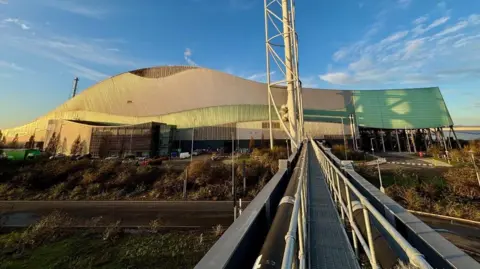
The network, which cost £15.5m, captures heat from steam already produced as a by-product of the process that powers electricity-generating turbines at Viridor's Trident Park Energy Recovery Facility.
This is then transported through a network of highly insulated pipes to buildings across Cardiff Bay, where it provides a sustainable source of heat and hot water.
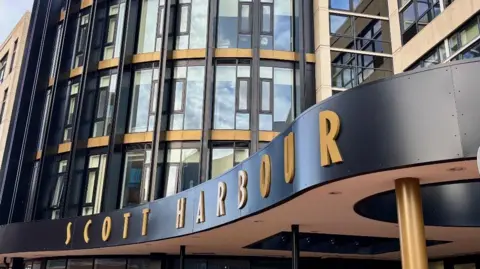
Now, Scott Harbour flats, which were converted from an office block into 78 council-owned apartments providing social housing in the city, have been connected to this system.
Cardiff council's cabinet member for climate change Dan De'Ath, said: "The moment a building connects, it eliminates the need for gas boilers and delivers an 80% cut in carbon emissions.
"It's a complicated project to deliver, but an incredibly simple idea at heart - capturing heat that already exists but is currently wasted and transporting it to where it can be used instead of burning fossil fuels."
The heat network took four years to build and is expected to save 10,000 tonnes of carbon dioxide every year.
 Cardiff Council
Cardiff and Vale College recently became the first building to receive heat from the network.
Over coming weeks, other buildings in Cardiff Bay, including Wales Millennium Centre, Butetown Hub, Nelson House, Tresillian House, Ty Hywel and the Senedd will also be connected.
Although the initial heat source is Viridor's Energy Recovery Facility, the network is designed to be "heat source neutral".
This means that, in future, it could potentially be connected to alternative or additional heat sources such as the groundwater or deep geothermal heat that exists beneath Cardiff's streets.
