Women who helped unearth Roman town celebrated

 St Albans Museums
 A female archaeologist said she hoped a new exhibition would showcase the "immeasurable contribution" of women in uncovering secrets of the past.
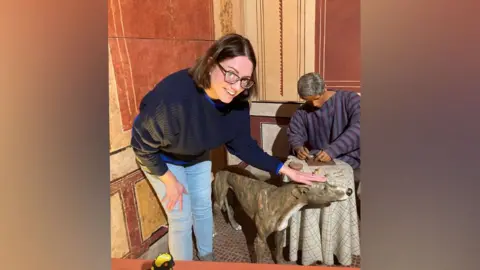
Lexi Diggins is curating "Women doing everything, everywhere, all at once" at Verulamium Museum in St Albans, Hertfordshire.
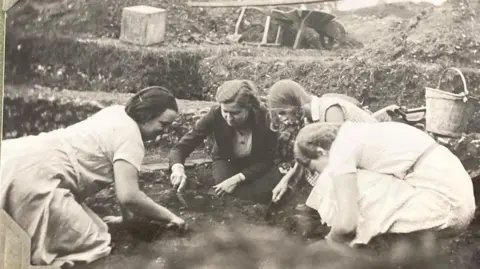
It features women who helped unearth the Roman town of Verulamium in the 1930s.
Ms Diggins hopes it will inspire more girls and women to take up the "serious scientific discipline".
“There should be no restraints. If you look back at what female archaeologists did, given the restraints of the time period they were living in, it was incredible,” she said.
 St Albans Museums
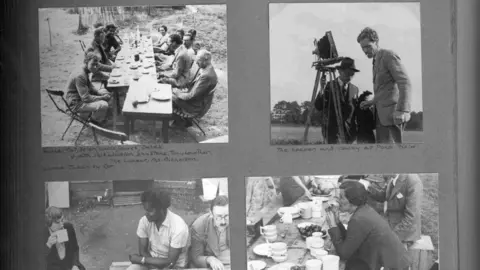
More than half of the team of archaeologists who excavated Verulamium were women, including Tessa Wheeler who supervised much of the work.
“Most people had heard of her husband Mortimer Wheeler, as he was good at promotion," Ms Diggins said.
"He was also a very good archaeologist, but it was very much Tessa who oversaw the day-to-day running of the dig. She died quite young, so wasn’t remembered as much as her husband."
She said Tessa Wheeler trained one of the most famous archaeologists of the 20th century at Verulamium, Kathleen Kenyon, who became the first female president of the Oxford University Archaeological Society.
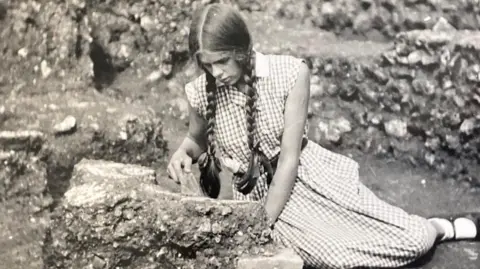
Helen-Carlton Smith, 13, nicknamed “Helen of Troy” by the team, also helped on the dig and kept a regular diary which features in the exhibition.
 Lexi Diggins
Four significant Roman and Iron Age women with links to St Albans are also highlighted in the exhibition, including Celtic queen Boudica whose rebellion against the Romans destroyed Verulamium.
“We’ve based it on the archaeology we found but also what we do know about women at the time," she added.
"We want to tell the stories, otherwise they remain untold and completely silent."
She said that while there are now “some strong female voices” bringing archaeology into the public eye, not enough is known about women in history.
“More needs to be known about past female archaeologists and their contribution. It’s immeasurable: the more you look into it, the more you find out how much they did,” she said.
 St Albans Museums
Women doing everything, everywhere, all at once runs from 8 March to 4 July 2024 at Verulamium Museum.
Follow East of England news on Facebook, Instagram and X. Got a story? Email eastofenglandnews@bbc.co.uk or WhatsApp us on 0800 169 1830
