Town's pedestrianisation scheme scrapped

 West Berkshire Council
A town centre's pedestrianisation trial scheme is being scrapped.
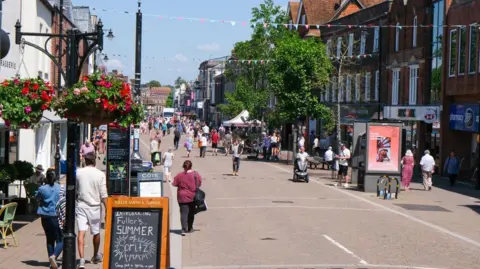
Parts of Newbury in Berkshire have been closed to traffic between 10:00 BST and 23:00 for almost a year.
But the scheme will end two months earlier than planned, in September, following a public consultation exercise, in which more than 75% of people rejected it.
West Berkshire Council's highways portfolio holder Stuart Gourley said: "The majority was against this version of pedestrianisation… but people like the idea of it – just not the version we trialled."
The extended hours for pedestrianisation were introduced in May 2025 as a time-limited pilot for 18 months.
It set out to test how longer pedestrianisation might work in practice and to gather views from residents, businesses and visitors.
"We want to give businesses a chance to make the most of it through the summer months," Gourley said about the decision to cut short the scheme.
"We do have until November to run the trial, but it seemed a sensible time to stop it then."
He added: "With Old Town [on the former Kennet Shopping centre site] being developed, it seemed to need a refreshed approach."
He said a refreshed town centre masterplan would likely take another 12 months to complete.
"We have listened to the consultation and want to test and adjust it with more detailed holistic town centre planning," he said.
More than 3,000 people responded to the consultation.
The report, set to be considered at the council's executive meeting next week, showed that supporters described the streets as safer and more pleasant for walking and crossing, particularly in the evenings, with cleaner air and reduced traffic noise.
Positive feedback also focused on better conditions for outdoor seating, alfresco dining, and opportunities for community events such as live music, night markets and seasonal activities.
Some respondents noted easier and safer access to venues like the Corn Exchange for evening performances, and others felt the traffic-free setting was especially beneficial for families, children and people with limited mobility.
Negative comments largely focused on the transport and access impacts, with many respondents reporting increased traffic on the A339, and concerns that diverted traffic worsened pollution.
A substantial theme was perceived economic harm to hospitality businesses, with reduced trade and practical disruption to deliveries, collections and takeaways.
Respondents also raised accessibility issues for disabled and elderly visitors due to the loss of blue badge access and safe drop-off points.
Finally, there were repeated worries about safety after dark, including the town centre feeling deserted or intimidating, antisocial behaviour, and risks posed by speeding bikes and e-scooters.
Some suggested the extended hours should be seasonal, or otherwise limited and supported by measures such as cheaper evening parking and stronger enforcement.
