How airship station defended shipping during WW1

 Brian Turpin
A small housing estate in East Sussex was once an airfield vital to the country's wartime defences.
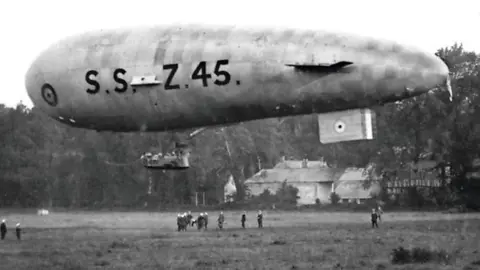
Polegate Royal Naval Airship Station was set up in 1915 and became one of 11 such stations around the coast.
The aircraft carried out reconnaissance, mine-hunting and convoy escort missions against the threat of German submarines from the base for the remainder of World War One, according to author Brian Turpin.
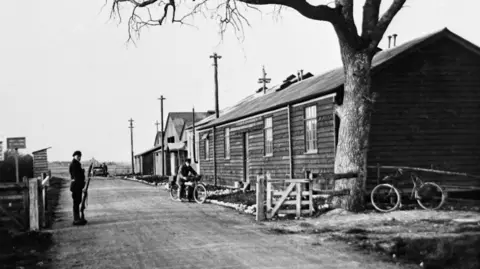
The writer of a history of WW1 airship operations told Secret Sussex there was "nothing to show" there would have been a station at the site today.
"They needed to have some sort of aircraft that could go out on long patrols over the seas around the British Isles," Turpin said.
"The airship was particularly suitable for that."
According to the author, the Polegate station's patrol area stretched from Dungeness in Kent to Portland Bill in Dorset.
The airships were "not very large" and had "quite low-powered engines", which sounded similar to modern light aircraft.
Turpin said Polegate developed a "special lighting arrangement around the shed entrance," which would "direct the crews so they could come in in the dark".
"As the war went on, the number of submarines increased," Turpin said. "The number of ships sunk went up and up and up."
According to the author, this became "critical" and this "had a serious effect on the war effort".
From Polegate, over 8,000 hours were flown in the final year of WW1 and the airship station was staffed by 37 officers and 264 airmen.
 Brian Turpin
Follow BBC Sussex on Facebook, on X, and on Instagram. Send your story ideas to southeasttoday@bbc.co.uk or WhatsApp us on 08081 002250.
