It's heartbreaking to lose loved ones to dementia'

 BBC
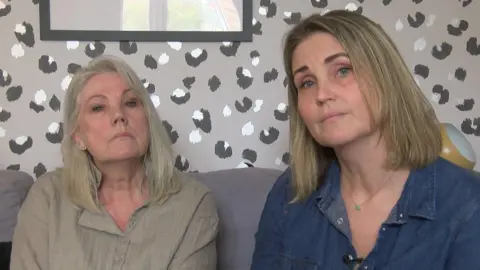
BBCA woman from Devon says she has signed up for a dementia research study with her mother after seeing family members with the condition "disappear".
The Protect Study uses uses a finger-prick blood sample and data from online cognitive tests to try and identify lifestyle and genetic factors that can reduce dementia risk.
More than 30,000 people have signed up to take part in the study including Vic Owens and her mother Jan Tandy, who both live in Exeter.
Owens said she signed up to the study as it was "heartbreaking" to watch members of her family with dementia lose their memories and personality.
She said people living with dementia who lost their individuality had lost the "most important" part of them.
She said: "The effect on them personally, but also the effect on everybody around them who loves them, just seeing that person disappear into something they don't recognise anymore. It's heartbreaking, it's so hard to see.
"That's why I think this type of research is really, really important to help people of the future to not have to face those things.
"Hopefully it will help families be able to have diagnosis early or different treatment plans that will help them or a care plan as they're moving forward."
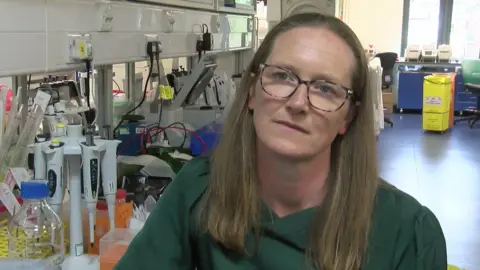
The research is being led by Professor Anne Corbett from the University of Exeter Medical School.
Corbett has already undertaken a study into biomarkers in blood linked to dementia using a finger-prick blood test.
She now believes she can link those biomarkers with performance on the brain tests, giving a potential way to predict risk of dementia.
'Reduce their risk'
She said the online tests provided results which were incredibly sensitive.
''Far more sensitive than you would ever have in a clinic, and they're able to detect change in key areas of brain function, things like memory, speed of processing, attention and day to day function.''
She said that when people's tests results were matched with the proteins in their blood it gave an idea of who would be at higher or lower risk of dementia in the future.
''So we are able to map all these different factors and understand which of them are contributing to the way that people are ageing and their potential risk of dementia.
"That information can then allow us to intervene, to design new treatments to help people reduce their risk of dementia as they age.''
Owens' mother, Jan Tandy, has also signed up to the study and said she "hadn't thought much about dementia" until it started to effect people she knows.
"I'd always worked in, sort of, mind-taxing jobs and thought it wouldn't affect me," she said.
"But then Vicky's family member went downhill really fast with dementia, and a friend of mine also has dementia, and it was the fear that I saw in their eyes that really prompted me to get involved."
Follow BBC Devon on X, Facebook and Instagram. Send your story ideas to spotlight@bbc.co.uk.
