Should burning waste keep Lincolnshire's lights on?

 BBC News
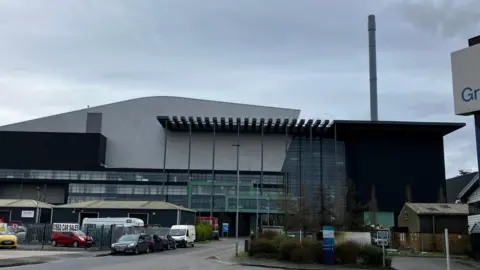
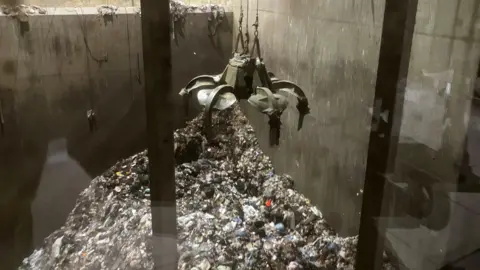
Every day lorries drive through the gates at the Energy from Waste (EfW) facility in North Hykeham ready to deliver rubbish from 350,000 homes. Instead of going to landfill, the waste is burned to generate electricity.
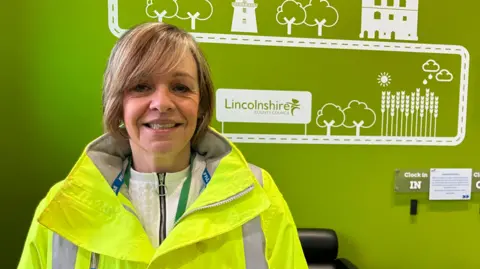
"For the past 11 years, all general waste has come here. We don't use landfill now. We create energy and use waste as a resource," explains Rachel Stamp from Lincolnshire County Council.
Environmental campaigners Greenpeace are one of the groups who have opposed the use of incinerators.
Dr Douglas Parr, the charity's chief scientist, said: "Incinerators are a major source of planet-heating emissions, with some experts branding them the country's dirtiest form of power generation."
But Lincolnshire County Council is committed to the use of EfW technology.
"Rather than burying it [waste] in the land and waiting for it to decompose and break down it's better from an environmental point of view," Stamp said.
 BBC News
In Lincolnshire, the ash that is left is taken away to be used as aggregate for the building industry and any leftover metal is sent for scrap.
The local authorities in Hull, North East Lincolnshire, and East Yorkshire, also use incinerators to burn waste and generate energy.
The Department for Environment, Food and Rural Affairs said between 2019 and 2023, about 18.6m tonnes of waste had been incinerated and turned into energy nationally.
In 2025, government research said incineration "continues to be a controversial form of waste management" and revealed the amount of incinerated waste in the UK had "nearly trebled" between 2010 and 2020.
It added just over half of all municipal waste in England was incinerated in the year 2023 to 2024.
According to the Lincolnshire County Council, the North Hykeham EfW has processed more than 2 million tonnes of waste and generated enough electricity to power 27,000 homes since it opened in 2014.
Despite a 93% reduction in the amount being sent to landfill, Stamp hoped they would be able to send less waste to the site in the future.
"People need to minimise the amount of waste they create. Only buy what you need. Reuse and recycle where you can.
She added: "If we recycle or reuse more we shouldn't need to be building lots of facilities like this."
And that is a point where two opposing sides of the argument for and against incineration find common ground.
Parr said: "The real solution to our waste problem is neither more holes in the ground nor more furnaces - it's producing less rubbish in the first place."
 BBC News
As part of a government initiative, councils across Lincolnshire have started to collect household food waste on a weekly basis.
But how will that be processed?
"That will go off to an anaerobic digestion plant in Lincolnshire where that will be recycled into green fuel and fertiliser that will be used on fields in the county," Stamp explains.
"Following that we'll be looking at how we can do things with other materials you throw away such as plastic bags and wrappings."
Listen to highlights fromLincolnshire on BBC Sounds, watch thelatest episode of Look Northor tell us about a story you think we should be covering here.
Download the BBC News app from the App Storefor iPhone and iPad orGoogle Play for Android devices
