Penguin chicks and baby monkey born at Twycross Zoo

 Twycross Zoo
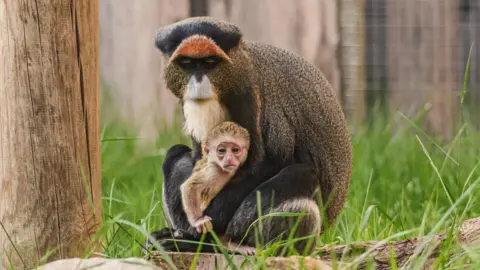
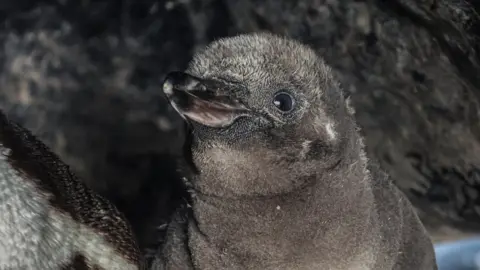
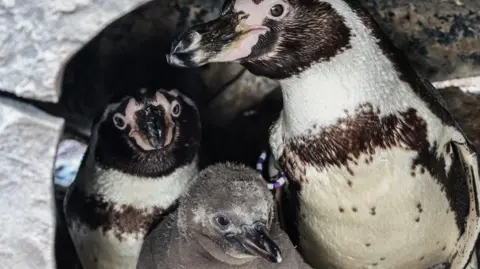
Twycross Zoo has welcomed two new penguin chicks and a baby monkey, born as part of efforts to increase numbers of both species.
The baby De Brazza's monkey has been born to a first time mother, said to be "displaying exceptional maternal instincts" after learning parenting skills from older female primates in her group.
While the two Humboldt penguin chicks have been born to monogamous parents which have raised chicks at the zoo before.
Matthew Ford, curator of primates at Twycross Zoo, said the births "highlight the important role zoos play in safeguarding wildlife for the future".
 Twycross Zoo
The Humboldt chicks are being kept in nest boxes until they are 70 days old, but can be seen by visitors when they eventually emerge having grown distinctive grey fluffy feathers.
They have been hatched as part of a European conservation scheme called the EAZA Ex-situ Programme (EEP), which aims to create a healthy population of endangered species in zoos to act as a support for their wild counterparts.
The newborn De Brazza's monkey is also part of an EEP and born to a mother who Twycross said observed multiple births during her early years and left her "well-equipped to embrace motherhood".
The baby is being kept close to its mother and zookeepers will be able to determine its sex in the coming months as it gains confidence and begins to explore independently.
 Twycross Zoo
Mr Ford said: "Every birth at Twycross Zoo is a testament to the dedication of our team and the collaborative efforts of the EAZA Ex-situ programmes.
"They highlight the important role zoos play in safeguarding wildlife for the future, ensuring we maintain a genetically diverse population of species facing extinction, to act as a support system for their wild counterparts.
"It's particularly exciting to see animals thriving under our care, and helping to contribute to vital conservation efforts."
Follow BBC Leicester on Facebook, on X, or on Instagram. Send your story ideas to eastmidsnews@bbc.co.uk or via WhatsApp on 0808 100 2210.
