What is the future of nature-friendly farming?

 Fiona Irving / BBC
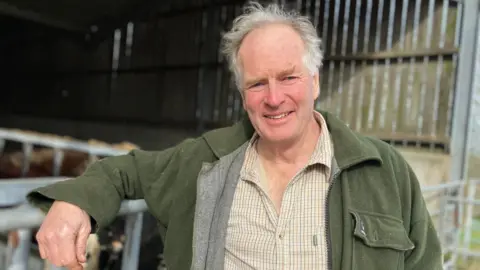
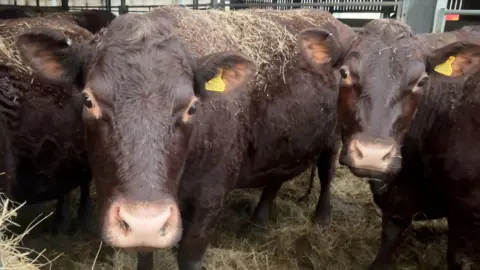
Livestock farmer Martin Hole grazes his organic sheep and cattle on 280 hectares of the Pevensey Levels, one of the most bio-diverse wetlands in the country.
On the farm hedgerows are left uncut and shaggy, full of berries for birds.
His Sussex cows are adept at grazing on the diverse grasslands of inedible rushes and tough barley grasses that the make up the nature-rich marshland.
Using sustainable methods - some of which were funded through the government Sustainable Farming Incentive (SFI) scheme - Hole tries to farm in a nature-friendly way. But when the government scheme was paused last year it left him and many other farmers unsure of the future.
The Department for Environment, Food & Rural Affairs (Defra) says it is working on a new proposal and that more than half of farmers in the country are currently in farming schemes, "including 44,000 multi-year SFI agreements".
'Like a marriage'
In April last year the SFI scheme was closed for new applications having reached its budget limits.
In January the government announced a new system would open in June, but farmers say they still do not have details about the scheme.
Hole has been supported in the past by government incentives and says changes to the way he farms have been financially costly, he is now calling for clarity on the new SFI offering.
"When you've changed your breed of livestock, the very nature of your landscape, when you've changed your hydrological systems, your perfectly productive pastures into herbage meadows, you need to know that that's for a lifetime," he said.
Farmers' relationship with government is like "a marriage", Hole says.
"When you make the promises at the very beginning, you want the partner to stand by you," he said.
"You don't want them to hop in and hop out."
He said without clarity from the government there was a "bruising effect", a "loss of trust" and a "loss of belief in the sustainability financially of what you're committing your resources to".
 Fiona Irving / BBC
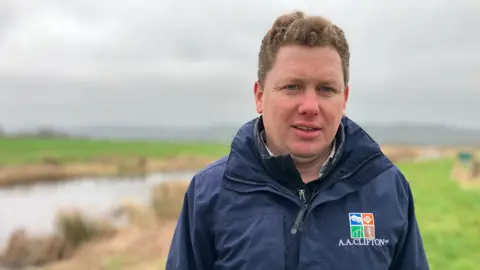
Alan Clifton-Holt farms 1,500 hectares on the Romney Marsh, it is productive arable land, but some of it is given over to nature-friendly projects.
SFI funding has helped him create wetland habitats that sit among the winter-wheat crops.
He says the ponds have led to an increase in the numbers of warblers, reed buntings and ducks on the farm.
Clifton-Holt said: "If I was just running this as a business I wouldn't worry about the nature."
But he added he was "passionate" about nature.
"We live, breathe and sleep here and that's why farmers want to be involved in the nature," he said.
 Fiona Irving / BBC
Clifton-Holt is calling on the government for a long-term commitment to the new scheme.
Creating a wetland "doesn't happen overnight" he said, adding that he needed five to 10 years of predictions to achieve results.
"It takes me a year to establish a grass margin," he said. "If the scheme's short it doesn't work."
A Defra spokesperson said British farmers were central to "our food security, our rural economy and the stewardship of our countryside" and that the new SFI would be "simpler" and "fairer".
Follow BBC Sussex on Facebook, on X, and on Instagram. Send your story ideas to southeasttoday@bbc.co.uk or WhatsApp us on 08081 002250.
