Medical emergency plans to be reviewed after death

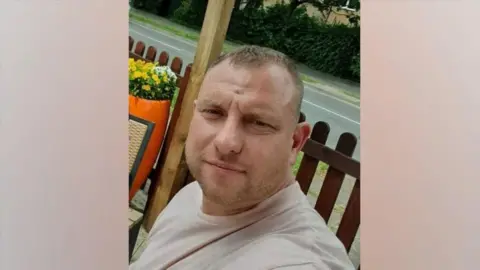 Family handout
Emergency services have been advised to review how they deal with a medical emergency known as acute behavioural disturbance (ABD).
It comes after 39-year-old Robert Gracey, of Morton Terrace, Gainsborough, died after he had been restrained by Lincolnshire Police.
A Prevention of Future Deaths report by coroner Paul Smith has pointed out that, despite a recommendation made in 2019, Lincolnshire Police and East Midlands Ambulance Service (EMAS) have no joint procedure for how they deal with ABD cases.
EMAS said it would "respond before the given deadline" to the report and Lincolnshire Police said it had "long-established arrangements" to review how it responds to medical emergencies.
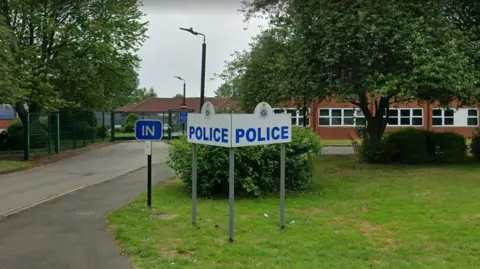 Google
On 18 December, an inquest jury at Lincoln Coroners Court concluded the effects of cocaine, restraint and struggle against restraint upon a scarred heart was the cause of Gracey's death in the early hours of 29 September 2021.
During the inquest, the jury heard suggestions Gracey was suffering from ABD - an umbrella term for the clinical presentation of a number of conditions, according to College of Policing guidelines.
In the report, Smith said there was "still no such protocol in Lincolnshire" on police forces establishing ABD protocols with their local ambulance service so suspected incidents were treated as medical emergencies.
He said under the current NHS Pathways system, which is used across the country, ABD "does not have its own allocation pathway" and a "referral for ABD will only be allocated a category two response in the absence of police restraint".
'Missed opportunity'
In a statement read out during Gracey's inquest on 5 December, Garry Firth, who was a police officer at the time but has since retired, admitted to punching Mr Gracey twice to "distract him" while he was resisting being put into a police van.
In the statement, Firth said he thought Gracey may have been under the influence of alcohol or drugs and was behaving in an "aggressive manner".
After placing Gracey into the van, Firth and PC Nicky Briscoe were travelling to Lincoln Police Station when Gracey became unresponsive. He was taken to Lincoln County Hospital where he was pronounced dead.
The jury concluded there had been a "failure to treat the situation as a medical emergency" after Gracey had been handcuffed and prior to leaving the scene.
It found there was a "missed opportunity to undertake a time-critical transfer of Gracey to A&E where it may have been possible to provide earlier medical intervention".
'Developing protocol'
Smith has requested both Lincolnshire Police and EMAS respond to the report by 3 March with details of action taken, proposed to be taken, or a timetable for action.
Keeley Sheldon, director of quality at EMAS, said: "Our thoughts remain with Robert's family at this difficult time.
"We remain focussed on delivering the right care at the right time, to the highest standards and in line with established processes.
"Our response is guided by the information available when an emergency is reported, in this case from Lincolnshire Police."
A spokesperson for Lincolnshire Police said: "Following research with other police forces and ambulance services nationally, EMAS have taken a lead on developing our ABD protocol across the East Midlands to ensure the most effective response to possible ABD medical emergencies in the future."
Listen to highlights fromLincolnshire on BBC Sounds, watch thelatest episode of Look Northor tell us about a story you think we should be covering here.
Download the BBC News app from the App Store for iPhone and iPad or Google Play for Android devices
