Kerdroya labyrinth completed after seven years

 BBC
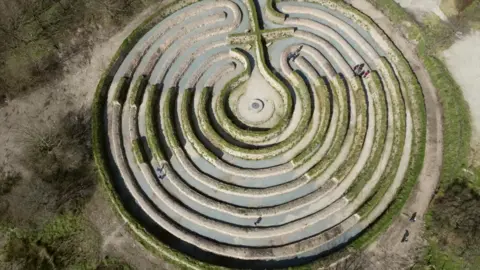
BBCThe last stone of a labyrinth in Cornwall called Kerdroya has been laid, marking the completion of a seven-year project.
It was the vision of Will Coleman, who was responsible for the Man Engine project, who said he believed it was the largest classical labyrinth in the world, built alongside Colliford Lake on Bodmin Moor.
It is a masterpiece of Cornish hedging, with almost 800m (2,600ft) of it, stretching one mile (1.6km), and showcasing 12 regional styles of this 4,000-year-old craft.
Coleman said: "Without the support of our community hedge-pledgers, sponsors and skilled craftsmen, this project would never have got off the ground, let alone reached completion."
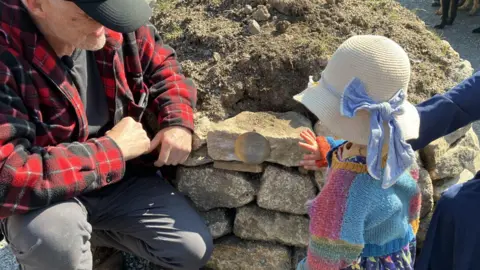
Coleman's granddaughter Bryher was chosen to lay the last stone at Kerdroya on her third birthday, although she had help to lift and push it into place.
The project stands as a living monument to Cornwall's landscape, craftsmanship, and cultural heritage.
Coleman said: "The hedge network right across Cornwall provides vital homes and passageways for pollinators, birds, bats, hedgehogs and other wildlife.
"It has been really exciting to see some of our native wildflowers take ownership of Kerdroya.
"We actually trained 60 people to some level, [but] only a few of those have gone as far as getting the Guild of Cornish Hedgers accreditation."
Cornish hedger Tammy Mead, 23, had been on the team that completed the Cornish hedges along the new A30 and then joined the last stretch of the project at Kerdroya.
She said: "It can be a little bit tough. I grew up on a farm, so I am used to the bulky work.
"Obviously I'm not as strong as the blokes, but I managed to keep up and I enjoy it.
"I love being out in the fresh air and in the fields. It's good fun."
Kerdroya is open to the public and free of charge except for the car park, which is run by South West Lakes.
Follow BBC Cornwall on X, Facebook and Instagram. Send your story ideas to spotlight@bbc.co.uk.
