'Just push us into the sea': The frustration of an area failed by politics

 BBC
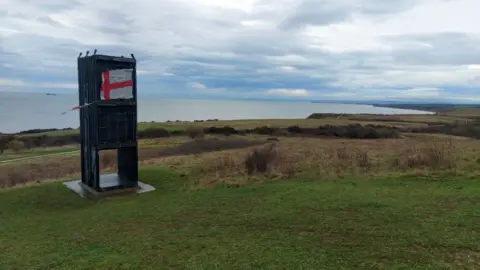
BBCOn hot summer days, the staff at Cotsford Primary School can't let the children into the playground because of the smell of cannabis being grown in nearby properties.
The school, in Horden, County Durham, sits amid 19 boarded-up houses, so teachers have to be inventive to help pupils succeed.
The children are encouraged to help in the library or as maths mentors, but to do so, they must fill in application forms and be interviewed. Some of them are unsuccessful and given feedback on how to improve. "It sounds a bit brutal," says the school's deputy headteacher, Vicky Page. "But if we don't give them those opportunities now, they're far less likely to have them when they're older."
The school's work is getting harder, nestled as it is in an area where politics has long failed its residents. Westminster slogans have long been left unmet. In east Durham's former pit villages, things never got better, they've never taken back control and Horden, along with neighbouring Blackhall and Easington, was never levelled up. A once proud, close-knit community has been left to the vagaries of absentee landlords, rising deprivation and residents who often don't want to be here.
Finally, however, people feel they have a choice - and what has happened here highlights the challenge facing the Labour government.
In an area where voting Tory was seen as a sin after their closure of the mines, Reform UK have swept in, hoovering up the votes of the forgotten and the disaffected. They won two-thirds of seats in County Durham in last May's councils elections, with the Liberal Democrats coming second. Seven out of the eight seats in east Durham's mining villages went to Reform UK.
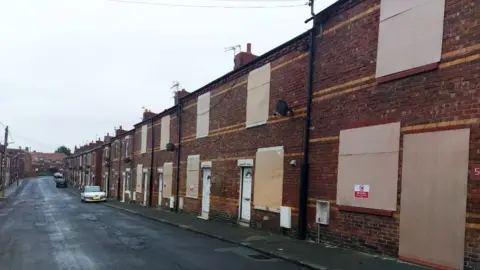
These derelict streets, wind-swept by the bracing North Sea air, were once the envy of the community, teeming with life.
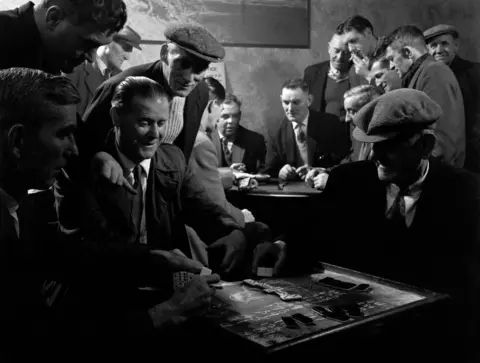
Some 15,000 people lived in Horden at its peak in 1951, with about 4,000 employed in the mines. But since the pits closed almost four decades ago, residents describe a slow and pained decline as people struggled to get well-paid, stable employment.
The population has now halved, and child poverty in parts of Horden is double the national average. "Just push us into the sea," says one woman.
 Heritage Images
In an effort to change their fortunes, residents voted for Brexit nearly a decade ago. Since then, official data shows the area has become poorer still and last May, people decided to toss the political dice once more by voting Reform.
For the newly elected councillors, and the government, the task to prove they can bring about change is significant. A vicious cycle has become ingrained - a deprived area to which poor people are sent, or find their way to through circumstance, rather than choice.
One family were sent to Horden by their local London council looking for a cheap place to house them. They were only told where they were heading by their taxi driver, and six hours later were dropped off in a place they'd never heard of in a county they'd never visited.
Ex-prisoners, with few options, arrive here too because of the cheap rents. The properties are often owned by absent landlords, after the pit houses were sold off to the highest bidder, sometimes for as little as £15,000.
In an area where community once meant everything, the change has felt too much.
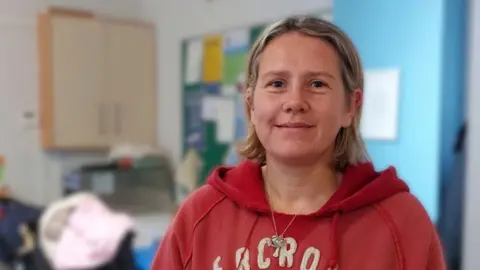
At The Ark, a local church community centre, toddlers play and dance as Baby Shark is sent through the speakers. Parents and grandparents enjoy meeting up for tea and cake, but long for the security of their own childhoods.
Kiah is here with her 18-month-old daughter. She feels a deep connection with Horden and says she "wouldn't want to bring her kids up anywhere else", but believes the area is being damaged by "people from out of the village" who buy houses "but don't maintain them. There are [houses] that have the windows out and all the pigeons are in them."
Nodding in agreement is Tracy, who is watching over her granddaughter playing nearby.
Labour took the area for granted, says Tracy, 60, as "people vote Labour because their parents voted for them". She can therefore understand why people turned against the party as "Labour wasn't doing anything about anything" but she isn't sure Reform UK are the answer either.
"I don't think it's going to get better in the near future, I really don't."
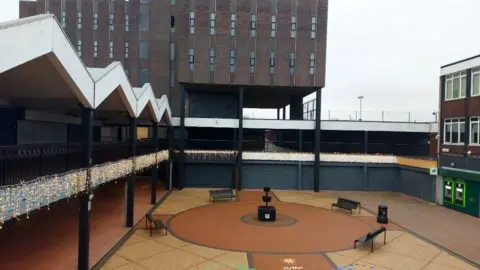
The nearby Castle Dene shopping centre is regularly brought up in conversations. Across its two floors, whole swathes of shops are boarded up. On either side lie two run-down empty tower blocks, replete with broken windows and walls blackened by fire damage.
One tower, Lee House, used to be home to local community groups until they were forced out in 2015. The other, Ridgemount House, was once an employment support hub, though its most recent use was as a cannabis farm until police raided it in 2020.
The task of revitalising and regenerating this area now falls heavily on Reform UK.
More deprived since Brexit
Some building blocks are in place. Peterlee will receive £20m investment over 10 years under the government's Pride in Place Programme. The council's £10.7m 'Horden Masterplan', developed before Reform's victory, will see three streets near Cotsford Primary demolished and replaced with 100 new homes. And in 2020, Horden train station opened after a £10m project, creating links to Newcastle and Whitby.
But Brexit has removed a key source of funding, which the area desperately needs. County Durham received £154m of EU funding between 2014 and 2020, about £22m a year. Since the UK left the European Union, it receives about half that amount, £12m annually, under the UK Shared Prosperity Fund.
At the same time, government statistics show that County Durham is home to seven of the 10 poorest rural communities in England, and that its former mining villages have become more deprived since the UK voted for Brexit in 2016.
Local groups continue to help those struggling financially. At Horden Youth and Community Centre, a main and dessert are served for just £3. They have a shop selling discounted toiletries too; it was recently stolen from.
Here, residents are despondent and angry.
Pat, 64, says the village has been left to "disintegrate" and believes the role of the EU was misunderstood. "Everybody thought the EU was about people coming into the country. They didn't portray what benefits we were having."
Denise sees investment in other nearby towns, like Seaham, and feels aggrieved that it hasn't been replicated in Horden. Her vote lies firmly with Reform UK. Brexit has failed due to the way it's been enacted, she says, and it's time to turn back to Nigel Farage.

Dawn Bellingham is one of the Reform councillors now trying to change her community. She had worked for the military for 35 years, and says she was fed up with returning between duties to see the local area becoming poorer.
There's been a Labour MP here since 1935 and we meet Bellingham in the Horden Social Welfare Centre, a bastion of local Labour politics, where a portrait of the party's former Prime Minister, Harold Wilson, proudly hangs.
She says she understands why people's votes have changed - that there is a "sense of injustice" that the community has had choices made for it, rather than with it, as poor people arrive in an already poor area.
"We've got our own problems, like everywhere, and we try to manage that for the people of Horden. And then there's more people coming in on top of that."
"We need investment," she adds, and is working to bring businesses to the area. "The Northern Powerhouse, or Levelling Up and all of this sort of thing didn't seem to sweep as far as the east coast of County Durham."
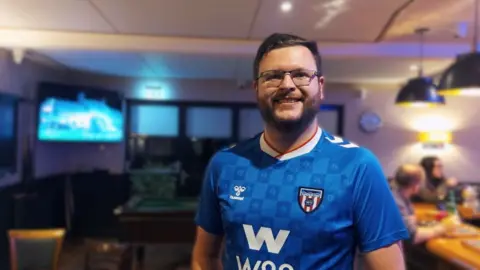
There are jobs available, says Steven Horseman, chair of the Southside Social Club in Easington, but a lot of young people "just don't want to go out to work now because they just think, 'What's the point?'"
He recently volunteered to chair the social club, believing it fosters much-needed community spirit. Politics and a pint fill many an evening, and despite Reform UK's recent success, the 32-year-old senses that Labour isn't done here, if it can demonstrate "very radical change".
The man charged with that task locally is Labour MP Grahame Morris.
"There are opportunities arising out of green energy," he says. "We've got some cutting-edge companies [coming here] who are involved in that particular sector."
He also points to a policy announced in the Budget that means former miners will receive a £100 weekly uplift in their pension through the releasing of cash held by the government since 1994.
"It was Labour that delivered that. That will go into people's pockets. It will be spent in the community and local businesses."
And while the community is changing, he says, its spirit can be kept alive.
But once more, politics isn't helping. In the past three years, a group of Nigerian families has moved into the area. Most are employed as engineers or health and social care workers, and many have sent their children to Cotsford Primary - of its 182 pupils, as many as 30 are now Nigerian. But they've become embroiled in the country's immigration debate.
Over the summer months, England flags started appearing on lampposts in the villages, and a group of Nigerian families playing in a local park was attacked with eggs. Some parents, says deputy head Vicky Page, feared for their safety.
"You're talking about people who have legally arrived in the country, who are here to work. And then you talk about a political agenda that's different, looking at people who are coming illegally. They are not in the same ballpark at all, but yet they're being treated as if they are."
Frustration seeps from most conversations in east Durham. For some, the focus is on the outsider - be they ex-prisoners, absent landlords or foreigners. But a firmer gaze is set towards politicians, be they in Westminster or Durham.
It's been close to 40 years since the mines were closed. How is it, locals ask, that we've been failed for so long?

Sign up for our Politics Essential newsletter to keep up with the inner workings of Westminster and beyond.
