'I felt relief when I lost out on Olympic medal'

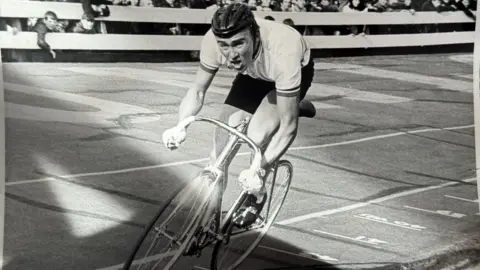 Reg Barnett
For most athletes, competing in the Olympic Games would be the highlight of their career.
But for British sprint cyclist Reg Barnett the experience led to a dark spiral which left him dependent on drugs.
Barnett grew up in South London in the early 1960s and began cycling as a teenager.
"I was so hooked on the bike that I thought, 'yeah, this is what I want to do,'" he recalled.
By the age of 21, he represented England in the 1966 Commonwealth Games.
In 1967, he won his first title as British National Sprint Champion.
Barnett, now based in Shoreham, Kent, said as his career progressed the pressure of track racing began to overwhelm him.
"I was flying," he said. "But in all honesty, my mind had gone a bit."
In 1968 he travelled to Mexico for the Olympic Games, where he fell into a deep depression.
"Nowadays they have psychiatrists, but I had always been on my own," Barnett said.
When it came to the deciding race, he lost out on the chance for a medal.
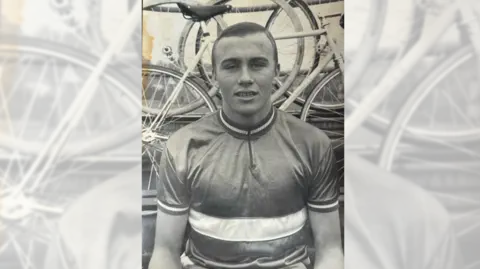 Reg Barnett
Barnett said losing the race was a turning point.
"It didn't hurt at all," he told the BBC. "I felt relief.
"No more worrying, no more sitting in the track waiting for the quarter finals, semi finals, finals."
Barnett recalled turning to his coach after the race and declaring, "I'm done."
'Juicing up on steroids'
Upon returning to the UK, Barnett left his career in sprint cycling to begin long-distance road racing.
He also began taking performance-enhancing drugs.
Ever since he was a teenager, Barnett remembered his competitors openly doping.
"They were all juicing up on steroids, even amphetamines," he said.
"I was a bit naive."
Only after turning to road racing in the later part of his career did Barnett decide to join in with the doping.
"I'm not proud of it," he said. "It's what everyone was doing at that time."
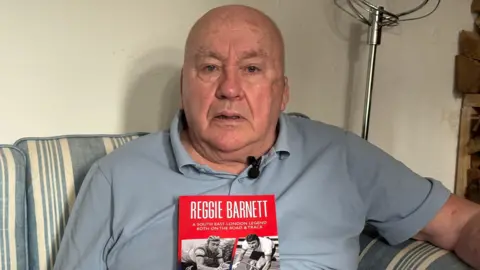
Barnett said he took performance-enhancing drugs before almost every long-distance race.
Outside of racing, he said he was also drinking heavily and taking cocaine.
"It was all linked to depression," Barnett said he later realised.
The turning point was meeting and dating his now-wife.
"From that day on, I felt another serious surge of discipline, like I had to have when I was an athlete," he said.
"That's what put me right."
Barnett has written about the highs and lows of competitive racing, and his road to recovery in a new memoir.
'Thin Glass and Thin Ice' is out now.
- If you're affected by any of the issues in this article you can find details of organisations who can help via the BBC Action Line.
Follow BBC Kent on Facebook, on X, and on Instagram. Send your story ideas to southeasttoday@bbc.co.uk or WhatsApp us on 08081 002250.
